
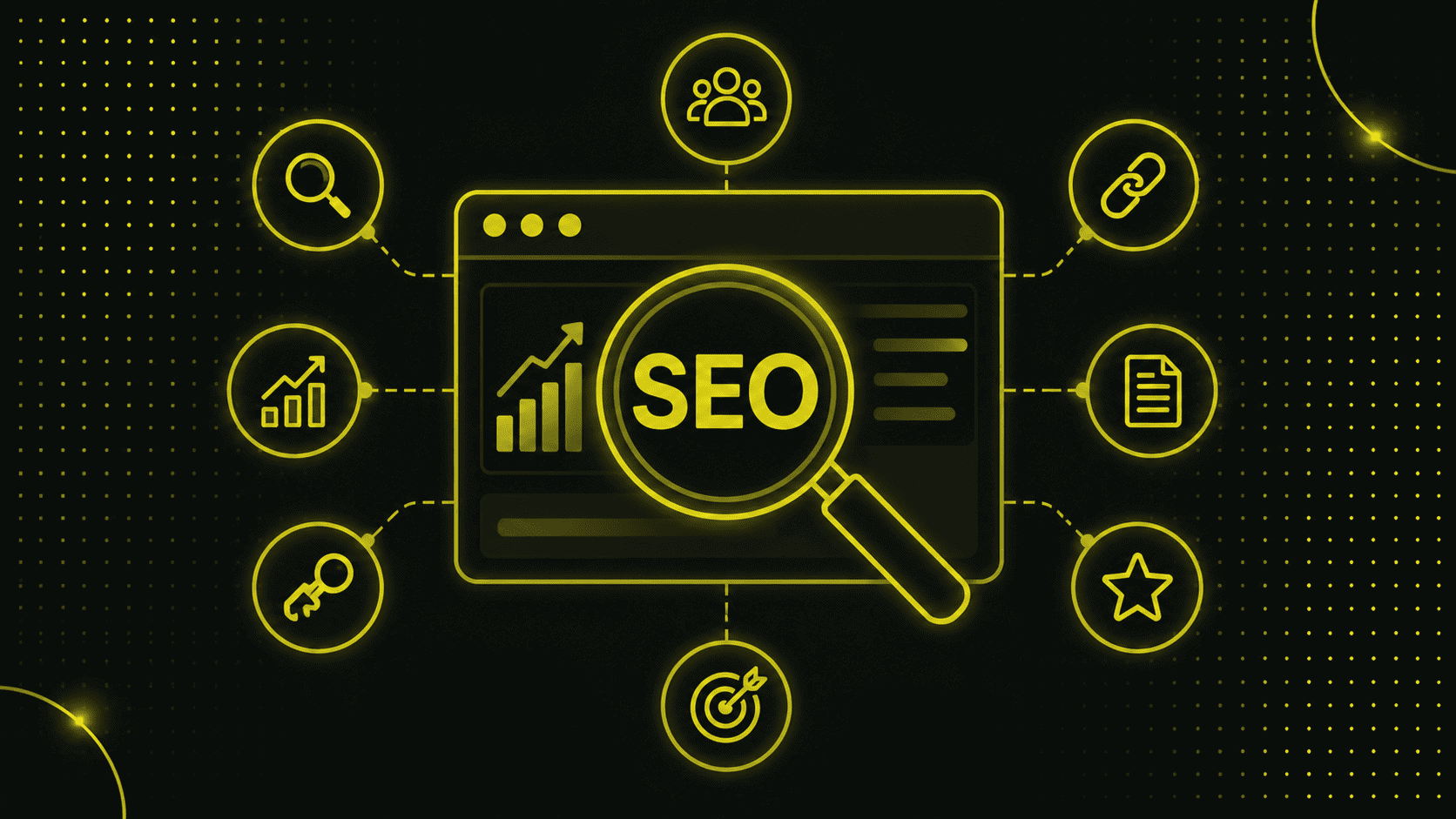
SEO, short for search engine optimization, refers to a set of measures aimed at improving a website’s visibility and ranking in the organic search results of search engines like Google.
But what exactly does SEO mean and why is it so important?
Definition and meaning
SEO (Search Engine Optimization) encompasses all activities designed to ensure that a website achieves a higher ranking in search engine results (SERPs, Search Engine Results Pages).
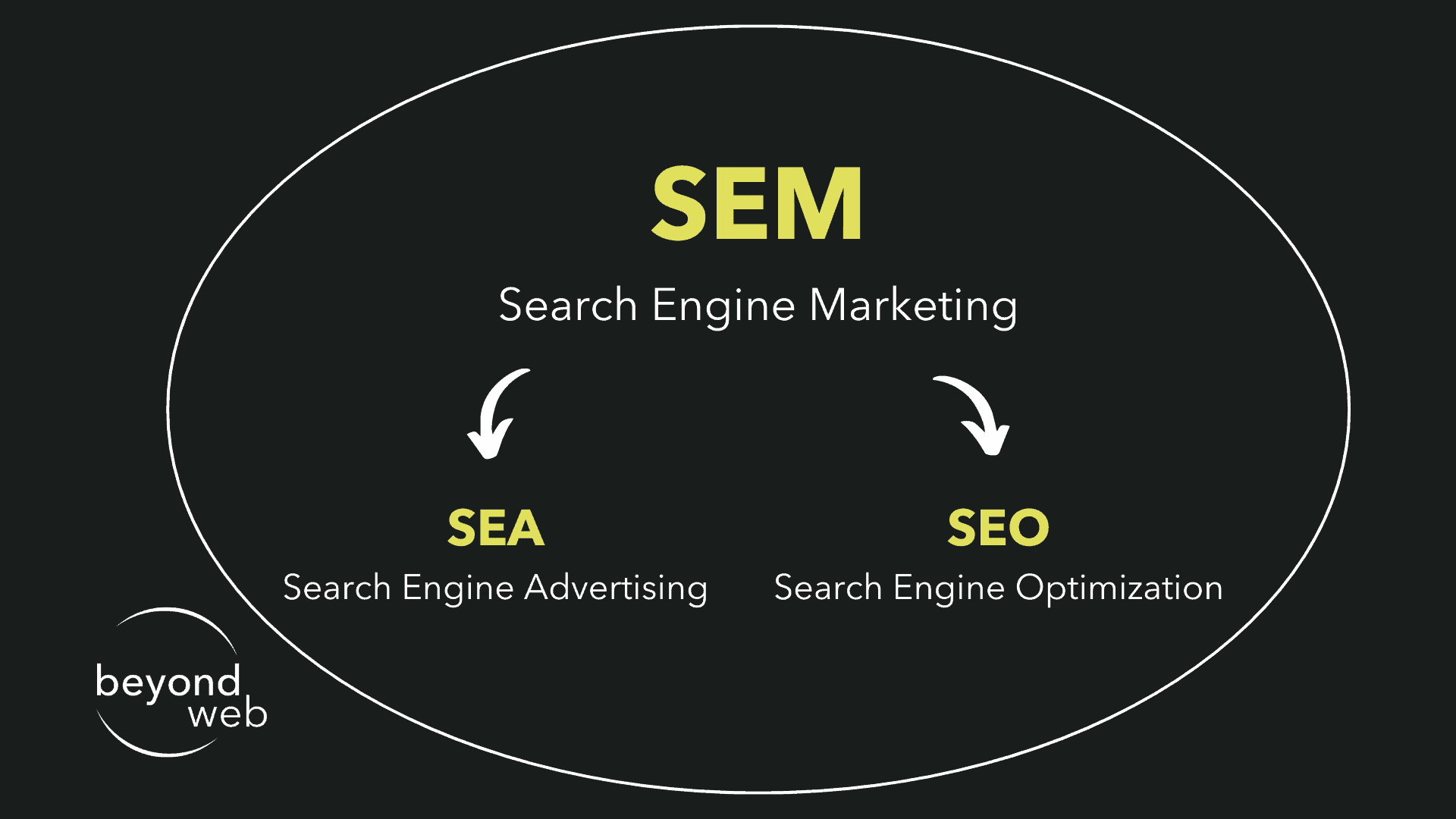
Search engine optimization (SEO) is therefore part of the broader concept of search engine marketing (SEM), which also includes search engine advertising (SEA).
The organic search results are non-paid listings that are created by search engines based on various ranking factors.
The main goal of SEO is to drive more qualified traffic to your website and improve the user experience.
In total, there are estimated to be over 200 ranking factors that Google takes into account when sorting organic search results.
If you focus on and optimize the right factors, you can achieve significant improvements in organic rankings and thus generate more visibility and leads.
Historical development and future trends
SEO has evolved considerably since the early 2000s, when the internet was still in its infancy.
In the early days of the internet, it was often enough to use keywords as frequently as possible in the text (keyword stuffing).
However, with advancing technology and better search engine algorithms, SEO has become increasingly complex.
Today, search engines such as Google focus on the quality of the content, the user experience and technical aspects of the website.
The evolution of search technologies, such as Voice Search or Google Search Generative Experience (which combines AI-generated with traditional search results), is having a significant impact on SEO strategies.
My practical experience shows that the trend is increasingly moving towards user-centricity and artificial intelligence.
Large Language Models (LLMs) such as ChatGPT or Gemini are a must for text creation today.
These tools did not exist a few years ago.
All of these examples show very clearly that technology and trends in SEO are constantly changing.
The search habits of users are also changing with them.
While Google used to be the only place to look for information, today more and more people are turning to LLMs such as ChatGPT or Gemini.
The only constant that remains is that as long as people are looking for information, there will be some form of search engine optimization.
However, it is crucial to think ahead and adapt to new trends on an ongoing basis.
Why is SEO important?
SEO has existed for as long as there have been search engines, i.e. since the early 2000s.
The discipline has changed considerably since the early days, but SEO is no longer a trend but a constant.
I always say that as long as people search for information digitally, SEO will continue to exist. Only the way in which SEO is practiced is constantly changing.
Despite the discipline's long history, I keep noticing that many companies are not even beginning to exploit the potential of Search Engine Optimization.
Most companies spend a lot of money on SEA, but have no SEO strategy.
In my view, this is an absolute absurdity, because in most cases SEO has a much higher return on investment (ROI) than search engine advertising.
In the following, I will give you some reasons why SEO should be indispensable for your company:
Advantages of SEO over paid advertising
- Sustainability: While paid advertising can bring immediate results, the traffic disappears as soon as you stop paying. SEO, on the other hand, brings long-term results and a sustainable competitive advantage.
- Cost-effectiveness: As soon as your SEO measures take effect, you can continuously generate traffic without having to pay for it. According to recent studies, SEO is one of the marketing channels with the highest return on investment (ROI).
- Building Trust: Users often trust organic search results more than paid ads and are more likely to click on them. According to recent studies, organic search results have click-through rates 6 to 10 times higher than Google ads.
We at Beyondweb have also been able to achieve great results for our customers. For example, we were able to increase organic traffic for an industrial company in Switzerland by 300% within 6 months.
How does SEO work?
The Google search engine (algorithm & ranking factors)
Search engines such as Google use complex algorithms to evaluate the relevance and quality of websites.
According to estimates, Google considers over 200+ ranking factors, including:
- Relevance of the content: How well does the content of the website match the user's search terms (keywords)?
- Backlinks: How many other websites link to the page? Every backlink is a signal of trust.
- User Experience (UX): How user-friendly is the website? This includes loading speed, mobile responsiveness and user click-through rates.
- Technical aspects: Is the code cleanly structured? Is structured data available? Are the loading times fast and are meta tags correctly marked?
In addition to SEO, search engine advertising (SEA) also plays an important role, as it brings additional traffic to the website.
Google prefers pages with multiple traffic sources.
Aber Achtung: SEA hat keinen direkten Einfluss auf die Effektivität von SEO.
SEA comprises paid advertising to increase the visibility of a company in the search engine results pages (SERPs) in the short term.
However, SEA has no influence on the rankings of organic search results.
How long does SEO take?
If you go live with an SEA campaign today, you will have the first clicks tomorrow and can optimize and iterate the campaign two weeks later based on the click data.
With SEO, these cycles are much longer.
SEO is a long-term marketing measure.
Mit signifikanten Resultaten kann in 6–12 Monaten gerechnet werden.
The duration always depends on the current status of the website and the competitive situation.
Together, SEO and SEA form the components of search engine marketing (SEM), whereby both strategies can be used synergistically to maximize online presence.
One of my experiences shows that it is often the small technical details that make the difference.
In one project, we achieved a noticeable ranking boost by optimizing the loading speed and improving the mobile user-friendliness.
How crawlers and indexing work
Search engines play a central role on the Internet by making the huge network of information searchable and accessible.
Google basically performs the following three tasks:
- Searching and indexing websites
- Saving and categorizing website information
- Provision of the collected information on a specific topic on request
In this sense, search engines act like a large, indexed table of contents of the Internet.
But the way a search engine works is more complex than it appears at first glance.
Google does not simply search the entire Internet, but concentrates on the World Wide Web.
Other Internet services such as e-mail, FTP (File Transfer Protocol) or Usenet are not included.
In a search query, the search engine therefore only searches a part of the Internet, namely what is to be shown in the search engine index.
This index is a cataloged representation of the World Wide Web that is stored in a cache and updated regularly.
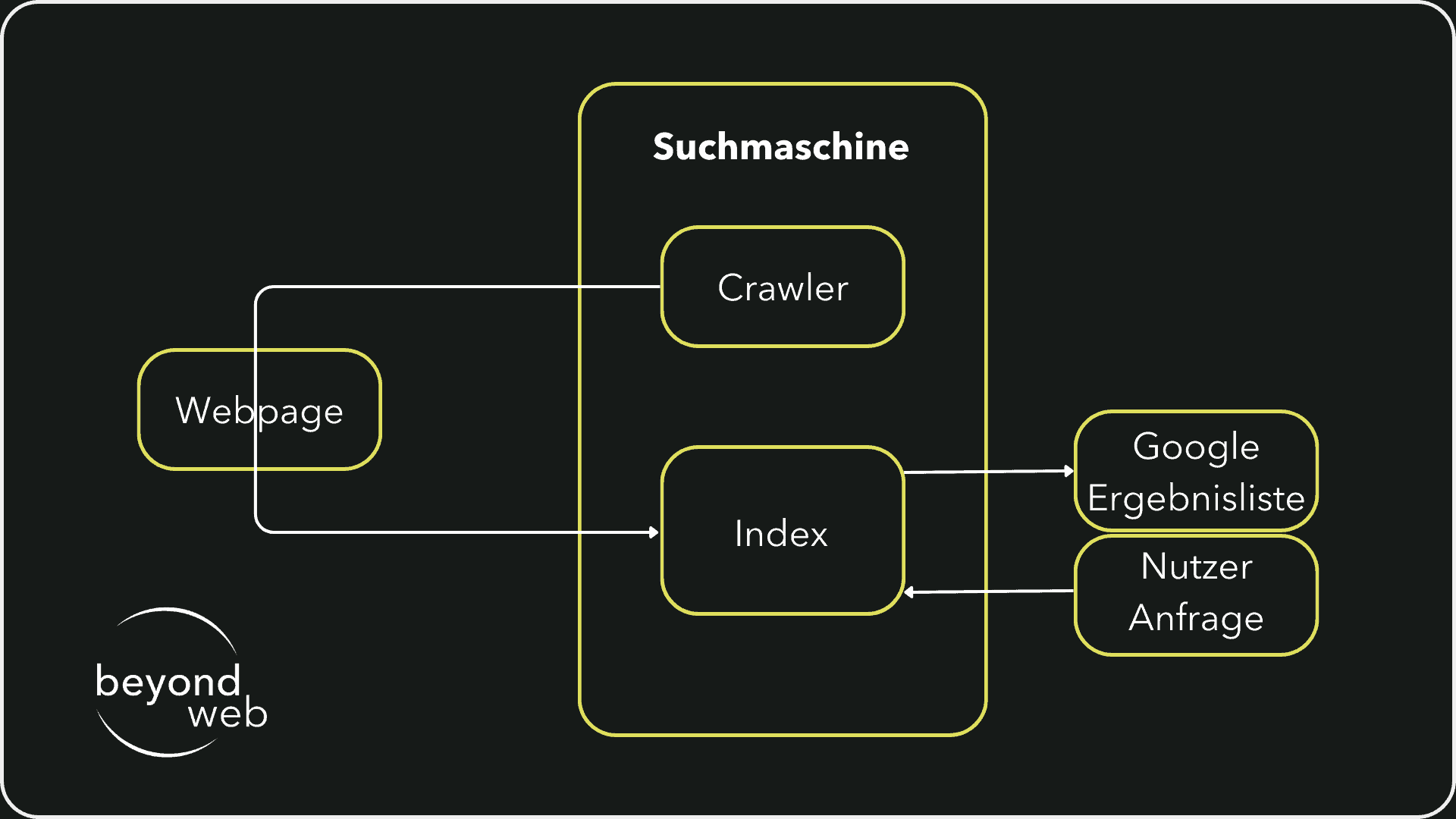
Wenn ein Nutzer ein Keyword oder eine Kombination von Keywords in die Suchmaschine eingibt, nutzt die Suchmaschine sogenannte Webcrawler, um den Index nach diesen Begriffen zu durchsuchen, und zeigt in Sekundenschnelle die relevantesten Ergebnisse.
These results are presented in the form of SERPs (Search Engine Result Pages), which contain a list of websites sorted by relevance.
The process of crawlers, the Google index and the SERPs is visualized again below.
The search results are not static, but change dynamically, as new relevant pages are constantly being added and the search engines are constantly changing their algorithms.
It is also interesting to note that the search results do not necessarily have to appear as an ordered list, but can also be provided in other formats, such as featured snippets or a Search Generative Experience (SGE) window.
A featured snippet is a short preview of the content of a web page (can include text and image) and is usually no longer than 156 characters, and gives the user a first impression of what to expect on the page.
These snippets are automatically created by the search engine for specific keywords. The webmaster only has a limited influence on the display of featured snippets.
To summarize the above content once again: Search engines such as Google fulfil a central function by filtering and organizing the Internet according to specific criteria.
Google and other search engines such as Bing enable users all over the world to find exactly what they are looking for from the immense amount of information on the World Wide Web and thus make a significant contribution to making the information on the Internet usable and accessible.
Analyze user search behavior
In order to conduct successful SEO, it is important to understand the search behavior of users.
In my view, two aspects are central to this:
1. consideration of the search intention
Why does the user search for certain terms.
Would they like to obtain information, buy a product or use a service?
Is the user looking for information or does he intend to buy?
In principle, we want to be able to cover the user's entire purchasing decision process with our website.
We want to provide appealing and useful content for all potential users.
This includes both undecided prospective customers who still need information and advice, as well as those who already have concrete purchase intentions and are looking for specific details about our products or services.
Our aim is to offer informative and compelling content that optimally appeals to and supports both target groups.
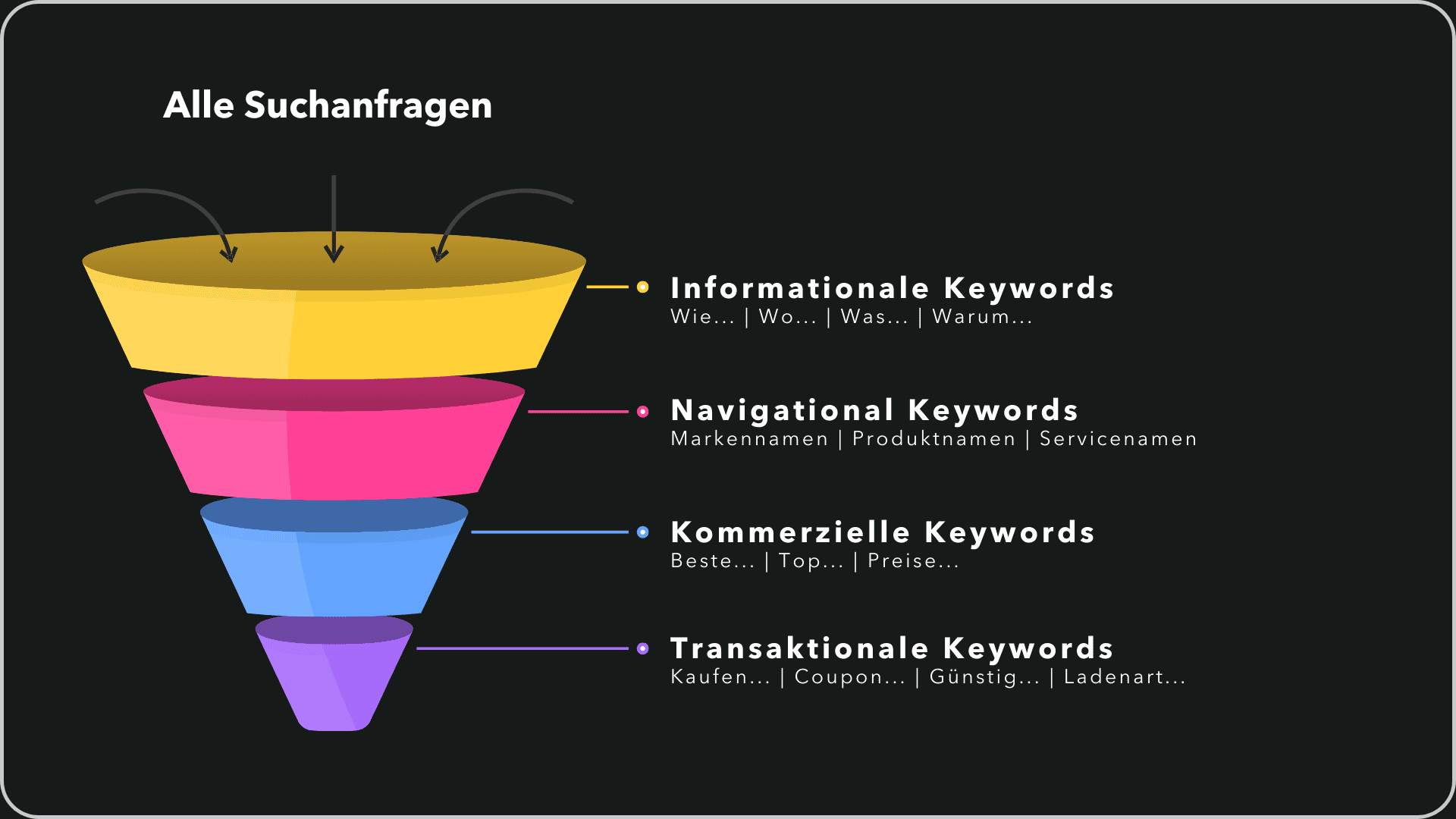
There are basically four types of search intentions in the purchase decision process, which are illustrated in the following diagram.
2. keyword analysis
What terms do users use and how does search behavior change over time?
Consideration of search intent should also be a central aspect when selecting keywords.
Companies often choose generic keywords with a high search volume, whereby the search intention of these terms is extremely vague and unclear.
Gerade zu Beginn sind aber meist weniger generische Begriffe interessanter und offerieren grössere Opportunitäten.
An appropriate tool is recommended for identifying and tracking suitable keywords.
Tools that I use myself to analyze search behavior are SEMrush and Ahrefs.
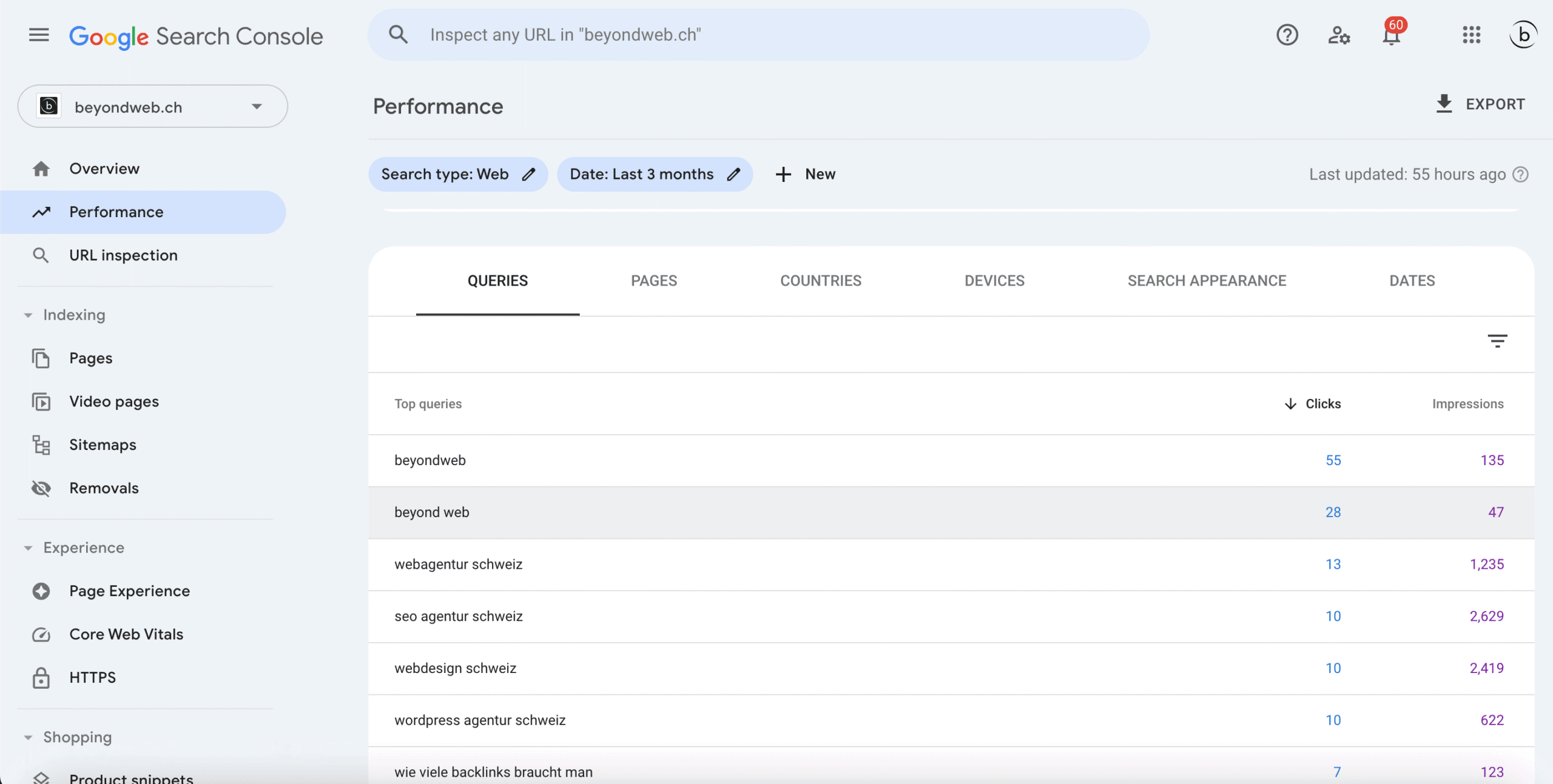
Google Search Console (GSC) can also be used. There you can see which terms users have used to land on your website.
Then you can better align the corresponding pages to these specific terms.
Zudem kannst du deine Google-Analytics-Property nutzen, um das Nutzerverhalten und den User-Flow nachzuvollziehen.
In one of my projects, analyzing the user paths and the most searched terms and optimizing the content strategy based on this resulted in 3x more customer inquiries.
OnPage SEO optimization
Content optimization
Important content elements (headings, keywords, multimedia)
Content is king in SEO.
Here are some basic rules for content optimization:
1. headings (H1, H2, H3, ...):
Clearly structured and informative headlines help both users and search engines to better understand the content.
2. keywords integration:
The most important keywords should of course be placed in the text, especially in headings and opening paragraphs.
3. multimedia use:
Images, videos and infographics increase user loyalty and can help to explain complex topics.
Aus meiner Erfahrung kann ich sagen, dass ein gut strukturierter und visuell ansprechend gestalteter Content die Absprungrate reduziert und die Verweildauer erhöht.
Optimize content for the user intention
It is essential to design content in such a way that it answers users' questions and needs.
Here are some steps for optimizing content based on user intent:
- Researching user questions: Tools such as AnswerThePublic help to identify the most frequently asked questions on a topic.
- Provide detailed answers: Offer well-founded and comprehensive answers that offer the user real added value.
- Call-to-actions (CTAs): Encourage users to make further interactions, e.g. newsletter registration or product purchase.
Meta tags and descriptions
Design title tags correctly
The title tag is one of the most important on-page SEO factors.
This should:
- Include the main keyword
- nicht länger als 60 Zeichen sein
- Encourage the user to click
Du kannst deine Klickrate (CTR) signifikant steigern, wenn du deine Title-Tags entsprechend optimierst.
Meta descriptions
The meta description provides a brief summary of the page content and should:
- be 150-160 characters long
- Contain a main keyword
- Have a clear call to action
Structured data
Application of schema markup
Schema markup helps search engines to better understand the content of your page.
Schema markup is structured data, i.e. code that makes your content readable for the search engine.
Here are some common markup formats we use at Beyondweb:
- Artikel: für Blog-Posts und Nachrichtenartikel
- Produkt: für E-Commerce-Seiten und Produkte
- FAQ: für häufig gestellte Fragen
I recommend using schema markup, especially for the content types listed above.
Off-page SEO measures
Off-Page-SEO bezieht sich auf alle externen Optimierungsmassnahmen wie Linkbuilding, die darauf abzielen, die Sichtbarkeit und das Ranking einer Webseite in den Suchmaschinenergebnisseiten (SERPs) zu verbessern.
The focus here is mainly on external factors such as backlinks and social signals, which increase the authority of your site and thus increase your chances of ranking higher in the search results.
Backlinks and their importance
Backlinks are links from another website to your own website.
They are considered a trust signal for search engines and are a key factor for ranking.
Basically, backlinks can be categorized into internal and external links.
While internal links represent a link between different pages of the same domain, backlinks connect external links between a website and another domain.
Within search engine optimization (SEO), backlinks are still a fundamental ranking factor for positioning on Google.
The concept is simple: the more high-quality and relevant backlinks a website has, the better it is ranked by search engines such as Google.
Since the Google Penguin update in 2012, particular attention has been paid to the quality of links; these act as search engine recommendations and thus increase the relevance and ranking of a website.
Backlinks from renowned and thematically relevant websites enable Google to recognize content more quickly and evaluate it better.
The natural creation of high-quality links is therefore essential for effective SEO strategies.
Difference between high and low quality backlinks
Diese stammen von vertrauenswürdigen und themenrelevanten Webseiten. Sie haben einen positiven Einfluss auf deine Autorität und ermöglichen dir, via SEO für kompetitive Begriffe zu ranken.
These come from low-quality or spam websites and can damage your SEO.
Link building strategies
Building backlinks requires strategy and patience. Links do not (usually) come by themselves.
Here are some effective methods for link building:
Link exchange
Do you have suppliers, partner companies or customers who can link to you?
If so, reach out to these partners proactively and suggest a link exchange.
What does that mean?
You link to their website and they link to your website in return.
Das einzig Wichtige dabei: Die Links sollten Nofollow-Links sein und die Seite, auf der du den Link platzierst, muss von Google indexierbar sein.
You can integrate the links on a partner site, for example.
Here is an example of our own partner page, where we link to selected partner companies.
Content marketing for backlinks
How are backlinks generated naturally?
Through high-quality, link-worthy content.
High-quality and unique content automatically attracts links.
Blog posts, studies, infographics and whitepapers are excellent ways to naturally generate backlinks.
Guest articles and cooperations
Writing guest posts on relevant blogs and websites is an effective way to get valuable backlinks.
Collaborations with other companies or influencers can also be helpful in acquiring more links more quickly.
Social Signals
Social signals refer to activities in social networks, such as shares, likes and comments.
These signals show search engines like Google that your content is valuable and relevant.
Importance of social media for SEO
Even if social signals do not directly influence the ranking, they increase the visibility and traffic on your website.
This increased activity can in turn have a positive impact on your SEO, as search engines see that your content is popular and often shared.
This leads to a higher probability that your page will be displayed higher up in the search results.
Diversifying traffic across several channels such as SEO, SEA (search engine advertising), social media and other online marketing disciplines always makes sense.
From a risk perspective, this strategy protects against the loss of all traffic if a channel suddenly becomes less effective.
Technical SEO
Technical SEO refers to all technical aspects of a website that influence crawlers and indexing by search engines.
It is an essential part of search engine optimization (SEO), which aims to improve the technical structure and performance of a website to ensure optimal visibility and user experience.
Here are the most important areas:
Crawling and indexing
Robots.txt and sitemaps
The robots.txt file gives the search engine crawlers instructions as to which pages they should and should not search.
An XML sitemap helps search engines to find and index all the important pages of your website.
One of my customers had problems with the indexing of new content.
By correcting the robots.txt file and setting up an XML sitemap, we were able to significantly improve the indexing speed.
Loading speed of the website
Tools for analyzing the loading speed
The loading speed is an important ranking factor.
Tools such as Google PageSpeed Insights and GTmetrix help to analyze the loading speed and make improvements.
In one of my projects, optimizing the loading speed led to a better user experience and an increase in the ranking on the search results pages.
Mobile optimization
Mobile First Indexing
Google uses mobile first indexing, which means that the mobile version of your website is prioritized for indexing and ranking.
A well-optimized mobile version is therefore crucial for SEO success.
Since Google's spam update in June 2024, mobile responsiveness has officially become a ranking factor.
Pages that are not mobile responsive are penalized by Google.
In addition, websites that still do not offer mobile responsiveness today have a miserable conversion rate.
Therefore, make sure that your web agency takes a mobile-first approach to design in the web process and that all pages are optimized for the mobile version.
Develop SEO strategy
Define objectives and KPIs
Before you start optimizing, it is important to set clear goals and key performance indicators (KPIs).
Wir legen in der initialen Analyse- und Strategiephase immer klar messbare und zeitgebundene KPIs fest.
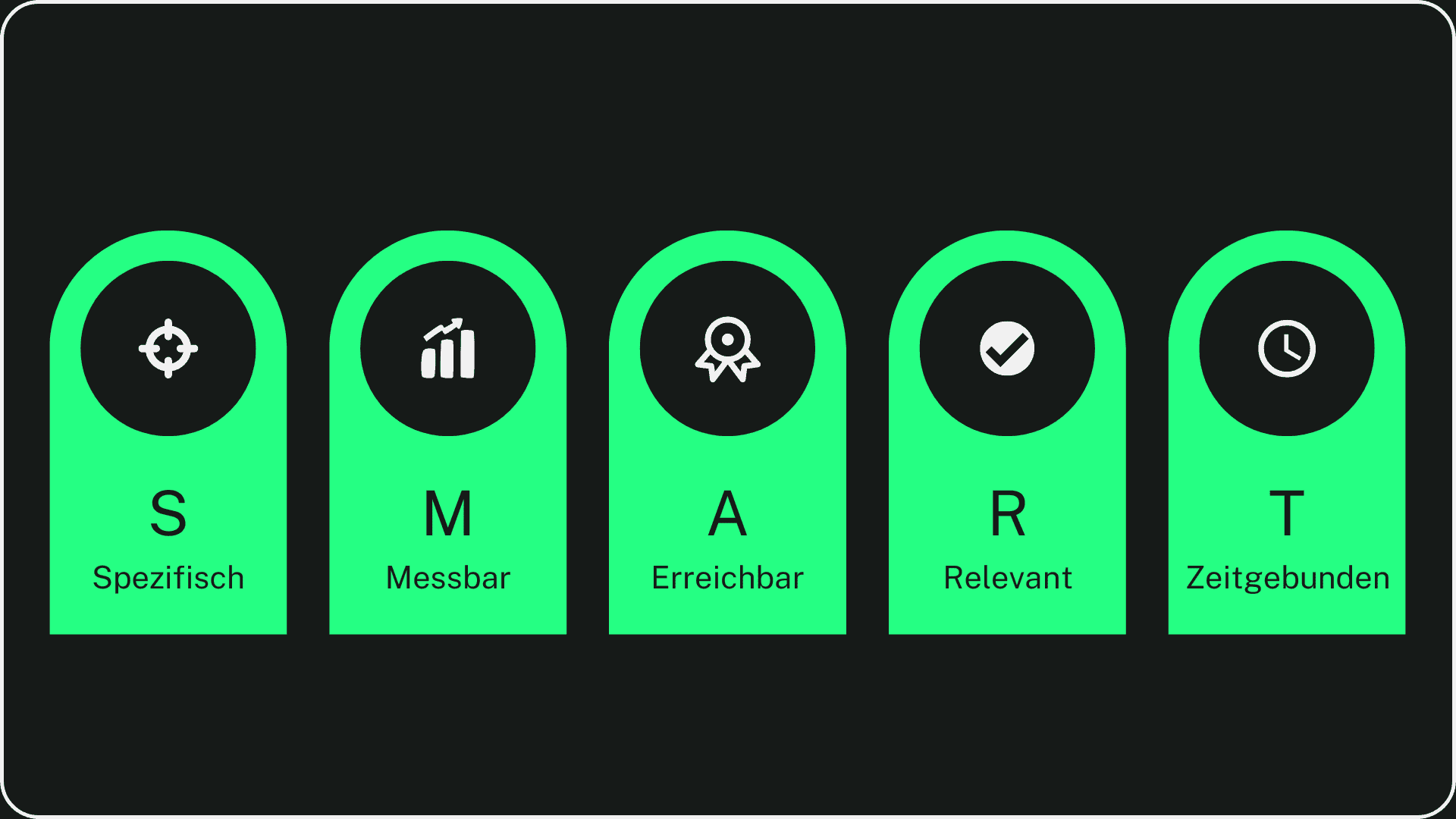
We proceed according to the SMART Framework.
SMART goals for SEO
- Specific: Goals should be clear and specific, e.g. "Increase organic traffic by 20%".
- Measurable: Key figures should be defined to measure progress.
- Achievable: The goals should be realistic and achievable.
- Relevant (Relevant): Objectives should have a direct impact on the business result.
- Time frame (time-bound): A specific time frame should be set for achieving the goal.
Competitor analysis
Understanding your competitors and their SEO strategies is crucial.
SEO is always dependent on the competitive situation.
Denn am Ende muss man in die Top-10-Suchergebnisse gelangen.
This requires a proper benchmarking process.
Here are some tips and tricks for analyzing the competition.
Analysis of competitors
- Backlink analysis: Examine the backlink profiles of your competitors to identify potential link building opportunities and measure the link gap, i.e. the difference between your link profile and the competition.
- Keyword Analysis: Find out which keywords your competitors are targeting and how they rank. The best way to do this is to use an SEO tool like Ahrefs.
- Content strategy: Analyze your competitors' content to identify content gaps or opportunities for new content on your website.
Keyword research
Keyword research is an important step in identifying relevant and targeted search terms.
If you optimize your website for the wrong keywords, you won't get any results at all.
Here are a few tools and tricks for perfecting your keyword research process.
Tools and techniques for keyword research
- Google Keyword Planner: A useful and free tool for identifying search volume and competitive strategy. Simply create an Ads account with Google and get started.
- Ahrefs and SEMrush: These tools offer comprehensive analyses and competitor research.
- AnswerThePublic: This tool helps to identify frequently asked questions and user needs. Click here for the tool.
Important SEO tools
Various tools are essential for effective search engine optimization. These tools are essential for a comprehensive online marketing strategy that encompasses both SEO and other online marketing disciplines.
Here are some of the most important ones:
Overview of keyword tools
These tools help you to analyze search volume, competition and keyword ideas.
They are the basis for any comprehensive keyword strategy.
- Google Keyword Planner
- Ahrefs Keyword Explorer
- SEMrush
Overview of analysis tools for user behavior
With targeted analysis tools, you can track visitor behavior on your website and identify potential weaknesses.
Google Analytics provides deep insights into traffic sources and user behavior, while Ahrefs enables comprehensive SEO analyses.
- Google Analytics
- Google Search Console
Overview of technical SEO tools
These tools help you to identify and fix technical SEO problems.
Screaming Frog is particularly useful for crawling and analyzing website structures, while SEMrush offers a wide range of SEO functions.
- ScreamingFrog
- Ahrefs
- SEMrush
Common SEO mistakes and how to avoid them
Even the best SEO strategies can be ruined by frequent mistakes.
Here are some of the most common mistakes and how you can avoid them:
Over-optimization and keyword stuffing
Over-optimization occurs when a text is overloaded with too many keywords, which can be considered spamming by search engines.
Keyword stuffing does more harm than good, as it impairs the readability of the text and is penalized by search engines such as Google.
Instead, keywords should be distributed naturally and sensibly in the content.
Make sure that your keywords are organically integrated into the text.
Use synonyms and related terms to make the content appear more natural.
A good balance between keyword usage and readable text is crucial.
Focus on creating high-quality and informative content that meets users' needs.
Bad backlinks
Backlinks are an important factor for search engine rankings.
However, low-quality or spam backlinks can harm your ranking.
Bad backlinks often come from dubious websites or are the result of unnatural link building strategies.
Use disavow tools to remove harmful links.
These tools help to exclude unwanted backlinks from the link profile of your website so that they are not taken into account by search engines.
Avoid buying cheap links on platforms like Fiverr or from ambivalent agencies.
Link building should always focus on quality and not just quantity.
Use natural link building strategies by creating valuable content that other websites want to link to voluntarily.
Neglect of mobile optimization
With the introduction of the mobile-first index by Google, mobile optimization has gained in importance.
Websites that are not optimized for mobile devices can suffer significant ranking losses.
Mobile optimization means that your website works smoothly on all devices - especially smartphones and tablets - and offers a good user experience.
Make sure that your website is responsive, i.e. that it automatically adapts to the screen size of the device being used.
Regularly check how your website looks and works on different mobile devices.
Make sure that loading times are short, navigation is simple and all content is easily accessible.
Tools like Google's Mobile-Friendly Test can help you check and improve the mobile optimization of your website.
SEO-KPIs und Reporting
Wichtige KPIs für SEO-Massnahmen
Organic traffic and conversion rates
- Organic traffic: Monitor the traffic that comes to your website via organic search results. Use Google Analytics to analyze traffic sources and behavior patterns.
- Conversionrates: Measure how many visitors lead to conversions (e.g. purchases, registrations) via SEO. A good conversion rate is an indicator of the effectiveness of your SEO strategy.
Bounce rate and dwell time
- Bounce rate: Shows how many users leave the website after visiting a page. A high bounce rate can be a sign that the content is not relevant or appealing.
- Dwell time: The average time users spend on your website. A longer dwell time indicates that the content is valuable and appealing. But beware, a longer dwell time is not always automatically better. Depending on the search term or search intention, a long dwell time can even indicate poor quality content. For certain search terms, the user wants an answer as quickly as possible (without having to scroll through hours of text).
Local SEO and international SEO
Local SEO is relevant for companies that want to rank in a local catchment area.
Dort im Zentrum stehen eine Google Business Optimierung und Geo Seiten, also Seiten, die auf Suchbegriffe mit einer lokalen Suchintention.
International SEO, on the other hand, is an issue for large companies and groups that operate in several countries.
International SEO in particular requires special strategies to maximize local visibility or global reach.
Special features and strategies for local SEO
Optimize Google Business (H4)
Setup and verification:
Make sure that your Google Business profile is complete and correct.
Verify your company information to increase visibility in local search queries.
You should also optimize your description, categories, titles and FAQs for those local keywords that have search volume.
Also post regularly on your Google Business profile.
Ratingsand reviews:
Encourage positive customer reviews and respond to feedback to build trust and authority.
A key ranking factor in local SEO is the number and quality of reviews.
In one of our projects, we were able to bring a fitness studio in Zurich Altstetten from no man's land to the top 3 through local SEO optimization.
As a result, the customer was able to significantly improve the utilization of her studio within a short period of time.
Special features and strategies for international SEO
hreflang tags and multilingual websites
hreflang tags: Use hreflang tags to show search engines which language versions of your website are available for different countries and languages.
Multilingual content: Ensure that the content is localized and culturally adapted for different target markets
Advanced SEO tactics
For those looking to take their SEO strategies to the next level, here are some advanced tactics:
Voice search and SEO
Importance of voice search and optimization
- Voice search trends: With the rise of voice assistants such as Siri, Alexa and Google Assistant, optimizing for voice search is becoming increasingly important.
- Long-Tail Keywords: Zielgerichtete Long-Tail-Keywords und natürlichsprachliche Phrasen, die häufig in Sprachsuchen verwendet werden. Versuche, diese Phrasen gezielt und natürlich in deine Texte einzuarbeiten, um deine Inhalte für Voice Search zu optimieren.
Artificial intelligence and SEO
Use of AI in search engine optimization
- Content creation and automation: AI tools can help to create content faster and more precisely and to automate SEO tasks. Tools such as ChatGPT or Gemini from Google are particularly suitable for this.
- Analysis and prediction: AI can analyze large amounts of data to identify patterns and make predictions about future trends.
Wenn du einem KI-Modell genug Kontext gibst, kann es dir somit auch bei der Datenauswertung im Bereich Search Engine Optimization helfen, insbesondere im Off Page-SEO-Bereich, wo regelmässig Konkurrenzanalysen durchgeführt werden.
In practice, I use AI tools for both text creation and data analysis.
The use of AI-based tools for content creation and analysis significantly increases the efficiency and accuracy of our SEO efforts.
Conclusion: Why search engine optimization is important
Long-term benefits of a good SEO strategy
A well-thought-out and implemented SEO strategy offers long-term benefits, including
- Sustainable traffic: SEO continuously generates traffic without incurring ongoing costs.
- Improved user experience: Optimizing content and technical aspects also improves the user experience.
- Competitive advantage: A solid SEO strategy can help you stand out from your competitors.
Summary of the most important points
SEO (Search Engine Optimization) is a continuous process that requires constant adjustments and improvements.
The most important points to remember:
- Understand the basics and workings of search engine optimization
- Entwickle eine durchdachte SEO-Strategie, basierend auf Zielen und KPIs
- Use the right tools and techniques for keyword research and analysis
- Avoid SEO mistakes
- Use advanced tactics where possible to maximize your SEO strategy