
Grundkonzepte des Linkbuildings verstehen
Linkbuilding, oft auch als Linkaufbau bezeichnet, ist ein zentrales Element der OffPage Suchmaschinenoptimierung.
Es zielt darauf ab, die Sichtbarkeit und das Ansehen einer Website in den Augen von Suchmaschinen zu erhöhen.
Der Schlüssel dazu liegt in der Generierung von qualitativ hochwertigen externen Links, auch Backlinks genannt, die auf die eigene Website verweisen.
Um dies besser verstehen zu können, werde ich dir drei grundlegende Fragen beantworten:
Was genau ist ein Backlink?
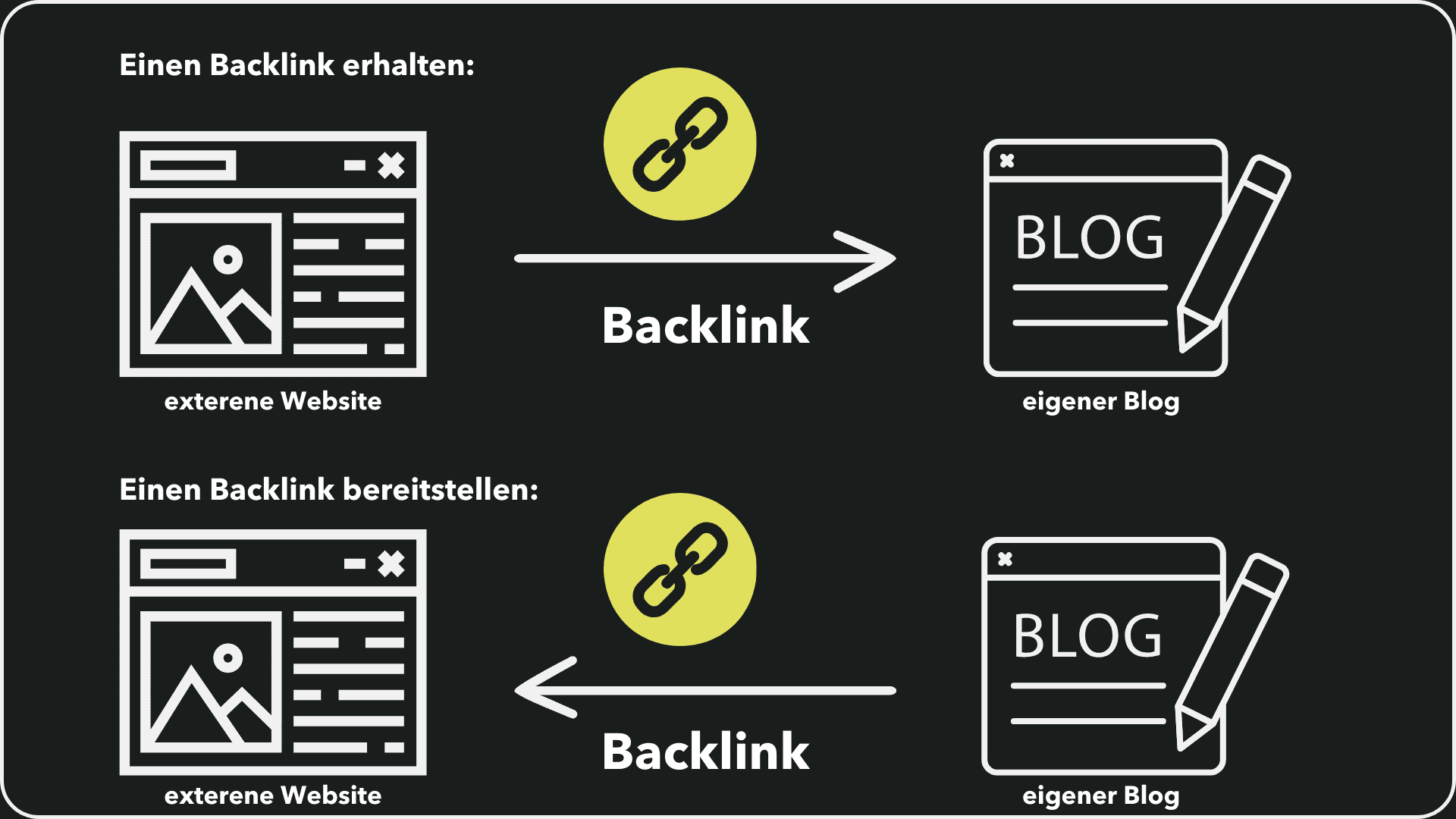
Ein Backlink, auch als Rückverweis bekannt, ist ein Link, der von einer externen Webseite auf eine andere Webseite verweist.
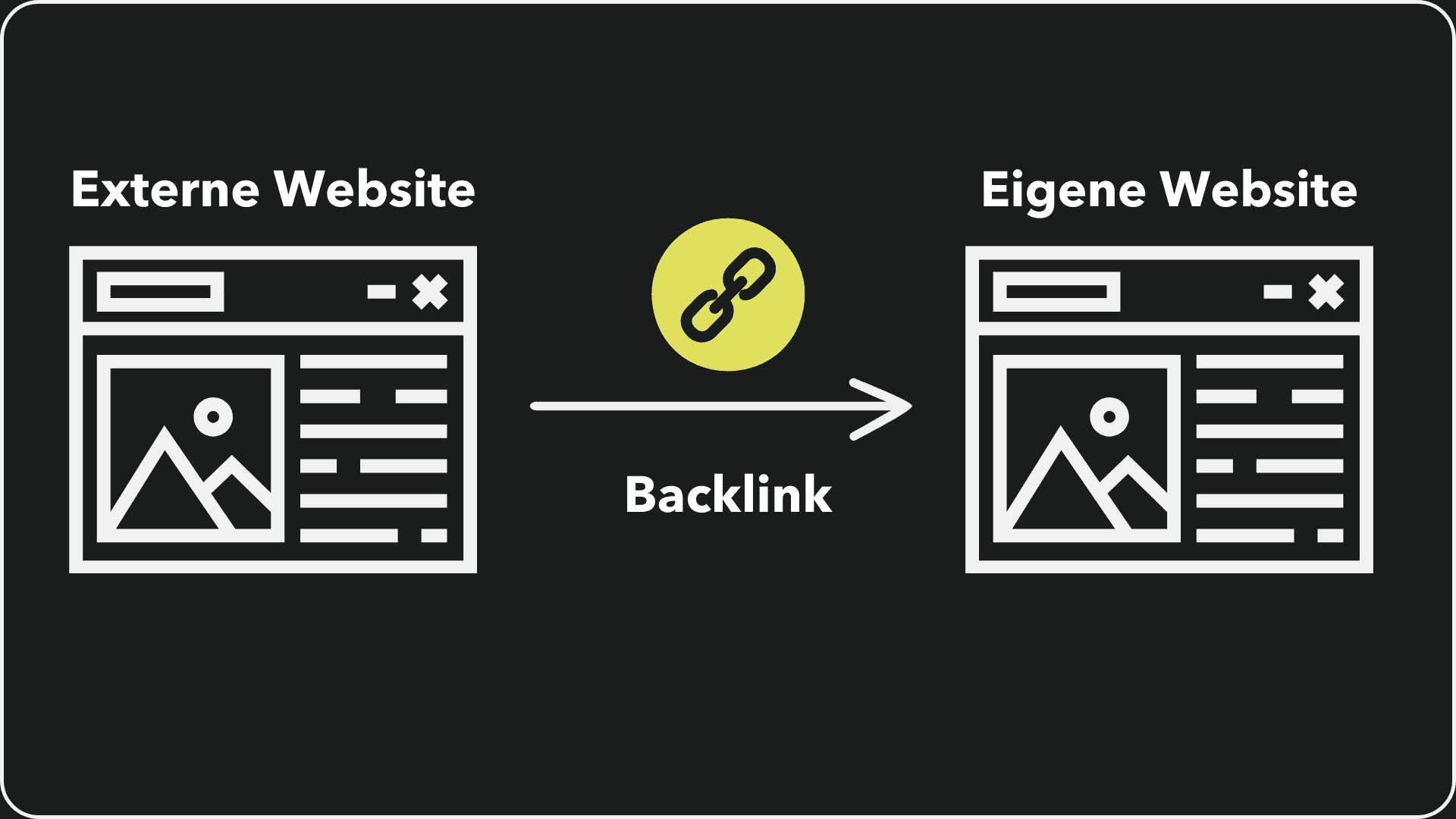
In der digitalen Welt sind Backlinks ein zentrales Element, das Suchmaschinen verwenden, um den Wert und die Relevanz einer Website zu bewerten.
Sie dienen dabei Google, Bing und anderen Suchmaschinen als Indikatoren für die Beliebtheit und Vertrauenswürdigkeit einer Webseite.
Je mehr qualitativ hochwertige Backlinks eine Seite besitzt, desto höher wird sie in den Suchmaschinenergebnissen eingestuft.
Wenn zum Beispiel jemand deine Webseite in einem Blogpost, einem Artikel oder auf einer anderen Webseite erwähnt und dabei einen Link zu deiner Seite setzt, hast du einen Backlink von dieser Quelle erhalten.
Wenn du auf eine andere Webseite verlinkst, stellst du einen Backlink für diese Seite bereit.
In der SEO-Welt werden Backlinks oft als Empfehlungen betrachtet.
Sie sind damit vergleichbar mit einem Gütesiegel im Internet.
Wenn eine vertrauenswürdige, relevante Webseite auf deine verlinkt, interpretiert Google das also als Zeichen dafür, dass deine Inhalte von Wert sind.
Sie sind demnach nicht nur Verweise, sondern auch Ausdruck von Vertrauen und Anerkennung im digitalen Raum.
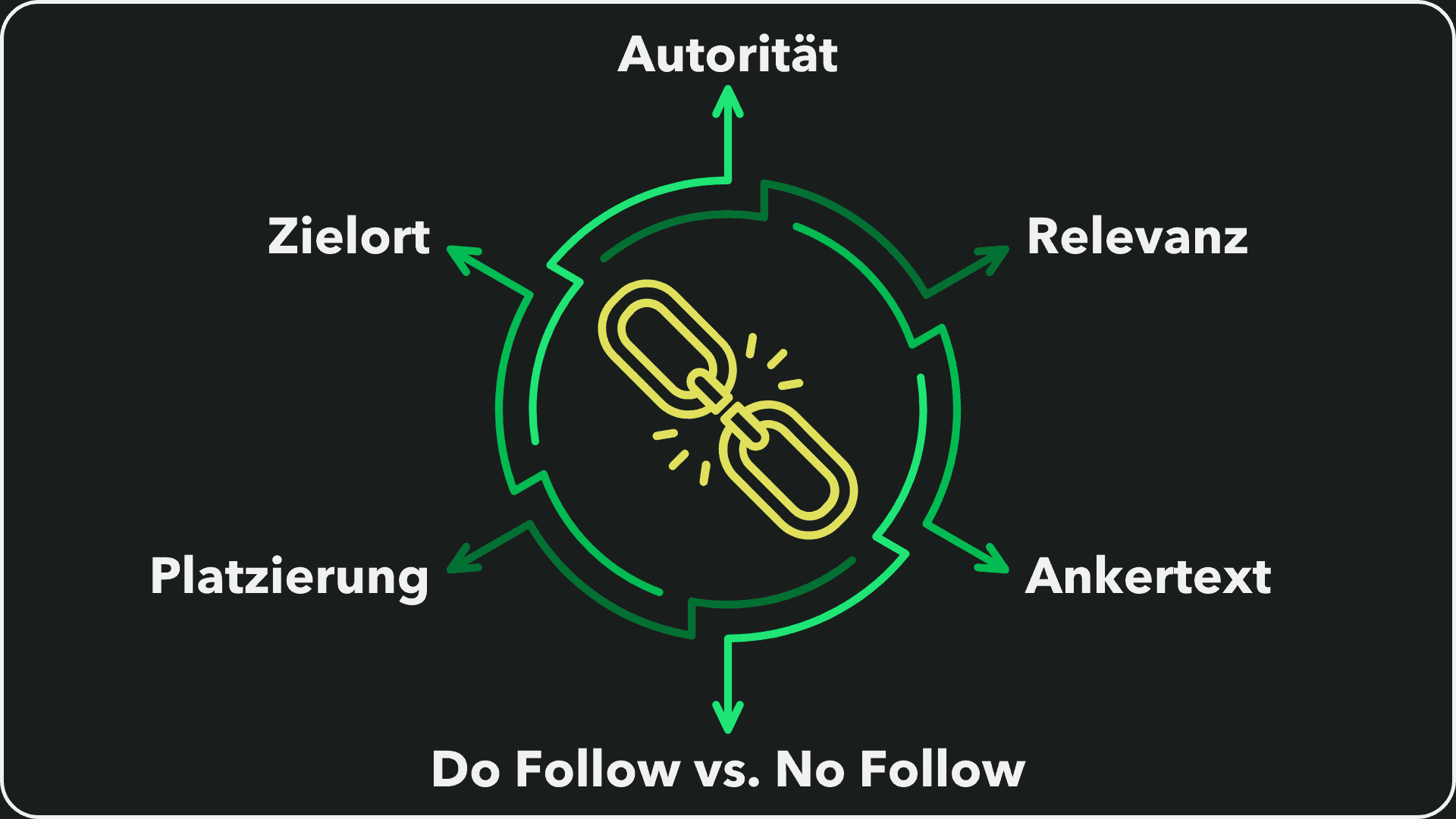
Faktoren, die Backlinks beeinflussen
Der Backlinkaufbau hängt von einer Vielzahl von Faktoren ab.
Das heisst, nicht jeder Backlink ist gut, manche richten sogar riesigen Schaden an.
Es sollten deshalb meiner Meinung nach die nun genannten Faktoren berücksichtigt werden:
1. Autorität
Jeder einzelne Link, der auf eine Website verweist, gilt als eine Form der Empfehlung.
Allerdings ist nicht jeder Link gleichwertig.
Ein Backlink von einer renommierten und autoritativen Seite wie der New York Times ist deutlich wertvoller als einer von einem weniger bekannten oder neuen Blog.
Google verwendet den PageRank-Algorithmus, um die Bedeutung und das Gewicht dieser Links zu bewerten.
Aus diesem Grund ist es entscheidend, auf die Autorität der verlinkenden Seiten zu achten und darauf hinzuarbeiten, dass Links, die auf die eigene Seite führen, von möglichst hochwertigen und anerkannten Quellen stammen.
2. Relevanz
Ein Backlink von einer thematisch ähnlichen oder relevanten Website hat einen grösseren Wert, insbesondere im Kontext der Suchmaschinenoptimierung.
Für einen Kaffee-Blog wäre also ein Link von einer anderen, auf Kaffee spezialisierten Seite wesentlich gewinnbringender als ein Link von einer Seite, die sich mit einem gänzlich anderen Thema, wie beispielsweise Finanzen, beschäftigt.
Suchmaschinen wie Google bewerten Links nach ihrer Relevanz, da sie davon ausgehen, dass eine Seite, die inhaltlich verwandte Themen behandelt, eine sinnvolle Empfehlung für die Nutzer darstellt.
Deshalb sendet ein thematisch passender Link ein stärkeres Signal für die Qualität und Relevanz einer Webseite aus, was wiederum zu einer besseren Positionierung in den Suchergebnissen führen kann.
3. Ankertext
Der Ankertext, auch Linktext genannt, ist der anklickbare Text, der auf eine andere Seite verweist.
Er spielt eine wichtige Rolle, da er Suchmaschinen wie Google wertvolle Hinweise auf den Inhalt der Zielseite gibt.
Diese Texte sind daher für die Suchmaschinenoptimierung von erheblicher Bedeutung.
Eine zu starke Optimierung, bei der immer wieder derselbe präzise Ankertext verwendet wird, kann von Suchmaschinen aber als manipulatives Verhalten gedeutet werden und möglicherweise zu einer Herabstufung in den Suchergebnissen führen.
Es ist deshalb wichtig, auf einen ausgewogenen Mix aus verschiedenen Ankertexten zurückzugreifen.
4. Nofollow vs. Follow
Google wertet üblicherweise Dofollow-Links als Empfehlungen, die die Autorität – oft auch als «Link Juice» bezeichnet – an die verlinkte Seite weitergeben.
Diese Dofollow-Links spielen eine zentrale Rolle bei der Bestimmung des Rankings einer Seite.
Allerdings sollten Nofollow-Links, die keinen direkten «Link Juice» weiterleiten, nicht unterschätzt werden, besonders wenn sie von hochkarätigen Websites wie beispielsweise Wikipedia stammen.
Solche Nofollow-Backlinks können immer noch einen positiven Effekt auf die Glaubwürdigkeit und das Vertrauen in eine Webseite haben.
Daher ist es empfehlenswert, eine ausgewogene Mischung aus Dofollow- und Nofollow-Backlinks anzustreben, um ein natürliches und vertrauenswürdiges Backlink-Profil zu etablieren.
Nur so kann man die direkten Einflüsse von Dofollow-Links als auch die indirekten Vorteile von Nofollow-Links nutzen.
5. Platzierung
Die Position eines Links auf einer Webseite ist ein wesentlicher Faktor, der nicht nur beeinflusst, wie oft er von Besuchern angeklickt wird, sondern auch seine Bedeutung aus SEO-Sicht.
Links, die prominent auf der Startseite platziert sind oder innerhalb einer Seite eine obere Position einnehmen, erhalten in der Regel mehr Aufmerksamkeit und Klicks.
Dies signalisiert Suchmaschinen, dass sie möglicherweise wichtiger sind, was sich positiv auf die Autorität der verlinkten Seite auswirken kann.
Aus SEO-Perspektive sind solche prominent platzierten Links daher oft wertvoller.
Zum Beispiel tendieren Links im Hauptinhalt einer Webseite oder in der oberen Navigation dazu, mehr Gewicht zu haben als solche, die in Fusszeilen oder Seitenleisten versteckt sind.
Ebenso können Links, die innerhalb eines relevanten und wertvollen Inhaltskontextes stehen – wie ein thematisch passender Artikel oder Blogpost – eine stärkere Wirkung haben als Links, die isoliert oder in weniger relevanten Abschnitten der Seite stehen.
Für die Optimierung einer Webseite ist es also vorteilhaft, hochwertige Backlinks zu gewinnen, die an gut sichtbaren Stellen positioniert sind.
Dadurch erhöht sich die Wahrscheinlichkeit, dass diese Links häufiger angeklickt werden, was direkten Traffic generiert und gleichzeitig indirekt zur Suchmaschinenoptimierung beiträgt, indem es die Relevanz und Autorität der eigenen Seite steigert.
6. Zielort
Backlinks können auf verschiedene Bereiche deiner Website zielen – von der Startseite über informative Inhaltsseiten bis hin zu kommerziellen Seiten, die Produkte oder Dienstleistungen präsentieren.
Es ist eine bewährte Strategie, sich auf das Sammeln von Backlinks zu informativen, content-reichen Seiten zu konzentrieren, da diese häufig natürlicher und glaubwürdiger wirken und daher eher verlinkt werden.
Sobald diese informativen Seiten an Autorität gewonnen haben, kann durch sorgfältig überlegtes internes Verlinken ein Teil dieser Autorität auf die kommerziellen Seiten übertragen werden.
Durch das Verlinken von diesen informativen Seiten auf die kommerziellen Seiten innerhalb der eigenen Domain, leitest du Besucher und gleichzeitig auch den PageRank weiter.
Dies kann die Sichtbarkeit und das Ranking der kommerziellen Seiten in den Suchmaschinen verbessern, ohne dass diese direkt eine grosse Anzahl an externen Backlinks benötigen.
Was ist die Domain Authority (DA) oder das Domain Rating (DR)?
Das Domain Authority (DA) von MOZ sowie das Domain Rating (DR) von Ahrefs sind bekannte Metriken in der Suchmaschinenoptimierung, die dazu dienen, die Autorität und das Ansehen einer Webseite im Internet zu bewerten.
Diese Metriken geben einen Wert auf einer Skala an.
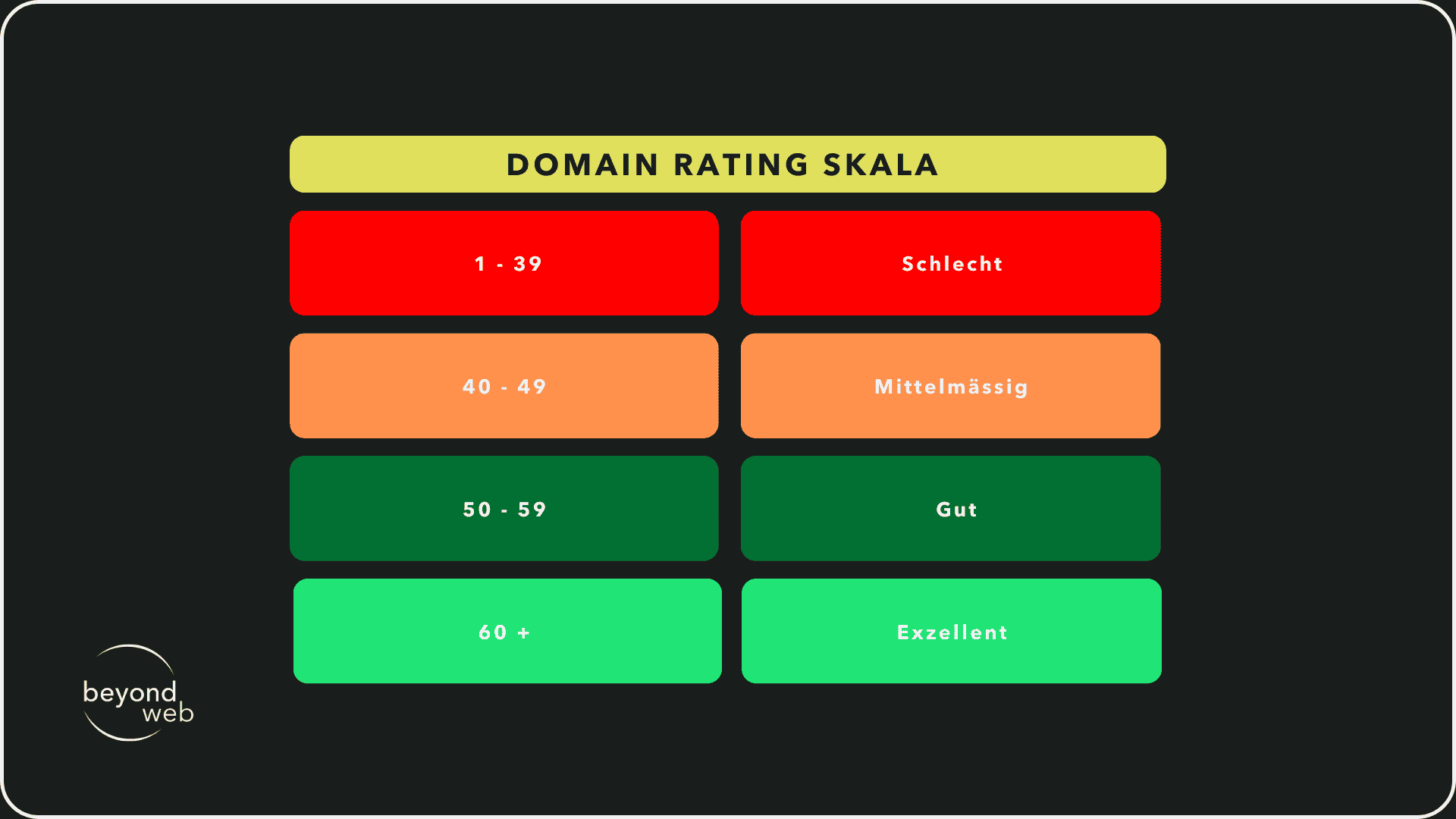
Diese Skala reicht bei beiden Metriken von 1 bis 100 und gibt einen Hinweis darauf, wie gut eine Website in den Suchmaschinenergebnissen performen kann.
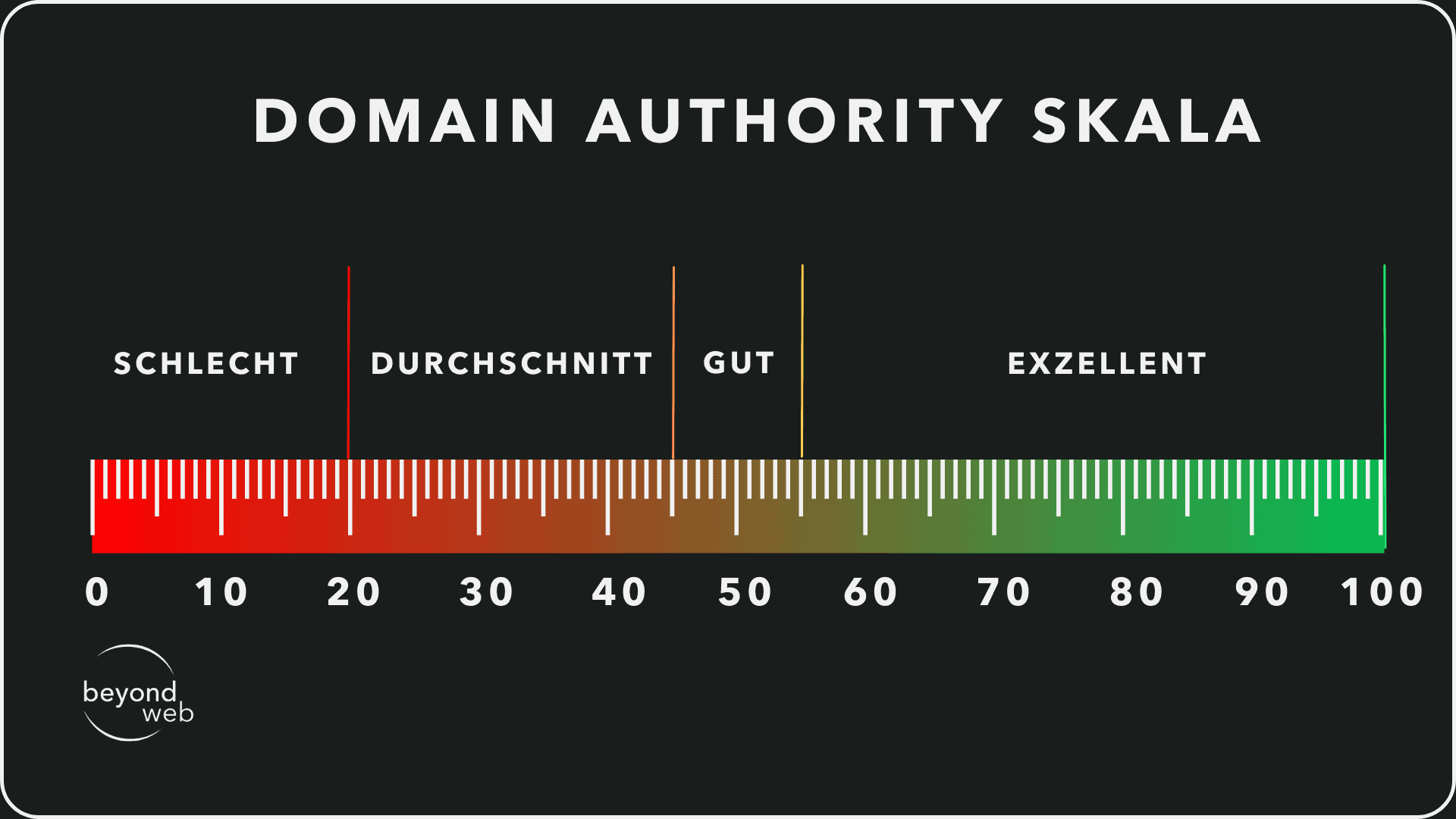
Die Bewertung von Metriken, insbesondere solchen wie dem Domain Rating (DR) oder auch der Domain Authority (DA), muss stets im Kontext betrachtet werden.
Es ist wichtig zu verstehen, dass solche Bewertungsskalen, je nach geografischem Standort, Branche oder anderen spezifischen Faktoren, variieren können.
Die Annahme, dass ein bestimmtes Rating, beispielsweise ein DR von 60+, in jedem Kontext als exzellent angesehen wird, wäre zu einfach.
Genauso mag ein DR von 1 bis 39 in manchen Kontexten als suboptimal erscheinen, doch diese Zahlen allein bieten nicht das vollständige Bild.
Denn eine Webseite mit einem DR von beispielsweise 40 kann in einer speziellen Nische oder Branche tatsächlich führend sein, da sie im Vergleich zu ihren direkten Konkurrenten ein höheres Rating hat.
In einem solchen Szenario wäre es also unangemessen, den DR von 40 als bloss «mittelmässig» zu betrachten, wenn er in Wahrheit ein Indikator für die Marktführerschaft innerhalb dieser Nische ist.
Es ist deshalb von entscheidender Bedeutung, den jeweiligen Kontext in Betracht zu ziehen und die Bewertungsskala entsprechend anzupassen.
Sowohl die Domain Authority als auch das Domain Rating werden durch eine Vielzahl von Faktoren bestimmt, einschliesslich der Anzahl und Qualität der eingehenden Backlinks, der Struktur und Qualität des Inhalts sowie der technischen SEO-Aspekte einer Webseite.
Beide Metriken stammen aber nicht von Suchmaschinen selbst, sondern wurden von Drittanbietern entwickelt, um SEO-Profis und Webseitenbetreibern eine Orientierungshilfe bei der Bewertung und Optimierung ihrer Online-Präsenz zu geben.
Obwohl DA und DR nützliche Richtwerte sind, sollten sie nicht isoliert betrachtet werden.
Warum sind Backlinks wichtig?
Ein Hauptgrund, warum Backlinks von solcher Bedeutung sind, liegt in ihrer zentralen Rolle für Suchmaschinen wie Google, Bing und Co.
Diese Suchmaschinen nutzen Algorithmen, die das Web durchforsten, um relevante Informationen zu finden.
Backlinks dienen dabei als Hinweise, die diesen Algorithmen helfen, Inhalte zu entdecken, zu kategorisieren und zu indexieren.
Backlinks haben aber auch einen direkten Einfluss auf die Suchmaschinenoptimierung (SEO).
Denn in den Augen von Suchmaschinen repräsentieren Backlinks «Vertrauensstimmen» für eine Webseite.
Eine Webseite, die von vielen anderen qualitativ hochwertigen und thematisch relevanten Seiten verlinkt wird, wird als vertrauenswürdiger und von höherer Qualität angesehen.
Dies kann zu einem verbesserten Ranking in den Suchergebnissen führen.
Darüber hinaus können Backlinks auch Traffic auf eine Webseite leiten.
Damit erhöht sich also nicht nur die Sichtbarkeit, sondern es kann auch zu potenziellen neuen Kunden oder Interessenten kommen.
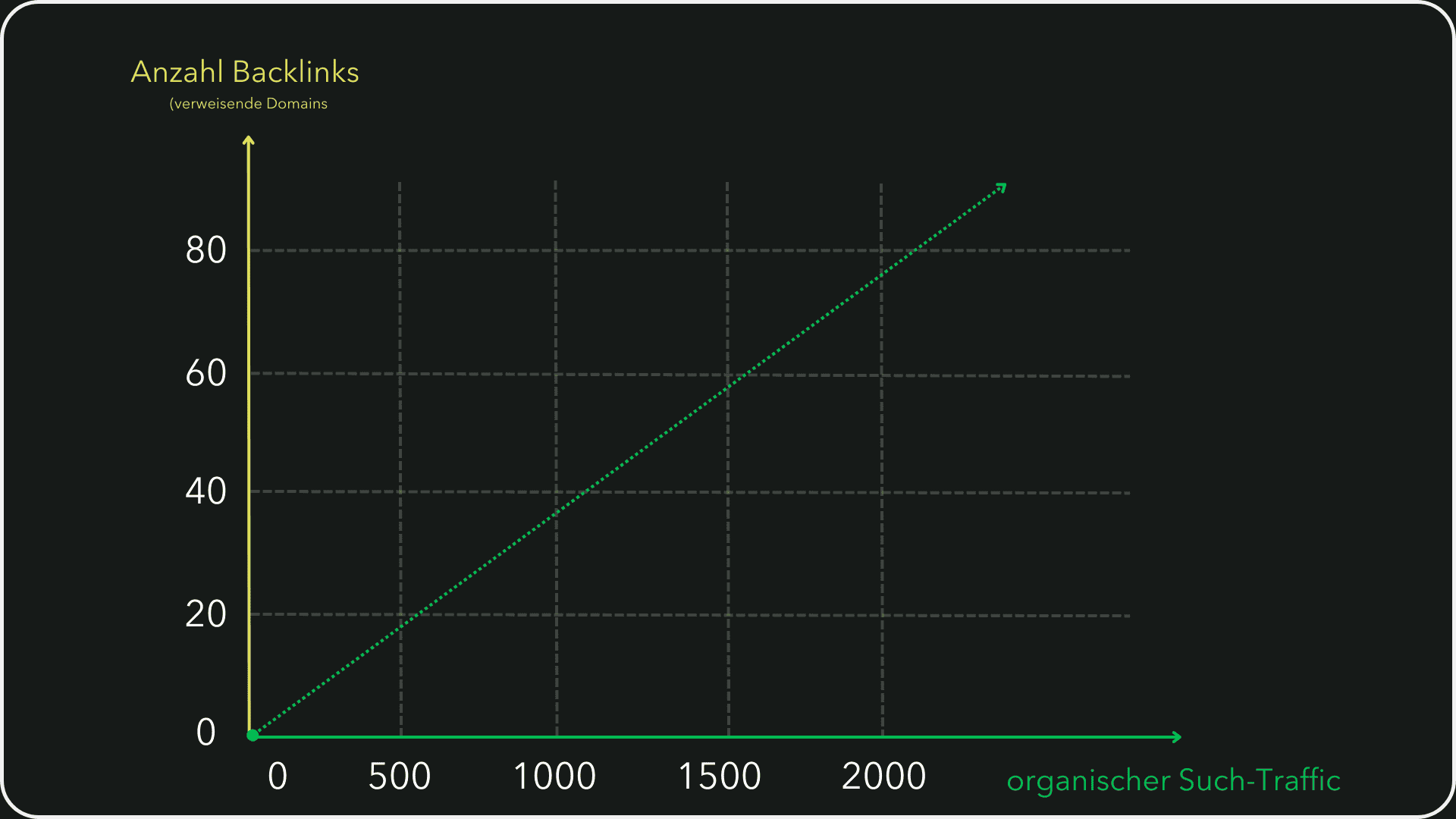
Es ist jedoch wichtig zu betonen, dass nicht alle Backlinks gleich sind.
Während qualitativ hochwertige Backlinks erhebliche Vorteile für deine Webseite bieten können, können minderwertige oder «toxische» Links negative Auswirkungen haben und sogar zu Strafen durch Suchmaschinen führen.
Was ist Linkbuilding?
Linkbuilding, häufig auch als Linkaufbau bezeichnet, ist ein zentraler Prozess innerhalb der Suchmaschinenoptimierung (SEO), speziell im Bereich der Off-Page-Optimierung.
Dabei handelt es sich um den gezielten Aufbau von externen Verlinkungen, sogenannten Backlinks, die auf die eigene Webseite verweisen.
Das übergeordnete Ziel des Linkbuildings ist es, ein robustes Netzwerk von hochwertigen und relevanten Links zu schaffen, welche die Autorität und das Vertrauen in die eigene Webseite stärken und dadurch das Ranking in den Suchmaschinenergebnissen positiv beeinflussen.
Die Methoden und Strategien des Linkaufbaus sind vielfältig und variieren in ihrer Effektivität sowie in ihrer Akzeptanz bei Suchmaschinen.
Während einige Taktiken von Suchmaschinen positiv bewertet und belohnt werden, können andere, vor allem manipulative oder unnatürliche Linkbuilding-Praktiken, zu Abstrafungen und einem Verlust im Ranking führen.
Ein hochwertiger Backlink wird aber nicht allein durch seine Existenz definiert.
Wie bereits erwähnt gibt es mehrere Faktoren, wie die Relevanz und Qualität der verlinkenden Seite, die Platzierung und der Kontext des Links sowie die Nutzerinteraktion, die die Wertigkeit eines Links bestimmen.
Das letztendliche Ziel beim Linkbuilding ist es, ein Gleichgewicht zwischen Quantität und Qualität der Backlinks zu erreichen und damit die eigene Online-Präsenz sowohl für Suchmaschinen als auch für Nutzer attraktiver zu gestalten.
Innerhalb des Linkbuilding unterscheidet man zwischen zwei Arten.
In den folgenden Abschnitten werde ich dir die Unterschiede zwischen diesen erklären:
Passives Linkbuilding
Passives Linkbuilding basiert auf dem Grundprinzip, hochwertige Inhalte, überzeugende Leistungen und ansprechende Designs bereitzustellen, die von Natur aus die Aufmerksamkeit anderer Website-Betreiber auf sich ziehen.
Beispiele hierfür wären Infografiken, Studien, Gastbeiträge, Videos und Podcasts oder auch Interviews.
Statt aktiv nach Verlinkungsmöglichkeiten zu suchen, steht hier also der Mehrwert für den Nutzer im Vordergrund.
Wenn andere Webseitenbetreiber den Wert und die Qualität der Inhalte erkennen, werden sie von sich aus Verlinkungen setzen, da sie ihren Nutzern ebenfalls diesen Mehrwert bieten möchten.
Es handelt sich hierbei um eine organische und authentische Methode, um die Online-Präsenz und das Vertrauen in die eigene Website zu stärken, was von Suchmaschinen positiv bewertet wird.
Aktives Linkbuilding
Das aktive Linkbuilding hingegen zielt, im Gegensatz zum passiven Linkbuilding, direkt auf den Aufbau von Backlinks ab, oftmals ohne den klaren Fokus auf den Mehrwert für den Endnutzer.
Es handelt sich hier um gezielte Massnahmen, bei denen der Hauptzweck die Platzierung von Links ist, um die Sichtbarkeit und das Ranking in Suchmaschinen zu verbessern.
Zu den Methoden des aktiven Linkbuildings gehören unter anderem auch der Linktausch und der Linkkauf.
Gerade bei Themen wie Linktausch und Linkkauf solltest du jedoch Vorsicht walten lassen.
Viele Suchmaschinen, insbesondere Google, sehen manipulative Linkbuilding-Strategien als Verstoss gegen ihre Richtlinien an und können Websites, die auf solche Massnahmen zurückgreifen, sanktionieren.
Daher ist es essenziell, beim aktiven Linkbuilding korrekt vorzugehen, um langfristigen Erfolg zu gewährleisten.
Do’s beim passiven Linkbuilding
Nachdem die Grundlagen des passiven Linkbuildings beleuchtet wurden, geht es nun zu den spezifischen Praktiken, die als empfehlenswerte Massnahmen – sogenannte Do’s – im passiven Linkbuilding gelten.
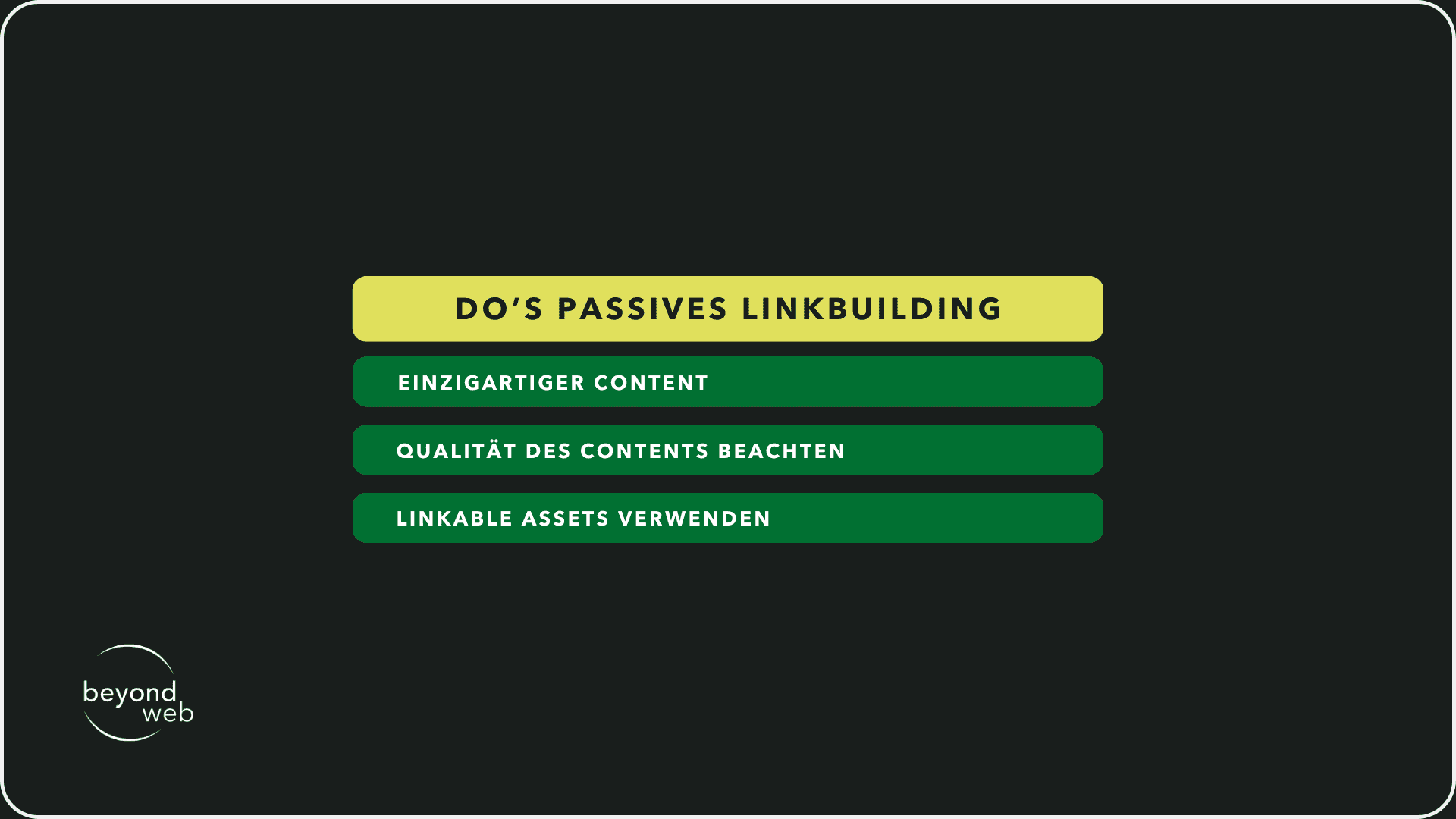
Es handelt sich dabei um effektive Strategien, die dazu beitragen, auf natürliche Weise hochwertige Backlinks zu generieren.
Im Folgenden werde ich diese positiven Ansätze im Detail beleuchten:
Einzigartiger Content
In der heutigen digitalen Landschaft, in der Milliarden von Inhalten täglich erstellt werden, ist einzigartiger Content wichtig, um aus der Informationsflut herauszustechen.
Einzigartige und originelle Inhalte, die nirgendwo anders zu finden sind, ziehen dabei nicht nur die Aufmerksamkeit der Nutzer auf sich, sondern auch die von anderen Website-Betreibern, Journalisten und Influencern.
Dadurch wird dein Content als referenzwürdige Quelle wahrgenommen, was die Chancen erhöht, dass andere darauf verlinken und deine Arbeit anerkennen.
Dementsprechend fördert einzigartiger Content nicht nur das persönliche oder Markenimage, sondern zieht auch qualitativ hochwertige Backlinks an, was wiederum deine SEO-Bemühungen unterstützt.
Qualität des Contents beachten
In der digitalen Ära sind Informationen überall und jederzeit verfügbar, was es für Website-Betreiber und Content-Ersteller umso wichtiger macht, nicht nur Einzigartigkeit, sondern vor allem Qualität zu gewährleisten.
Qualitativ hochwertiger Content unterscheidet sich dabei durch mehrere Merkmale:
1. Tiefgehende Recherche
Grundlegende Informationen bieten viele.
Aber Inhalte, die auf sorgfältiger und umfassender Recherche basieren, bieten dem Leser einen echten Mehrwert.
Sie liefern nicht nur Fakten, sondern auch Kontext, Hintergrundinformationen und fundierte Analysen.
2. Verständliche Sprache
Selbst das komplexeste Thema kann und sollte in einer Sprache präsentiert werden, die für die Zielgruppe verständlich ist.
Dies stellt sicher, dass die Botschaft effektiv vermittelt wird und der Content für ein breiteres Publikum zugänglich ist.
3. Visuelle Darstellung
Ein Bild sagt mehr als tausend Worte.
Gut gestaltete Grafiken, Diagramme oder Videos können komplizierte Sachverhalte einfacher erklären und den Content ansprechender und verständlicher machen.
4. Aktualität
Der Content sollte immer aktuell und relevant sein.
Dies bedeutet nicht nur, dass veraltete Informationen regelmässig aktualisiert werden sollten, sondern auch, dass auf aktuelle Trends und Entwicklungen eingegangen wird.
5. Interaktivität
Inhalte, die den Nutzer einbinden, wie interaktive Grafiken, können die Verweildauer erhöhen und die Nutzerbindung stärken.
Insgesamt sind gut recherchierte, gut geschriebene und gut präsentierte Inhalte für die Nutzer wertvoller und werden eher geteilt und verlinkt.
Ein Content von hoher Qualität wird dementsprechend nicht nur die Sichtbarkeit und Glaubwürdigkeit einer Webseite oder Marke erhöhen, sondern kann auch dazu beitragen, eine treue und engagierte Community aufzubauen.
Linkable Assets verwenden (z.B. Infografiken)
Linkable Assets sind spezielle Inhalte, die in der Regel einen so hohen Wert oder eine solche Einzigartigkeit aufweisen, dass andere Websites sie gerne verlinken möchten.
Sie fungieren quasi als «Magnete» in der Welt des Linkbuildings und können erheblich zur Steigerung der Backlink-Zahl und somit zur Verbesserung des Suchmaschinenrankings beitragen.
Infografiken sind ein perfektes Beispiel für solche Assets.
Du fragst dich sicherlich, warum?
Ich erkläre es dir: Infografiken kombinieren Text, Design und Daten in einer übersichtlichen und leicht verständlichen Form.
Wenn diese Infografiken dann noch ein aktuelles Thema oder eine komplexe Fragestellung aufgreifen und dieses anschaulich darstellen, werden sie schnell zur Referenzquelle für viele andere Webseiten.
Zwar ist die Erstellung solcher Inhalte zeitaufwendig und manchmal kostenintensiv, aber die langfristigen Vorteile in Form von Backlinks, erhöhter Sichtbarkeit und Anerkennung in der Branche rechtfertigen diese Investitionen.
Don’ts beim passiven Linkbuilding
Neben den empfehlenswerten Massnahmen für passives Linkbuilding gibt es auch Praktiken –sogenannte Don’ts – die schädlich sein können und von Suchmaschinen negativ bewertet werden.
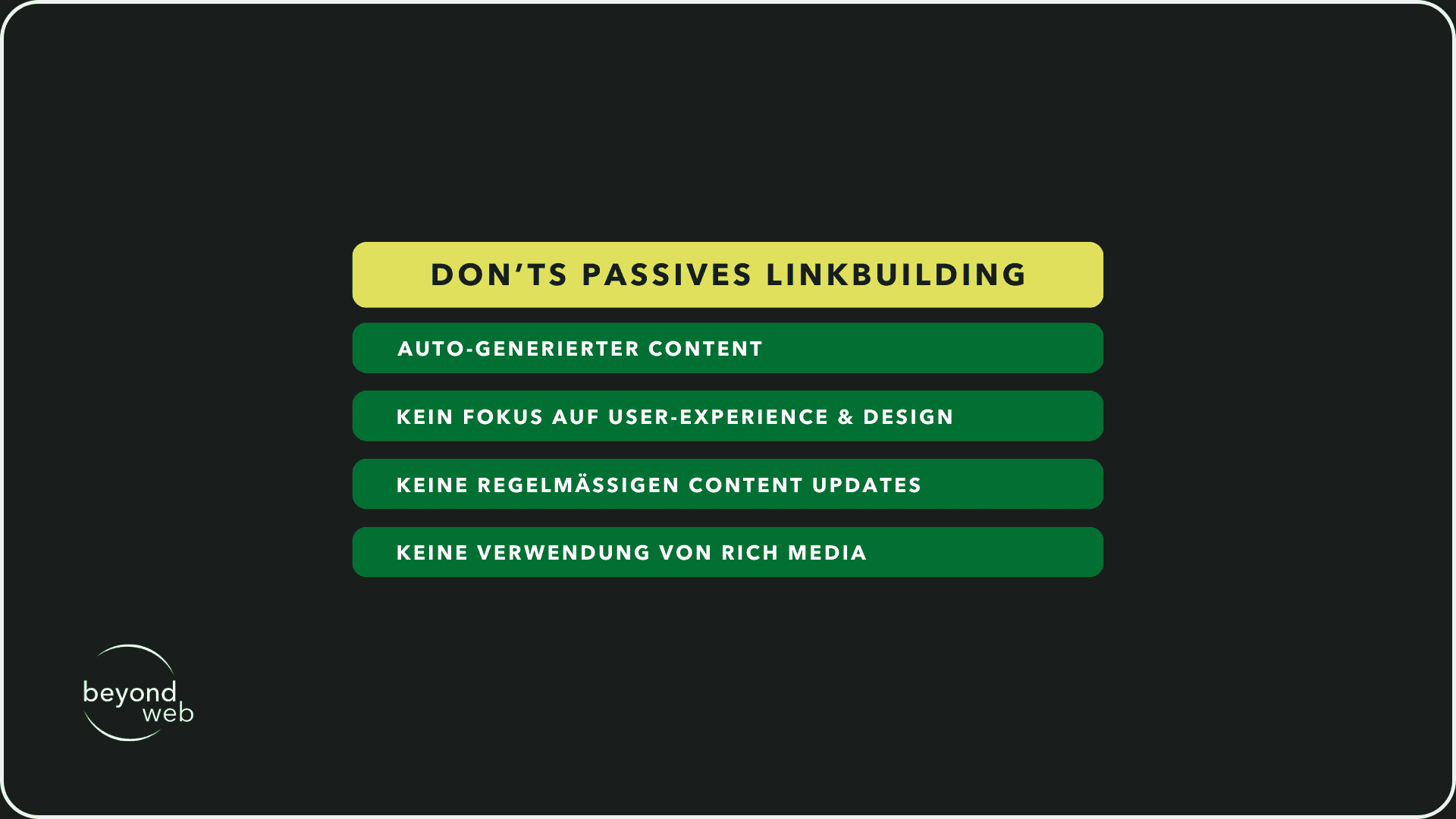
Auf diese Don’ts werde ich in den nächsten Abschnitten eingehen und sie genauer erklären:
Auto-generierter Content (ChatGPT)
In der digitalen Landschaft gibt es immer wieder Innovationen, und ChatGPT sowie andere Auto-Generierungstechnologien repräsentieren einen beeindruckenden Fortschritt in der KI-gesteuerten Content-Erstellung.
Aber wie bei allen Werkzeugen gibt es auch hier sowohl Vorteile als auch Nachteile.
Einer der Hauptvorteile von Technologien wie ChatGPT ist die Fähigkeit, in kurzer Zeit grosse Mengen an Inhalten zu produzieren.
Für bestimmte Anwendungen, wie etwa FAQ-Bereiche oder generische Antworten in einem Kundenservice-Chatbot, kann dies besonders nützlich sein.
Auto-generierter Content fehlt aber oft die menschliche Perspektive, der emotionale Kontext und die tiefe Expertise, die ein menschlicher Autor in einen Artikel, Blogpost oder jede andere Form von Content einbringen kann.
Automatisierte Inhalte können zudem repetitiv, generisch oder nicht ganz auf den Punkt sein, was die Qualität und Relevanz des Contents beeinträchtigt.
Ein weiterer Punkt ist die Sichtweise von Suchmaschinen gegenüber Chat GPT.
Google und andere Suchmaschinen priorisieren qualitativ hochwertigen, originalen und für den Benutzer wertvollen Content.
Ein Übermass an automatisch generierten Inhalten kann als Versuch wahrgenommen werden, das System «auszutricksen» und schnelle SEO-Gewinne zu erzielen, ohne echten Mehrwert zu bieten.
Das kann zu Sanktionen führen und die Sichtbarkeit einer Website beeinträchtigen.
Zusätzlich zur Suchmaschinenoptimierung kann der Ruf und das Ansehen einer Marke oder Website leiden, wenn Besucher erkennen, dass der Grossteil der Inhalte maschinell und ohne menschlichen Einfluss erstellt wurde.
Obwohl also Technologien wie ChatGPT beeindruckende Fähigkeiten bieten, sollten sie meiner Meinung nach am besten in Kombination mit menschlichen Autoren und Redakteuren eingesetzt werden.
Kein Fokus auf User-Experience & Design
Neben der Erstellung von qualitativ hochwertigem Content muss auch darauf geachtet werden, dass die Inhalte in einem ansprechenden und benutzerfreundlichen Format präsentiert werden.
Denn die User-Experience (UX) und das Design einer Website spielen eine entscheidende Rolle bei der Entscheidung eines Besuchers, ob er bleibt, interagiert oder letztlich den Content weiterempfiehlt.
Eine schlecht gestaltete Website, die eine frustrierende Nutzererfahrung bietet, kann dazu führen, dass Besucher abspringen, bevor sie überhaupt die Chance hatten, sich mit dem bereitgestellten Content auseinanderzusetzen.
Lange Ladezeiten, unübersichtliche Menüführung oder nicht mobile-optimierte Seiten können hierbei als abschreckend empfunden werden.
Zusätzlich kann ein veraltetes oder unprofessionelles Design das Vertrauen in die Glaubwürdigkeit und Professionalität einer Website untergraben.
Erste Eindrücke zählen und oft hat man nur Sekunden, um einen positiven Eindruck zu hinterlassen.
Ein ansprechendes, modernes Design kann demnach die Wahrscheinlichkeit erhöhen, dass Besucher länger auf der Seite verweilen, mehr Inhalte konsumieren und diese schliesslich in ihren eigenen Netzwerken teilen.
Keine regelmässigen Content Updates
Um in den Suchmaschinenrankings oben zu bleiben und das Vertrauen der Nutzer zu gewinnen, ist es unerlässlich, regelmässige Content-Updates durchzuführen.
Websites, die keine regelmässigen Content Updates durchführen und damit «veralteten» Content bereitstellen, beeinträchtigen damit nicht nur die Glaubwürdigkeit deiner Website, sondern beeinflussen auch deine Positionierung in den Suchergebnissen negativ.
Suchmaschinen wie Google bevorzugen aktuelle und relevante Inhalte, da diese den Nutzern einen höheren Mehrwert bieten.
Websites, die ihren Content also regelmässig aktualisieren, signalisieren Suchmaschinen, dass sie aktiv sind und den Nutzern kontinuierlich frische und relevante Informationen bieten.
Zudem kann die regelmässige Aktualisierung von Inhalten dazu beitragen, die Besucherrücklaufquote zu erhöhen.
Nutzer werden motiviert, wiederzukommen, wenn sie wissen, dass sie immer wieder neue oder aktualisierte Informationen auf der Website finden.
Das regelmässige Hinzufügen oder Überarbeiten von Content kann auch neue Möglichkeiten bieten, Keywords zu integrieren oder auf aktuelle Trends und Entwicklungen einzugehen, was wiederum die Sichtbarkeit in den Suchmaschinen erhöhen kann.
Keine Verwendung von Rich Media
Heutzutage spielt Rich Media eine zentrale Rolle bei der Bereitstellung eines tieferen und ansprechenderen Nutzererlebnisses.
Rich Media, zu denen Videos, interaktive Diagramme, Animationen, Slideshows und andere multimediale Inhalte gehören, bieten eine dynamische Möglichkeit, Informationen zu präsentieren und die Nutzerbindung zu erhöhen.
Wenn du Rich Media nicht in die Webstrategie integrierst, verpasst du nicht nur die Chance, komplexe Themen auf verständliche und ansprechende Weise darzustellen, sondern auch, deine Marke in einem wettbewerbsintensiven Umfeld zu differenzieren.
Denn multimediale Inhalte haben das Potenzial, Informationen lebendiger und verständlicher zu erzählen.
Ein weiterer Vorteil der Integration von Rich Media ist die Erhöhung der Verweildauer der Nutzer auf deiner Seite.
Beispielsweise kann ein gut produziertes Video die Nutzer dazu anregen, länger auf deiner Website zu verweilen, was wiederum positive Signale an Suchmaschinen sendet und deine SEO-Performance verbessern kann.
Längere Verweilzeiten können auch zu höheren Konversionsraten führen, da die Nutzer mehr Zeit haben, sich mit deinem Content zu beschäftigen und eine Verbindung zu deiner Marke herzustellen.
Darüber hinaus sind multimediale Inhalte oft eher teilbar und können virales Potenzial haben.
Ein einzigartiges, informatives und unterhaltsames Video oder eine interaktive Grafik wird viel eher in sozialen Medien geteilt als ein reiner Textbeitrag.
Dies kann zu einem Anstieg des organischen Traffics führen und neue Möglichkeiten für Backlinks schaffen, da andere Websites und Blogs möglicherweise auf deinen nützlichen Content verlinken möchten.
Do’s beim aktiven Linkbuilding
Neben dem passiven Linkbuilding hast du auch die Grundlagen für aktives Linkbuilding kennengelernt.
Auch beim aktiven Linkbuilding gibt es Massnahmen – sogenannte Do’s – die von Suchmaschinen positiv bewertet werden und die Reichweite von Webseiten nachhaltig verbessern.
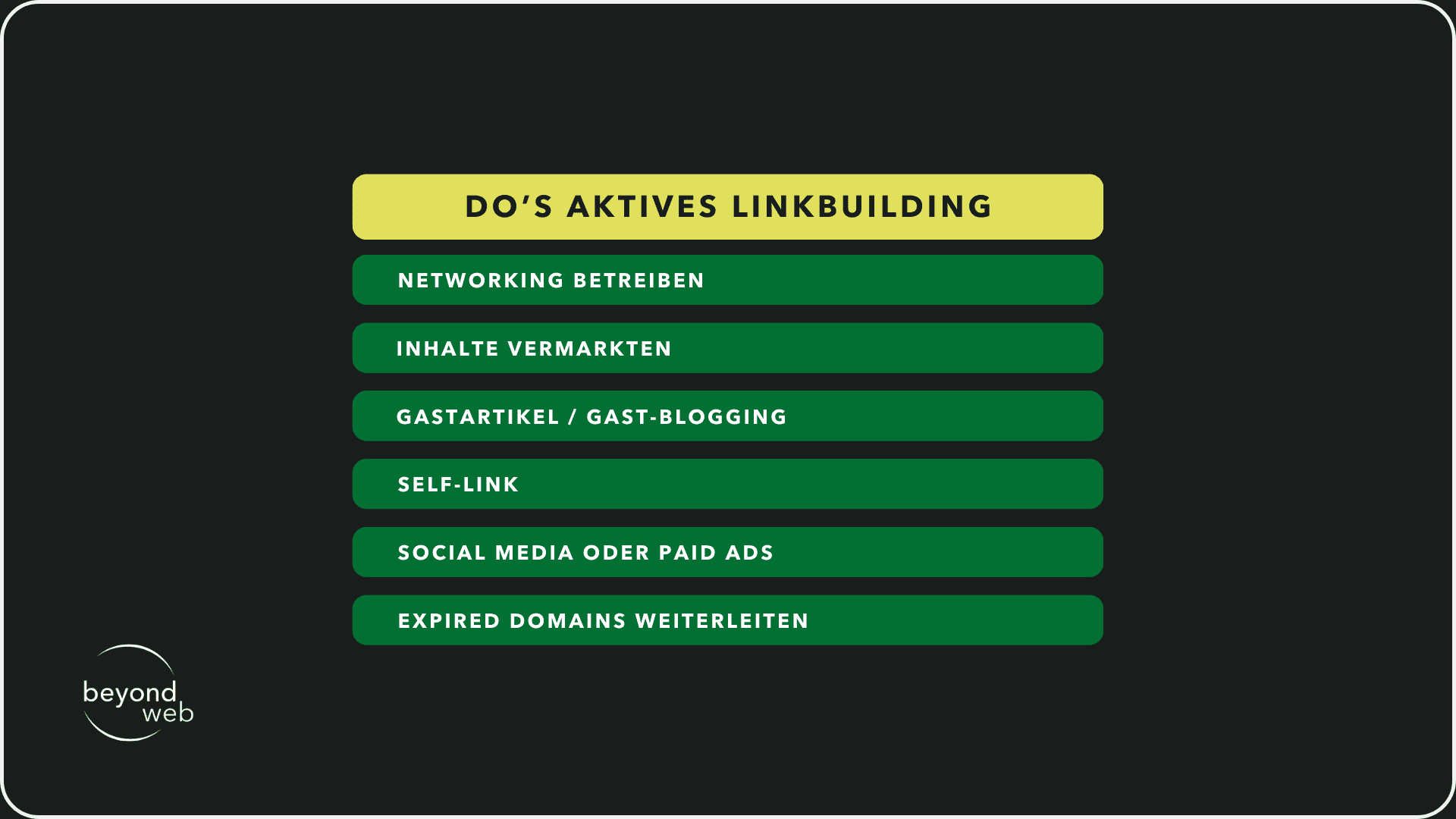
Auf diese Massnahmen werde ich in den nächsten Abschnitten genauer eingehen:
Networking betreiben
Das Betreiben von Networking und dementsprechend das Aufbauen und Pflegen von professionellen Beziehungen zu anderen Akteuren in deiner Branche oder Nische, können den Unterschied ausmachen, wenn es darum geht, Sichtbarkeit und Anerkennung für deine Inhalte und Angebote zu erhalten.
Networking kann auf verschiedene Weisen stattfinden.
Dies reicht von der Teilnahme an Online-Foren, Webinaren und Branchenkonferenzen bis hin zur Beteiligung an sozialen Netzwerken, in denen Fachleute und Interessierte diskutieren und Wissen teilen.
Durch solche Interaktionen kannst du dein Fachwissen demonstrieren, Fragen beantworten und wertvolle Einblicke in deine Branche bieten.
Im Gegenzug könnten andere Fachleute deinen Inhalt als Referenz verwenden und auf deine Website verlinken.
Es geht beim Networking aber nicht nur darum, Beziehungen für den Moment aufzubauen, sondern vielmehr um den Aufbau langfristiger Partnerschaften.
Ein vertrauensvoller Umgang und der Austausch von Gefälligkeiten, wie das Teilen von Artikeln oder das gegenseitige Vorstellen auf eigenen Plattformen, können einer Win-Win-Situation für beide Parteien führen.
Wenn dein Content beispielsweise von einem etablierten Blogger oder Influencer geteilt wird, erhöht dies nicht nur deinen Traffic, sondern kann auch deine Glaubwürdigkeit in deiner Branche steigern.
Inhalte vermarkten
Um sicherzustellen, dass deine Inhalte auch die gewünschte Zielgruppe erreichen, ist eine durchdachte Vermarktungsstrategie unerlässlich.
Die Konkurrenz um die Aufmerksamkeit der Nutzer ist gross, und selbst der beste Content kann im Meer der Online-Informationen untergehen, wenn er nicht aktiv beworben wird.
Die Vermarktung von Inhalten beginnt dabei oft schon vor der eigentlichen Veröffentlichung.
Durch eine gezielte Keyword-Recherche und Suchmaschinenoptimierung (SEO) kannst du sicherstellen, dass deine Inhalte in den Suchergebnissen prominent platziert werden.
Doch SEO allein reicht nicht aus.
Es ist ebenso wichtig, den Content aktiv in den sozialen Medien, in Foren und auf anderen relevanten Plattformen zu teilen.
Neben dem organischen Teilen von Inhalten kann auch bezahlte Werbung in Betracht gezogen werden, insbesondere wenn es darum geht, eine spezifische Zielgruppe oder Nische anzusprechen.
Plattformen wie Google Ads oder Facebook Advertising bieten detaillierte Targeting-Optionen, die es ermöglichen, genau die Nutzer anzusprechen, für die der Inhalt am relevantesten ist.
Gastartikel / Gast-Blogging
Gastblogging ist eine der effektivsten Strategien, um die eigene Online-Präsenz zu stärken und gleichzeitig eine breitere Zielgruppe zu erreichen.
Indem man Artikel für etablierte Blogs und Websites schreibt, kann man sich als Experte in seinem Fachgebiet positionieren und gleichzeitig das Vertrauen des jeweiligen Publikums gewinnen.
Ein klarer Vorteil des Gastblogging ist zudem die Möglichkeit, eine neue und oft grössere Leserschaft zu erreichen.
Ein gut geschriebener und informativer Gastartikel kann demnach dazu beitragen, dass diese Leser den Weg zu deiner Website finden und möglicherweise zu regelmässigen Besuchern werden.
Darüber hinaus bietet das Gastblogging die Gelegenheit, Beziehungen zu anderen Bloggern und Influencern in der Branche aufzubauen.
Diese Netzwerkchancen können sich langfristig als wertvoll erweisen, sei es in Form von zukünftigen Kollaborationen, Empfehlungen oder einfach als Unterstützung innerhalb der Community.
Bei der Auswahl von Websites oder Blogs für Gastartikel sollte man jedoch sorgfältig vorgehen.
Es ist wichtig, Plattformen zu wählen, die einen guten Ruf haben, qualitativ hochwertige Inhalte bieten und eine Zielgruppe haben, die mit der eigenen übereinstimmt.
Ein Gastartikel auf einer nicht relevanten oder unseriösen Website kann mehr Schaden anrichten als Nutzen.
Self-Link
Die Kunst der internen Verlinkung, oft als Self-Link bezeichnet, spielt eine wesentliche Rolle bei der Optimierung einer Website, sowohl für Suchmaschinen als auch für Besucher.
Während externe Backlinks oft den Schwerpunkt im Linkbuilding haben, sollte die Kraft der internen Verlinkung nicht unterschätzt werden.
Ein effektives System interner Verlinkungen kann die gesamte Struktur einer Website stärken und den Suchmaschinen dabei helfen, die Beziehungen und Hierarchien zwischen verschiedenen Seiten und Inhalten besser zu verstehen.
Dies kann insbesondere bei umfangreichen Websites mit einer grossen Anzahl von Unterseiten von Vorteil sein.
Self-Links können auch dazu beitragen, dass wichtige Seiten, wie zum Beispiel diejenigen, die ein Produkt oder einen Service vorstellen, mehr Traffic und somit mehr Interaktionen erhalten.
Durch das Setzen von internen Links von hoch frequentierten oder hochwertigen Seiten zu diesen Ziel-Seiten können Besucher effektiv dorthin geleitet werden, wo sie am meisten benötigt werden.
Darüber hinaus profitieren die Nutzer direkt von einer gut durchdachten internen Verlinkungsstrategie.
Wenn sie verwandte oder weiterführende Informationen zu einem bestimmten Thema suchen, können interne Links dabei helfen, schnell und einfach zu diesen Informationen zu gelangen, ohne die Website verlassen zu müssen.
Dies kann die Verweildauer auf der Website erhöhen und die Absprungrate verringern.
Es ist jedoch trotzdem wichtig, bei der Implementierung von Self-Links auf übermässige oder erzwungene interne Verlinkungen zu verzichten.
Diese können kontraproduktiv sein und sogar als Spam betrachtet werden.
Aufmerksamkeit über Social Media oder Paid Ads erzeugen
Präsenz auf Social Media ist nicht nur wünschenswert, sondern nahezu unerlässlich, um eine breite Zielgruppe zu erreichen.
Gleichzeitig bieten bezahlte Werbeanzeigen, auch bekannt als Paid Ads, gezielte Möglichkeiten, genau das richtige Publikum anzusprechen und den eigenen Content effektiv zu bewerben.
Durch die strategische Nutzung von Social Media können Marken und Unternehmen nicht nur mit ihrer Zielgruppe in direkten Kontakt treten, sondern auch eine Community aufbauen.
Ein viraler Post oder ein besonders interessanter Beitrag kann so in kürzester Zeit tausende von Aufrufen generieren.
Solche Peaks in der Aufmerksamkeit können Journalisten, Blogger und andere Content-Ersteller aufmerksam machen, die sich entscheiden, auf den Content zu verlinken, wodurch organische Backlinks generiert werden.
Bezahlte Werbung hingegen bietet eine gezielte Herangehensweise.
Durch sorgfältig ausgewählte Keywords, demografische Merkmale oder Interessen kann der Content genau den Personen präsentiert werden, für die er am relevantesten ist.
Wenn beispielsweise ein Artikel für eine bestimmte Branche geschrieben wurde, kann er durch Paid Ads genau den Fachleuten und Entscheidungsträgern dieser Branche vorgestellt werden.
Ein solch zielgerichteter Ansatz kann die Chancen erhöhen, dass der Content nicht nur wahrgenommen, sondern auch als wertvoll erachtet und somit verlinkt wird.
Es ist jedoch wichtig zu beachten, dass sowohl Social Media als auch Paid Ads nicht als Ersatz, sondern als Ergänzung zu anderen Linkbuilding-Strategien betrachtet werden sollten.
Expired Domains weiterleiten
Das Nutzen von Expired Domains, also abgelaufenen Domains, kann sehr sinnvoll sein.
Das liegt daran, dass diese Domains bereits in der Vergangenheit existiert haben und meist über ein beachtliches Backlinkprofil verfügen.
Erwirbt man also eine solche Domain, kann man von ihrem bestehenden Linkkapital profitieren.
Denn statt von Grund auf neue Backlinks aufzubauen, kann man die vorhandenen Links nutzen und so die eigene Online-Präsenz stärken.
Don’ts beim aktiven Linkbuilding
Neben den positiven Massnahmen des aktiven Linkbuilding gibt es auch hier Strategien und Massnahmen, die einen negativen Einfluss auf die Reichweite von Websiten in Suchmaschinen wie beispielsweise Google haben.
Man spricht hier wieder von sogenannten Don’ts.
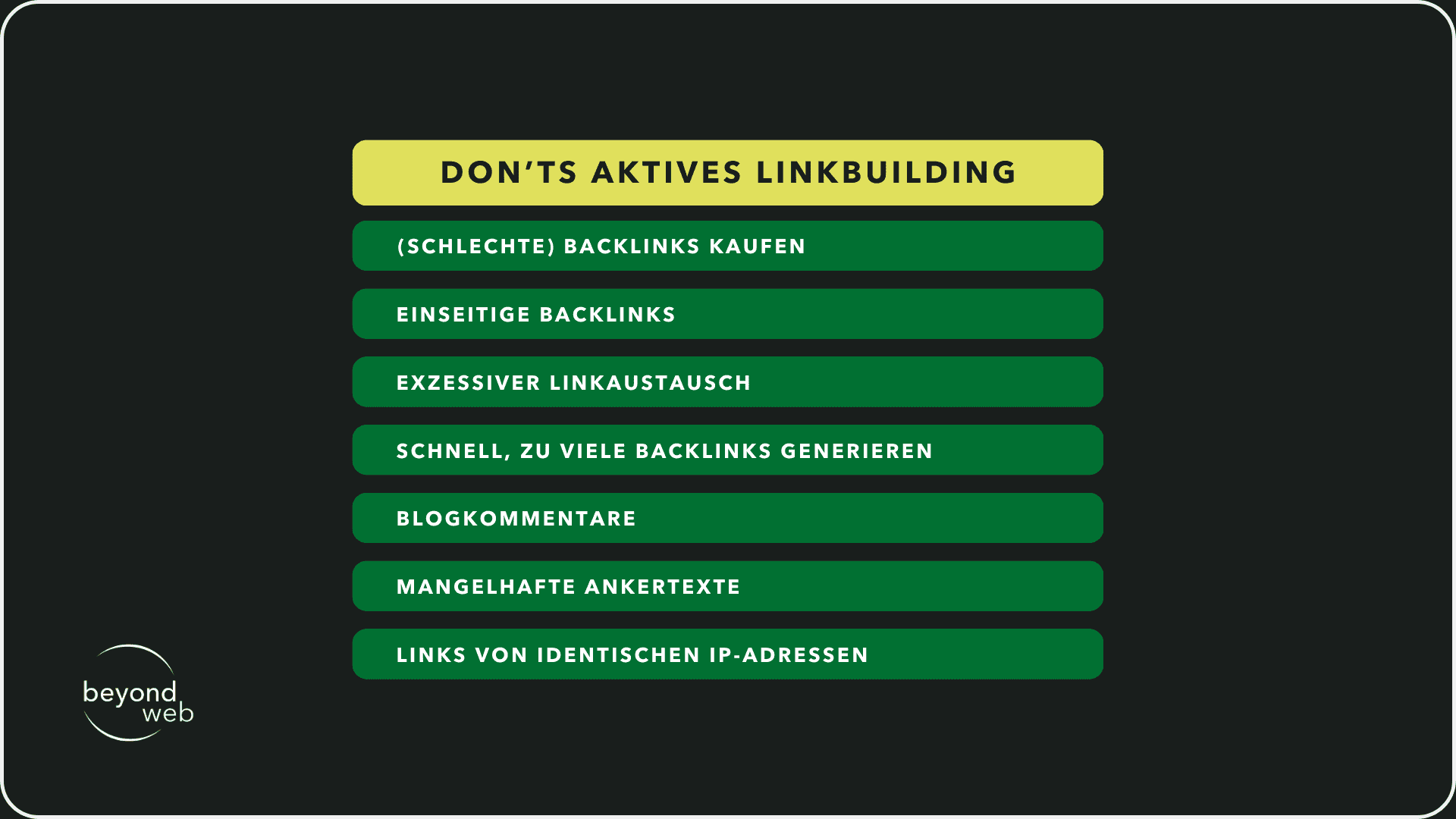
Damit du einen Überblick darüber hast, welche Strategien du vermeiden solltest, habe ich dir die wichtigsten in den folgenden Abschnitten aufgeführt und erklärt:
(Schlechte) Backlinks kaufen
Das Kaufen von Backlinks mag auf den ersten Blick als schneller und einfacher Weg erscheinen, um die Sichtbarkeit und das Ranking einer Website in den Suchmaschinen zu erhöhen.
Allerdings sind die Risiken, die mit dieser Praxis einhergehen, erheblich und können letztlich weit mehr schaden als nützen.
Suchmaschinen wie Google haben in den letzten Jahren ihre Algorithmen stetig verfeinert, um Websites zu erkennen, die versuchen, das System durch den Kauf von Backlinks zu manipulieren.
Solche inauthentischen Linkaufbau-Methoden widersprechen den Webmaster-Richtlinien von Google.
Wird eine Website erwischt, kann dies zu einer Abstrafung oder sogar zur kompletten Entfernung aus dem Suchindex führen.
Anstatt Ressourcen in den Kauf von Backlinks zu investieren, ist es deshalb weitaus sinnvoller, in qualitativ hochwertigen Content und organische Linkaufbau-Strategien zu investieren.
Einseitige Backlinks
Wenn eine Website hauptsächlich einseitige Backlinks aufweist, das heisst Links, die überwiegend von einer bestimmten Art von Website, einem bestimmten Themenbereich oder gar einer einzelnen Domain stammen, dann kann dies für Suchmaschinen wie Google ein Warnsignal sein.
Ein solches Muster kann darauf hinweisen, dass die Backlinks nicht organisch, sondern möglicherweise manipuliert wurden.
Es ist daher ratsam, beim Linkaufbau eine Strategie zu verfolgen, die auf eine breite Palette von Quellen und Linktypen abzielt.
Es geht nicht nur darum, möglichst viele Links zu sammeln, sondern vielmehr darum, ein natürliches und vielfältiges Linkprofil aufzubauen, das der Website langfristigen Erfolg bringt.
Exzessiver Linkaustausch
Der Linkaustausch ist eine Methode, bei der zwei Websites miteinander vereinbaren, sich gegenseitig zu verlinken.
Dies wurde oft als Strategie eingesetzt, um das Linkprofil einer Website zu verbessern.
Aber wie bei vielen Dingen im Leben gilt auch hier: Zu viel des Guten kann schädlich sein.
Aber warum ist das so?
1. Suchmaschinen-Algorithmen
Moderne Suchmaschinen-Algorithmen sind darauf ausgelegt, unnatürliche Linkmuster zu erkennen.
Ein exzessiver Linkaustausch, insbesondere wenn er in kurzer Zeit erfolgt, kann solch ein Muster darstellen und als Versuch gewertet werden, das System zu manipulieren.
2. Relevanz und Qualität
Ein Link von einer hochwertigen, thematisch relevanten Seite kann sehr wertvoll sein.
Aber Links, die nur zum Zweck des Austauschs erstellt wurden, ohne Rücksicht auf den Kontext oder die Qualität der verlinkenden Seite, können wenig bis keinen Wert haben oder sogar schädlich sein.
3. Glaubwürdigkeit
Wenn Besucher bemerken, dass eine Seite zahlreiche nicht relevante oder geringwertige Links enthält, kann dies ihr Vertrauen in die Website und ihren Inhalt mindern.
Linkaustausch kann demnach in einem kleinen und durchdachten Rahmen eine legitime Strategie sein.
Von exzessivem Linkaustausch ist jedoch abzuraten, da er mehr Schaden verursacht, als dass er einen positiven Einfluss hat.
Schnell, zu viele Backlinks generieren
Im Streben nach einer besseren Suchmaschinenplatzierung machen manche den Fehler, in kürzester Zeit eine grosse Anzahl von Backlinks zu generieren.
Dies kann durch den Kauf von Links, den Beitritt zu Linknetzwerken oder andere nicht empfohlene Taktiken geschehen.
Ein überstürztes Sammeln von Backlinks kann aber problematisch sein.
Einerseits, weil man dadurch unnatürliche Linkmuster generiert, andererseits weil die Reputation und die Glaubwürdigkeit einer Website durch das Generieren von zu vielen Backlinks abnimmt.
Viel sinnvoller ist es deshalb, auf Qualität anstatt auf Quantität zu setzen.
Ein nachhaltiger Linkaufbau basiert dabei auf der Schaffung von wertvollen Inhalten, die auch andere natürlich verlinken möchten.
Dadurch kann das Vertrauen der Benutzer, aber vor allem auch das Vertrauen gegenüber Suchmaschinen wie Google verbessert werden.
Blogkommentare
Ursprünglich dienten Blogkommentare als Mittel, um Gedanken auszutauschen, Fragen zu stellen und eine Diskussion zu einem bestimmten Thema zu fördern.
In der Vergangenheit haben jedoch viele dieses Werkzeug missbraucht, um Links zu platzieren und so ihr Ranking zu verbessern.
Ein qualitativ hochwertiger Kommentar sollte in meinen Augen immer einen echten Mehrwert bieten.
Ein flüchtiges «Toller Beitrag!» zählt dazu nicht und kann mittlerweile sogar abwertend wirken.
Es ist deshalb weitaus sinnvoller, sich die Zeit zu nehmen, den Beitrag wirklich zu lesen und einen durchdachten Kommentar zu hinterlassen, der auf den Inhalt eingeht.
Ein weiterer wichtiger Aspekt ist die Vermeidung von generischen oder manipulativen Links in den Kommentaren.
Viele moderne Blogs setzen externe Links in den Kommentaren automatisch auf «nofollow», was bedeutet, dass sie keinen direkten Einfluss auf das Suchmaschinenranking haben.
Doch selbst wenn dies nicht der Fall ist, sollte die Hauptmotivation hinter einem Kommentar die Kommunikation und nicht der Linkaufbau sein.
Ein gut formulierter Kommentar kann der Beginn einer Diskussion sein, die zu weiteren Zusammenarbeiten oder Gastblogging-Möglichkeiten führen kann.
Blogkommentare können also, wenn sie richtig eingesetzt werden, ein wertvolles Werkzeug für Kommunikation, Netzwerkbildung und Markenbildung sein.
Es ist aber wichtig, den Fokus auf Authentizität und echte Diskussionen zu legen, anstatt sie als blosses Mittel zum Zweck des Linkaufbaus zu betrachten.
Mangelhafte Ankertexte
Der Ankertext – bekannt als das sichtbare und klickbare Wort – ist von entscheidender Bedeutung.
Er gibt nicht nur den Nutzern, sondern auch den Suchmaschinen eine Vorstellung davon, was sich hinter einem Link verbirgt.
Ein gut durchdachter und relevanter Ankertext kann also sowohl das Benutzererlebnis verbessern als auch positive SEO-Signale senden.
Jedoch ist es eine gängige Praxis in manchen SEO-Kreisen geworden, Ankertexte zu überoptimieren, indem sie mit Keywords überladen werden.
Dies in der Hoffnung, dadurch das Ranking für bestimmte Begriffe zu verbessern.
Suchmaschinen wie Google sind mittlerweile aber sehr gut darin, unnatürliche oder künstliche Optimierungstechniken zu erkennen.
Ein Übermass an keyword-reichen Ankertexten kann daher als versuchte Manipulation wahrgenommen werden, was zu Ranking-Strafen führen kann.
Neben der Überoptimierung ist es aber auch problematisch, nicht relevante Ankertexte zu verwenden.
Wenn beispielsweise der Ankertext «Webdesign» zu einer Seite über Autoreparaturen führt, wird dies den Nutzer verwirren, und auch Suchmaschinen können dies als negatives Signal interpretieren.
Der Fokus sollte deshalb auf die Schaffung von natürlich wirkenden und thematisch relevanten Ankertexten gelegt werden.
Ein ausgewogenes Verhältnis von verschiedenen Arten von Ankertexten kann ausserdem dabei helfen, ein vielfältiges und natürliches Linkprofil aufzubauen.
Links von identischen IP-Adressen
Wenn eine ungewöhnlich hohe Anzahl von Backlinks von Websites stammt, die dieselbe IP-Adresse teilen, kann dies von Suchmaschinen negativ aufgenommen werden.
Die Logik dahinter ist einfach:
Suchmaschinen wie Google streben danach, den Nutzern die relevantesten und vertrauenswürdigsten Informationen zu liefern.
Wenn viele Links von derselben IP-Adresse kommen, könnte dies darauf hindeuten, dass jemand versucht, das System durch die Erstellung von Netzwerken künstlich erstellter Websites zu manipulieren, um das Ranking zu beeinflussen.
Dies ist in den Augen von Suchmaschinen nicht nur unnatürlich, sondern auch irreführend.
Darüber hinaus vermittelt ein solches Vorgehen, dass der Content nicht ausreichend wertvoll oder relevant genug ist, um organische Backlinks von einer Vielzahl von Quellen zu erhalten.
Es sollte deshalb darauf geachtet werden, dass die Links von verschiedenen Websites mit verschiedenen IP-Adressen stammen, um das Linkprofil so natürlich wie möglich zu halten.
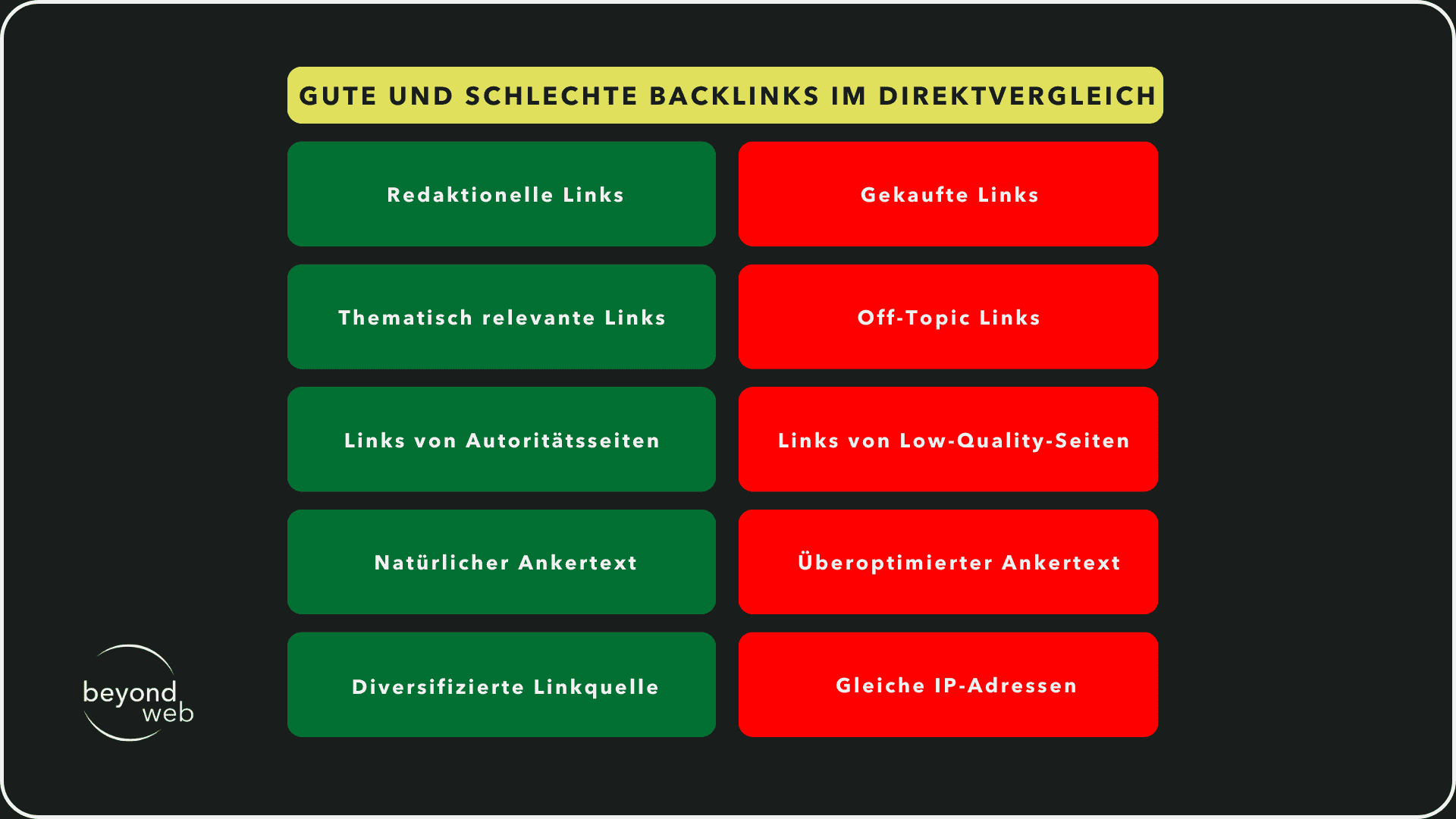
5 Beispiele – gute und schlechte Backlinks im Direktvergleich
Backlinks sind ein essentieller Faktor für die Suchmaschinenoptimierung und können massgeblich beeinflussen, wie eine Website in den Suchergebnissen gerankt wird.
Aber nicht alle Backlinks sind gleichwertig.
Es ist wichtig zu verstehen, welche Links als wertvoll und welche als schädlich angesehen werden.
Ich gebe dir nun Direktvergleiche von guten und schlechten Backlinks anhand von fünf Beispielen:
1. Redaktionelle Links vs. Gekaufte Links
Gut
Redaktionelle Links sind solche, die beispielsweise von Journalisten oder Bloggern freiwillig gesetzt werden, weil sie den Inhalt als wertvoll oder relevant für ihre Leser betrachten.
Dies sind hoch geschätzte Backlinks, da sie organisch und aufgrund der Qualität des Inhalts erworben werden.
Schlecht
Gekaufte Links hingegen werden nur gegen Bezahlung gesetzt.
Sie können oft leicht von Suchmaschinen identifiziert werden, da sie unnatürlich erscheinen und teilweise nicht thematisch zum Linkziel passen.
Solche Links können zu Abstrafungen führen.
2. Thematisch relevante Links vs. Off-Topic Links
Gut
Thematisch relevante Links kommen von Websites, die sich auf ein ähnliches Thema spezialisieren oder in einem verwandten Bereich tätig sind.
Solche Links zeigen, dass Experten in einem Bereich den Inhalt als wertvoll erachten.
Schlecht
Off-Topic Links haben keine thematische Relevanz zur verlinkten Seite.
Sie wirken oft zufällig und können das Signal senden, dass der Link nicht natürlich, sondern manipulativ gesetzt wurde.
3. Links von Autoritätsseiten vs. Links von Low-Quality-Seiten
Gut
Backlinks von Autoritätsseiten (Seiten mit hoher Domain Authority) werden als besonders wertvoll betrachtet.
Sie strahlen Vertrauen und Glaubwürdigkeit aus und können einen erheblichen Boost geben.
Schlecht
Backlinks von Low-Quality-Seiten, die dünnen Inhalt haben, mit Anzeigen überflutet sind oder für Spam bekannt sind, können schädlich sein und die Glaubwürdigkeit einer Seite beeinträchtigen.
4. Natürlicher Ankertext vs. Überoptimierter Ankertext
Gut
Ein natürlicher Ankertext beschreibt in der Regel den Inhalt der verlinkten Seite auf unaufdringliche Weise und ohne die ständige Wiederholung von Keywords.
Schlecht
Ein überoptimierter Ankertext wiederholt bestimmte Keywords unnatürlich oft und wirkt erzwungen.
Dies kann ein Indikator für manipulatives Linkbuilding sein.
5. Diversifizierte Linkquellen vs. Gleiche IP-Adressen
Gut
Backlinks, die von einer Vielzahl von verschiedenen Domains und IP-Adressen stammen, zeigen, dass eine Website breite Anerkennung und Vertrauen in verschiedenen Bereichen des Internets geniesst.
Schlecht
Eine Überzahl an Links von Websites mit gleichen IP-Adressen kann darauf hinweisen, dass die Backlinks künstlich erstellt wurden, z. B. durch ein Netzwerk von eigenen Websites.
Solche Taktiken können von Suchmaschinen als manipulativ betrachtet werden.
Die folgende Grafik illustriert noch einmal die fünf genannten Beispiele im Direktvergleich:
Welche Linkbuilding-Strategien führen zu mehr Backlinks?
Innerhalb des Linkbuildings gibt es verschiedene Strategien, die angewendet werden können, um zu mehr Backlinks zu gelangen.
Die für mich wichtigsten werde ich dir nun genauer erklären:
Links von der Konkurrenz “stehlen”
Die Idee, Links von der Konkurrenz «zu stehlen», bezieht sich auf das Nachahmen und Verbessern von Linkbuilding-Strategien der Konkurrenten.
Indem du untersuchst, wo deine Konkurrenten ihre Backlinks herhaben, kannst du potenzielle Linkquellen identifizieren.
Der Schlüssel hierbei ist, besseren oder relevanteren Content anzubieten, sodass die gleichen Plattformen vielleicht auch auf deine Inhalte verlinken möchten.
Tools wie Ahrefs oder SEMrush können genutzt werden, um die Backlink-Profile der Konkurrenten zu durchforsten und potenzielle Linkquellen zu identifizieren.
Backlinks von Partnerfirmen, Lieferanten oder Kunden erhalten
Firmen, mit denen du regelmässig Geschäfte machst – sei es als Lieferant, Kunde oder Partner – sind potenzielle Backlinkquellen.
Verlinkungen auf deren Website, welche auf deine Website führen, sind eine natürliche Methode, um Backlinks zu generieren, und tragen zu einem besseren Ranking bei.
Allerdings entstehen solche Verlinkungen nicht immer von selbst.
In vielen Fällen ist es erforderlich, dass du proaktiv auf die Firmen, Lieferanten, Kunden oder auch Partner zugehst, um eine Verlinkung zu initiieren.
Das Ziel sollte es sein, die andere Partei von dem gegenseitigen Nutzen einer solchen Verlinkung zu überzeugen.
Ich gebe dir nun ein E-Mail-Template, das du als Grundlage verwenden kannst, um Partnerunternehmen auf eine potenzielle Verlinkung anzusprechen:
Hallo [Name]
Ich hoffe, es geht dir/Ihnen gut.
Ich wollte mich bei dir/Ihnen erkundigen, ob du/Sie Interesse an einem Linkaustausch zwischen unseren beiden Websites hättest/hätten.
Ein Linkaustausch könnte uns beiden helfen, ein besseres Google-Ranking in den Suchergebnissen zu erzielen und dadurch mehr Besucher auf der Website zu erlangen.
Falls du/Sie Interesse hast/haben, wäre hier mein Vorschlag für das weitere Vorgehen:
1. Wir geben uns gegenseitig die Seite an, die wir verlinkt haben möchten.
2. Wir geben uns gegenseitig den Link-Text (Ankertext), den wir gerne verwenden möchten.
3. Wir platzieren den Link auf einer unserer Unterseiten. Wir werden dich unter [URL einfügen] verlinken.
Lass mich wissen, ob du daran interessiert bist / Lassen Sie mich wissen, ob Sie daran interessiert sind.
Falls du/Sie weitere Fragen oder Anmerkungen hast/haben, stehe ich dir/Ihnen gerne zur Verfügung.
Ich freue mich, von dir/zu hören!
Freundliche Grüsse,
[Dein Name]
Dieses Template ist natürlich nur ein Vorschlag und sollte individuell auf die spezifische Geschäftsbeziehung und den jeweiligen Kontext angepasst werden.
Internationaler Linkaustausch (in Massen)
Ein internationaler Linkaustausch kann helfen, deine Online-Präsenz in verschiedenen Ländern und Sprachregionen auszubauen.
Das bietet sich vor allem deshalb an, weil es über die Landesgrenzen hinweg wenig bis kaum direkte Konkurrenz gibt.
Dadurch erhöhen sich die Chancen auf eine erfolgreiche Verlinkung.
Zugleich bieten internationale Verlinkungen das Potenzial Synergien zu schaffen, von denen alle Beteiligten profitieren.
Backlinks der Konkurrenz ausfindig machen, die du nicht hast
Mit Tools wie SEMrush oder Ahrefs kannst du nicht nur sehen, wo deine Konkurrenten Links haben, sondern auch, welche Links dir fehlen.
Dies gibt dir eine klare Übersicht, welche Seiten oder Plattformen du ansprechen solltest.
Finde heraus, welche hochwertigen Backlinks deine Konkurrenten haben und welche Strategien sie verwenden, und pass diese an deine eigenen Bedürfnisse an.
Eigenen Podcast launchen
Ein eigener Podcast kann nicht nur deine Marke stärken und dein Publikum erweitern, sondern auch eine wertvolle Quelle für Backlinks sein.
Jede Podcast-Episode bietet die Möglichkeit, auf deiner Website Transkripte oder begleitende Blogposts zu veröffentlichen.
Gäste deines Podcasts werden wahrscheinlicher auf diese verlinken, was zu weiteren natürlichen Backlinks führt.
Darüber hinaus kannst du deinen Podcast auf Plattformen wie Apple Podcasts, Spotify und anderen hosten, die zusätzliche Backlink-Möglichkeiten bieten.
Häufig gestellte Fragen rund ums Thema Linkbuilding
Abschliessend werde ich in diesem Abschnitt die häufigsten Fragen rund um das Thema Linkbuilding beantworten.
Soll ich mit aktivem oder passivem Linkbuilding beginnen?
Die Frage, ob man mit aktivem oder passivem Linkbuilding beginnen sollte, hängt von verschiedenen Faktoren ab, einschliesslich der Art des Geschäfts, der verfügbaren Ressourcen, der Ziele und der aktuellen Position im Web.
Ich zeige dir deshalb noch einmal die Vor- und Nachteile der beiden Strategien auf und gebe dir eine anschliessende Empfehlung:
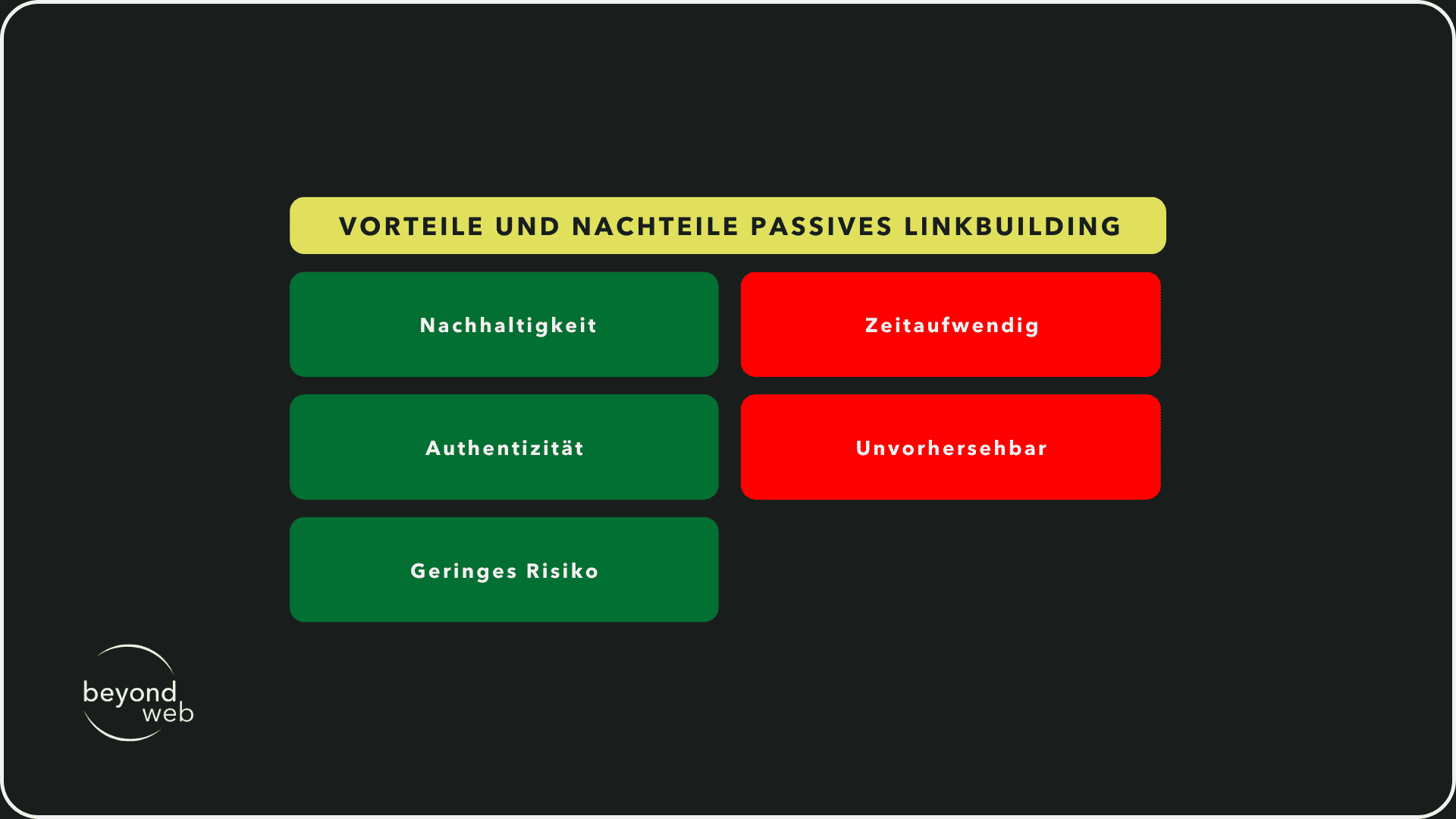
1. Passives Linkbuilding
Vorteile
1. Nachhaltigkeit
Inhalte, die organisch verlinkt werden, weil sie Mehrwert bieten, werden oft als nachhaltiger und länger anhaltend in ihrer Wirkung betrachtet.
2. Authentizität
Natürlich gewonnene Links durch qualitativ hochwertigen Content oder aufgrund eines guten Services werden von Suchmaschinen häufig als authentischer und relevanter betrachtet.
3. Geringeres Risiko
Da du bei passivem Linkbuilding nicht aktiv nach Links suchst oder diese erwirbst, besteht ein geringeres Risiko Strafen durch Suchmaschinen zu erhalten.
Nachteile
1. Zeitaufwendig
Es kann dauern, bis qualitativ hochwertiger Content erstellt, geteilt und von anderen bemerkt wird.
2. Unvorhersehbar
Es gibt keine Garantie, dass dein Content verlinkt wird, egal wie gut er ist.
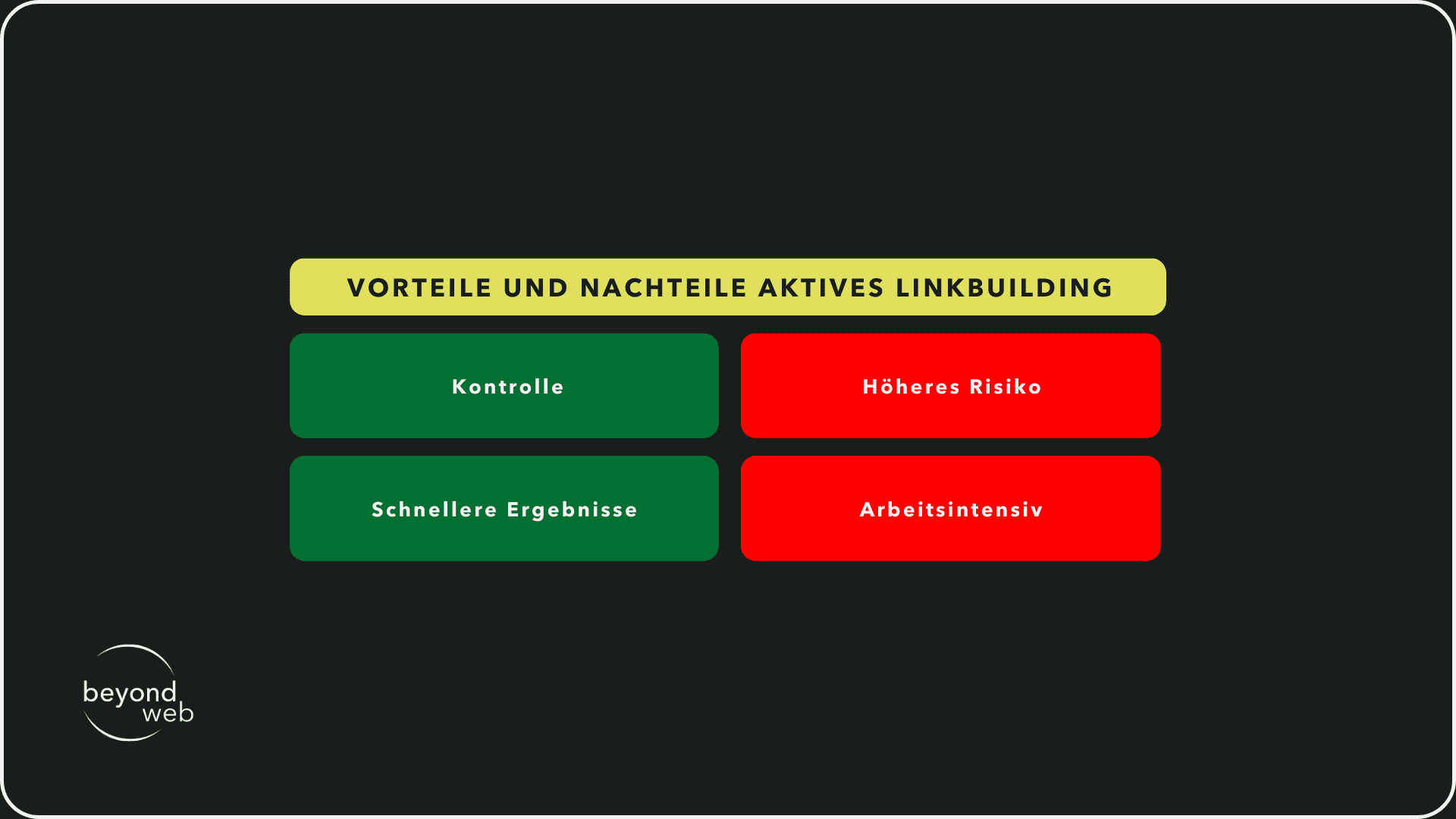
2. Aktives Linkbuilding
Vorteile
1. Kontrolle
Du kannst gezielt Strategien und Taktiken einsetzen, um Links von bestimmten Seiten oder in bestimmten Nischen zu erhalten.
2. Schnellere Ergebnisse
Durch den gezielten Einsatz aktiver Taktiken kann man oft schneller Links aufbauen als durch passives Linkbuilding.
Nachteile
1. Höheres Risiko
Bestimmte Techniken des aktiven Linkbuildings, wie der Kauf von Links oder exzessiver Linktausch, können zu Strafen von Suchmaschinen führen.
2. Arbeitsintensiv
Es erfordert aktive Bemühungen, Kontakte zu knüpfen, Inhalte für Gastbeiträge zu schreiben oder andere Linkbuilding-Strategien umzusetzen.
Empfehlung
Es ist meiner Meinung nach sinnvoll, mit passivem Linkbuilding zu beginnen, insbesondere wenn du neu im Bereich SEO bist.
Der Fokus sollte zunächst darauf liegen, qualitativ hochwertigen und einzigartigen Content zu erstellen, der von Natur aus linkwürdig ist.
Diese Strategie stellt sicher, dass deine Website eine solide Basis hat, auf der du aufbauen kannst.
Sobald du eine starke Content-Basis und einige organische Links hast, kannst du in Erwägung ziehen, aktive Linkbuilding-Strategien zu implementieren, um den Linkaufbau zu beschleunigen.
Dabei solltest du jedoch stets auf die Richtlinien der Suchmaschinen achten, um potenzielle Strafen zu vermeiden.
In der Praxis werden oft beide Ansätze kombiniert, je nach Situation und Zielsetzung.
Wie bewertet Google, ob ein Linkprofil aus hochwertigen Backlinks generiert wurde?
Googles Algorithmus ist komplex und berücksichtigt Hunderte von Faktoren, wenn es darum geht, die Qualität von Backlinks und das gesamte Linkprofil einer Website zu bewerten.
Während Google nicht alle spezifischen Details darüber preisgibt, wie es Websites rankt, gibt es trotzdem einige klare Anhaltspunkte darüber, wie Google die Qualität von Backlinks bewertet.
Ich erläutere dir im folgenden Abschnitt die wichtigsten Aspekte:
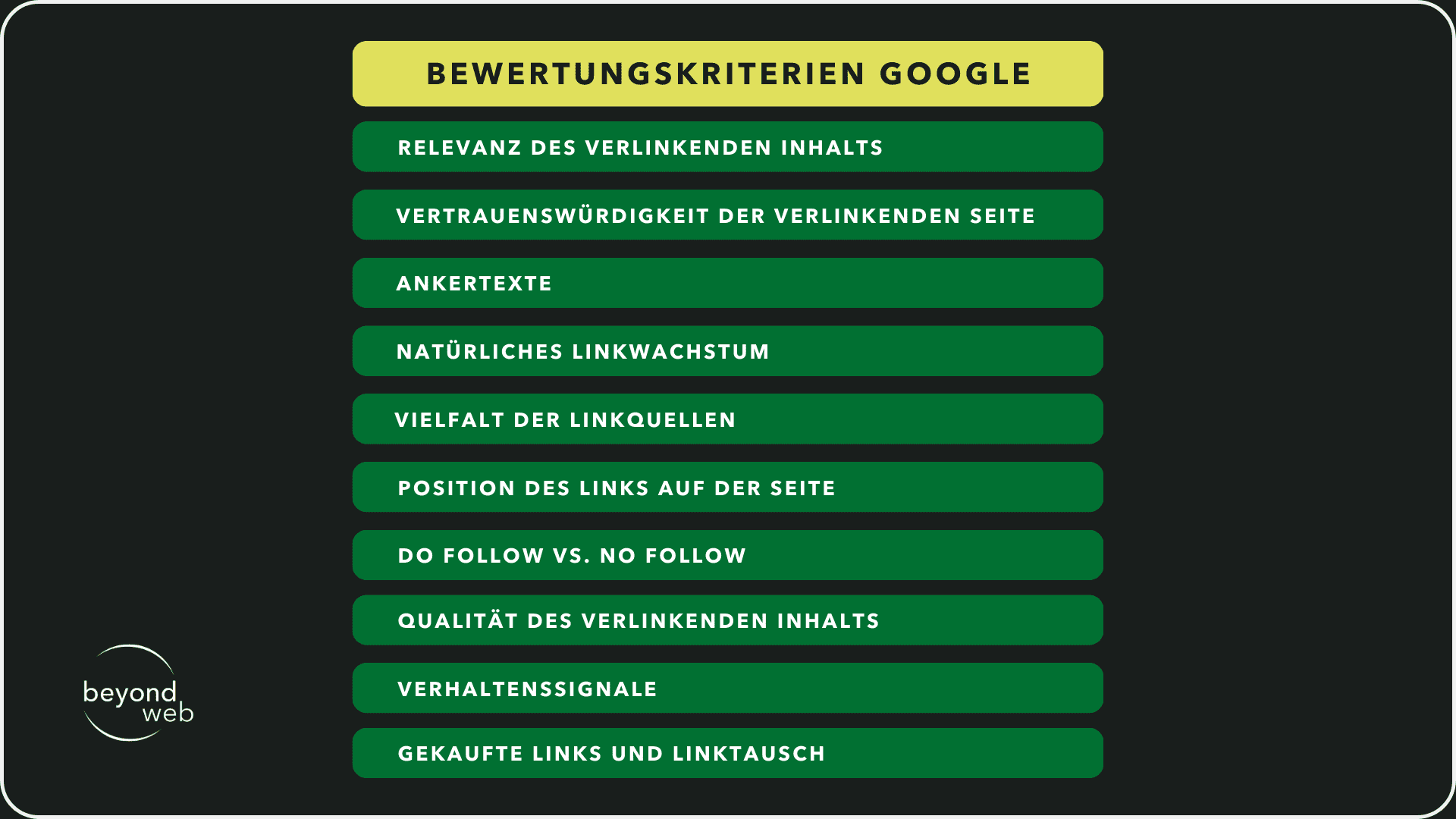
1. Relevanz des verlinkenden Inhalts
Ein Link von einer Seite, die thematisch relevant zu deiner Website oder dem spezifischen Inhalt deiner Seite ist, wird oft als wertvoller angesehen als ein Link von einer nicht verwandten Seite.
2. Autorität und Vertrauenswürdigkeit der verlinkenden Seite
Google verwendet Metriken wie den PageRank, um die Autorität von Webseiten zu messen.
Seiten mit hoher Autorität, die auf deine Website verlinken, können deinem Ranking helfen.
3. Ankertext
Der sichtbare Text eines Links (Ankertext) gibt Google Hinweise auf den Inhalt der verlinkten Seite.
Gut gewählte Ankertexte wirken sich dabei positiv auf das Ranking in den Suchmaschinen aus.
4. Natürliches Linkwachstum
Ein plötzlicher Anstieg von Backlinks, insbesondere von niedriger Qualität, kann als unnatürlich angesehen werden.
Ein organisches, allmähliches Wachstum von Backlinks wird hingegen oft als positiver Indikator gesehen.
5. Vielfalt der Linkquellen
Backlinks von einer Vielzahl von verschiedenen Domains und IPs sind oft wertvoller als viele Links von ein und derselben Domain.
6. Position des Links auf der Seite
Links, die im Hauptinhalt einer Seite und nicht im Footer oder in der Seitenleiste eingebettet sind, werden meistens als wertvoller betrachtet.
7. Dofollow vs. Nofollow
Während «dofollow»-Links direkt den PageRank weitergeben können, können «nofollow»-Links dies nicht.
Allerdings wird ein natürliches Verhältnis von «dofollow» und «nofollow» Links als Zeichen für ein gesundes Linkprofil angesehen und wirkt sich positiv auf das Suchmaschinen Ranking aus.
8. Qualität des verlinkenden Inhalts
Links von gut recherchierten, qualitativ hochwertigen und vertrauenswürdigen Inhalten können mehr Gewicht haben als Links von minderwertigen oder dünnen Inhalten.
9. Verhaltenssignale
Wenn Nutzer von einem Link zu deiner Website gelangen und dann sofort wieder zurückkehren (Bounce), könnte das ein Signal dafür sein, dass dein Inhalt nicht relevant oder von geringer Qualität ist.
Dementsprechend wichtig ist es guten Content und eine gute Nutzererfahrung zu bieten.
10. Gekaufte Links und Linktausch
Google versucht aktiv, gekaufte Links und unnatürlichen Linktausch zu erkennen und abzustrafen, da diese Praktiken gegen die Webmaster-Richtlinien verstossen.
Die nachfolgende Grafik zeigt noch einmal übersichtlich, welche Faktoren Google verwendet, wenn es darum geht die Qualität von Backlinks und das gesamte Linkprofil einer Website zu bewerten:
Google arbeitet ständig daran, die besten Inhalte für die Nutzer zu finden und dabei manipulative oder künstliche Linkbuilding-Taktiken zu identifizieren und zu bestrafen.
Daher ist es essentiell, sich auf den Aufbau eines natürlichen, hochwertigen Linkprofils zu konzentrieren, welches den Nutzern echten Mehrwert bietet.
Wie kann ich Erwähnungen zu Backlinks umwandeln?
Das Umwandeln von Erwähnungen in Backlinks ist eine effektive Strategie, um die Sichtbarkeit und Autorität einer Website zu steigern.
Eine «Erwähnung» bezieht sich auf jede Instanz, in der deine Marke, dein Produkt oder dein Inhalt auf einer anderen Website ohne aktiven Link zu deiner Website erwähnt wird.
Das Ziel ist es, diese Erwähnungen in tatsächliche Backlinks zu konvertieren.
Ich gebe dir nun eine Schritt für Schritt Anleitung, wie du Erwähnungen finden und in Backlinks umwandeln kannst:
1. Erwähnungen finden
Bevor du beginnen kannst, Erwähnungen in Links umzuwandeln, musst du diese Erwähnungen erst einmal identifizieren.
Monitoring-Tools
Verwende Tools wie Google Alerts, Mention oder Ahrefs, um Erwähnungen deiner Marke oder Inhalte im Web zu überwachen.
Ich zeige dir nun die konkreten Schritte in Ahrefs, um Erwähnungen (ohne Verlinkungen zu finden) und die betreffenden Webmaster anzuschreiben:
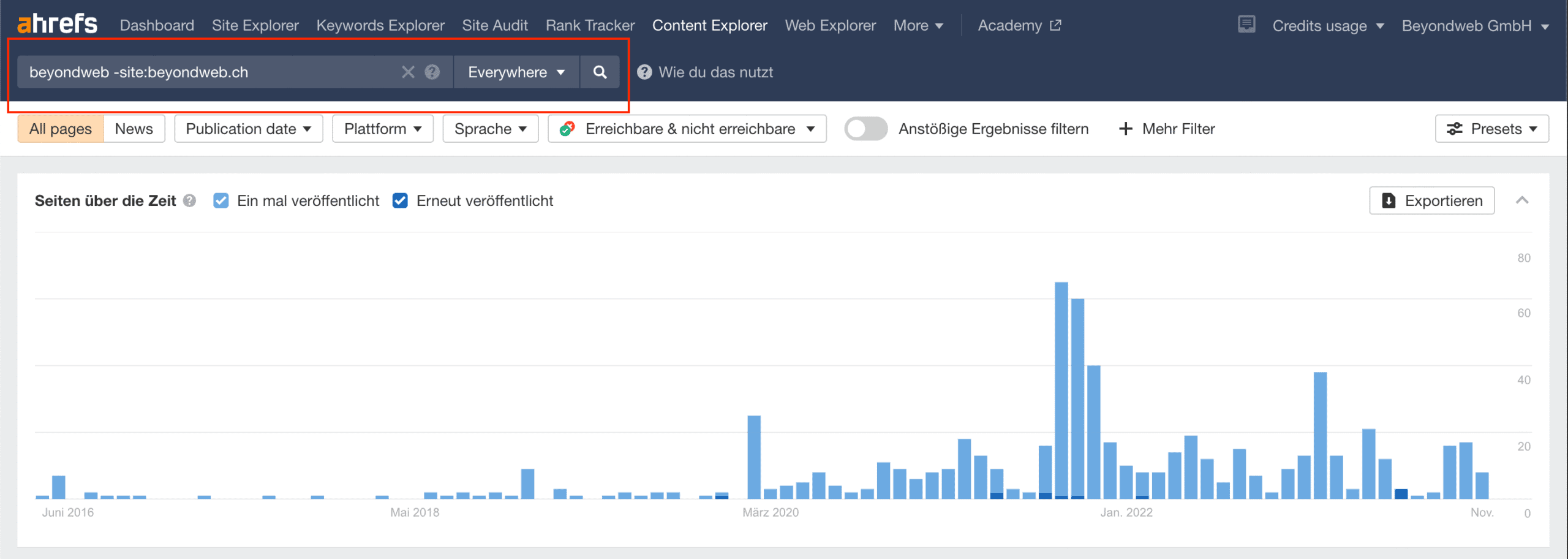
1. Gehe zum Content Explorer, dann zum Markenname (in unserem Fall geben wir „Beyondweb“ im Suchfeld ein und schreiben dahinter -site:www.beyondweb.ch. Das -site:www.beyondweb.ch ist dazu da, alle gefundenen Seiten mit dem Keyword „Beyondweb“ ausserhalb der Domain www.beyondweb.ch zu finden).
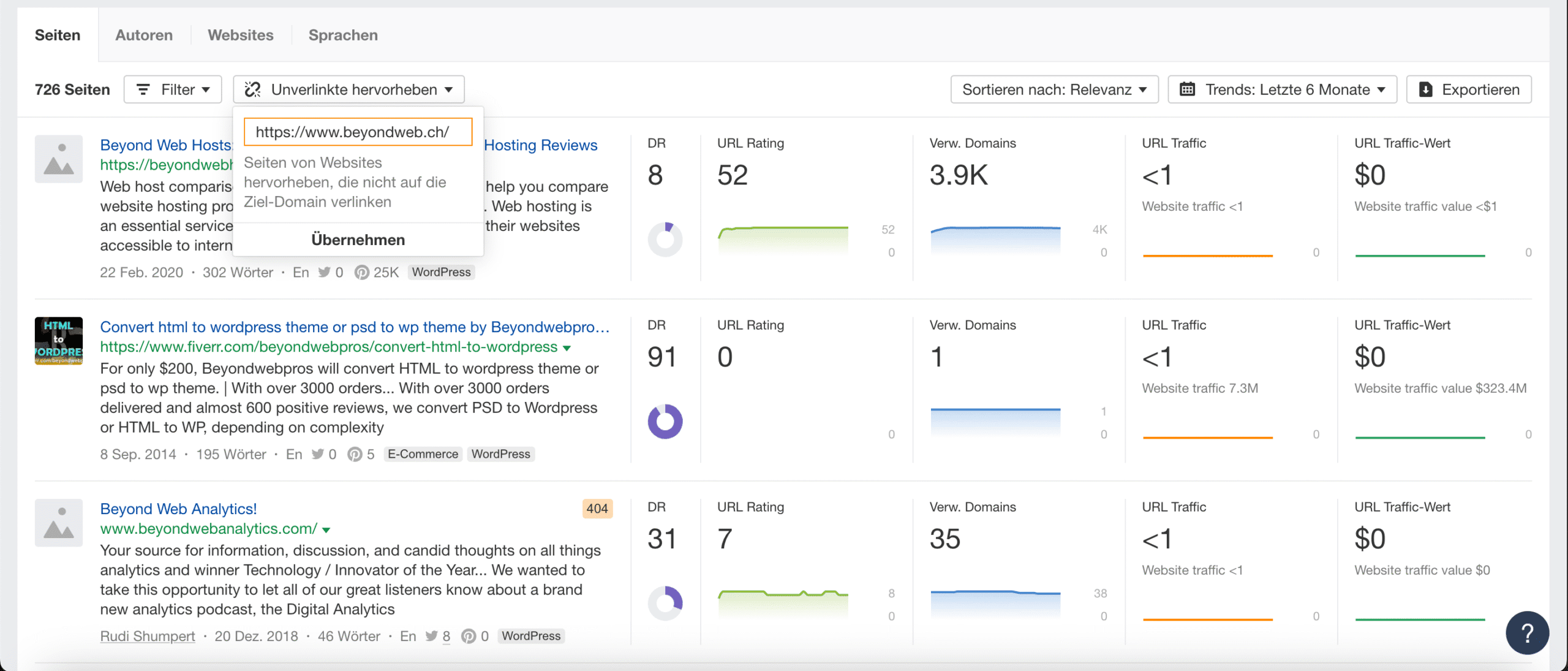
2. Danach klickst du weiter unten neben dem Reiter «Filter» auf «Unverlinkte hervorheben» und fügst die Zieldomain (in unserem Fall www.beyondweb.ch) ein.
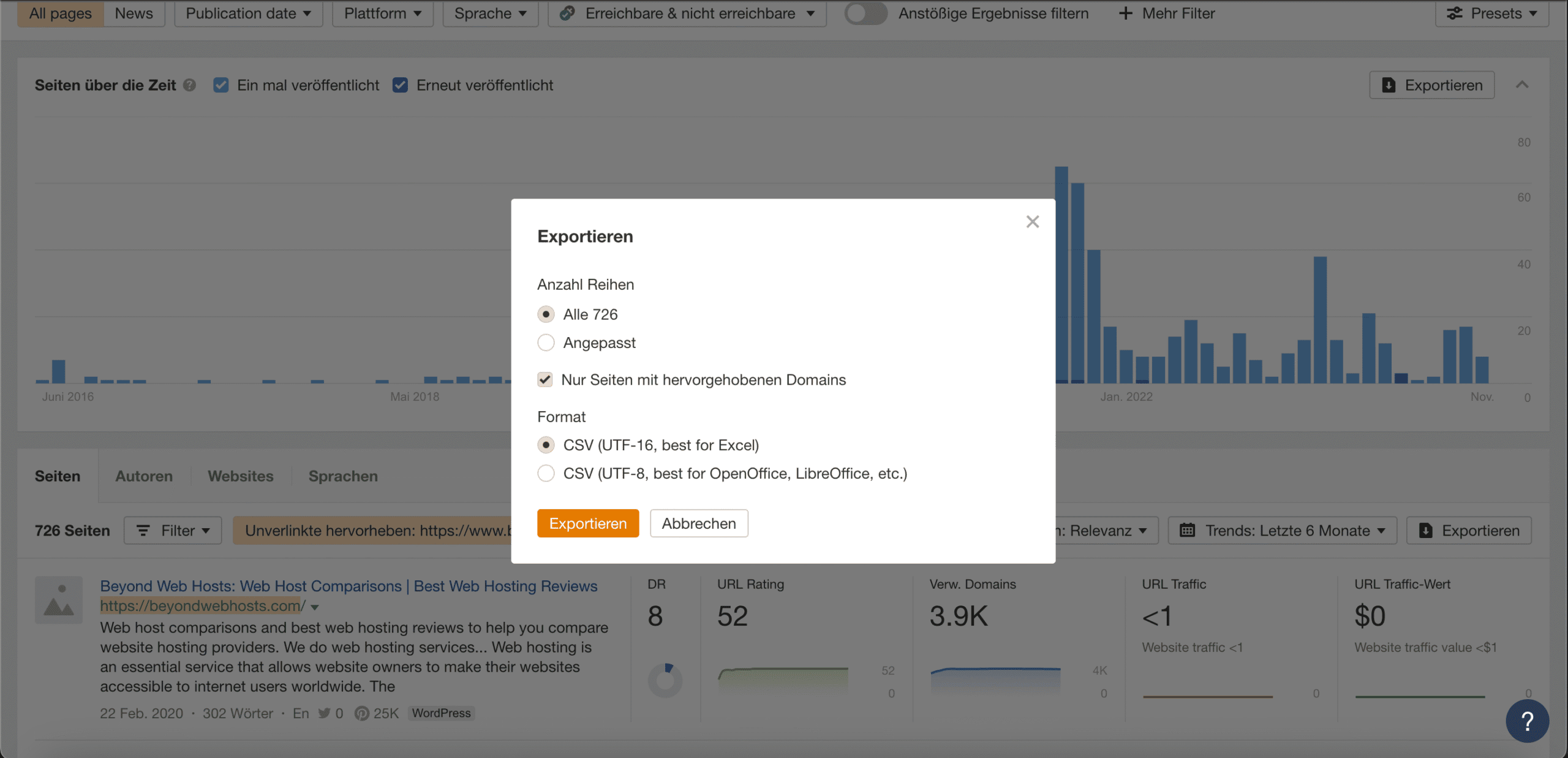
3. Danach werden alle Erwähnungen der eigenen Marke ausserhalb der eigenen Domain angezeigt, die nicht mit der eigenen Seite verlinkt wurden. Diese Liste musst du downloaden und in Excel manuell durchgehen.
Alle Erwähnungen sollten einzeln überprüft werden.
An dieser Stelle ist Vorsicht geboten!
Es kann sein, dass es international andere Firmen mit demselben Markennamen gibt.
Hier ergibt es keinen Sinn diese Firmen anzuschreiben für einen Verlinkung.
Zudem sollte darauf geachtet werden, dass keine Verlinkungen von Spam-Seiten, Seiten mit sehr niedrigem Domain Rating oder mit keiner thematischen Relevanz verlinkt werden.
Hast du nun die passenden Seiten mit unverlinkten Erwähnungen deiner Marke ausfindig gemacht, musst du deren Webmaster anschreiben.
Dabei solltest du am besten via E-Mail vorgehen.
Falls keine öffentliche E-Mail direkt via Website vorhanden ist, kann man unter https://hunter.io/email-finder die entsprechende Email einer Domain finden.
Wenn du den Kontakt zu anderen aufnimmst, insbesondere um deine Präsenz im Internet zu stärken, solltest du auf folgendes achten:
1. Sei taktvoll
Frage dich, ob eine Erwähnung ohne Link in einem Artikel tatsächlich angebracht ist.
Ist deine Seite schon überall anders verlinkt?
Wenn ja, dann verzichte besser darauf, weiter zu drängen.
Wähle sorgfältig aus, wen du kontaktierst, und vermeide aufdringliches Verhalten – es lohnt sich nicht.
2. Linkanfragen sollten sinnvoll sein
Stell dir vor, dein Produkt wird in einem kritischen Kontext erwähnt, wie zum Beispiel Coca Cola in einem Artikel über zuckerhaltige Getränke und deren negative Auswirkungen auf die Zähne.
Würde ein Link in diesem Kontext wirklich Mehrwert bieten?
Wahrscheinlich nicht.
Deshalb solltest du nicht um Links in solchen Fällen bitten.
3. Biete etwas an
Wenn dir auf der Seite, von der du dir einen Link erhoffst, ein anderer Fehler auffällt – sei es ein Tippfehler, ein Grammatikfehler oder ein toter Link – dann teile das dem Autor mit.
Das ist nicht nur nützlich, sondern kann auch die Bereitschaft erhöhen, deinen Link aufzunehmen, wenn ohnehin eine Überarbeitung des Artikels stattfindet.
4. Nutze deinen gesunden Menschenverstand
Jage nicht blindlings jeder Linkmöglichkeit hinterher.
Entscheide klug, welche Aktionen du verfolgst, um niemanden zu verärgern.
Ich gebe dir nun noch ein Beispiel für eine mögliche E-Mail, die mir geholfen hat, eine unverlinkte Erwähnung auf storehacks.com in einen Backlink zu verwandeln:
Hallo [Name]
Hier ist Ato von Beyondweb.
Ich nehme Kontakt auf im Namen der Beyondweb GmbH, die Sie in Ihrem Artikel erwähnt haben:
[URL einfügen]
Hier ein Auszug aus diesem Abschnitt:
„Beyondweb, eine SEO Agentur aus der Schweiz, bringt es am besten auf den Punkt:“
Ich frage mich, ob es möglich wäre, das Wort „Beyondweb“ in diesem Satz mit www.beyondweb.ch zu verlinken? Ich denke, das würde den Besuchern helfen, Beyondweb zu finden.
Lassen Sie mich wissen, ob das machbar wäre.
PS: Es könnte sich lohnen, die „12“ im Titel in „14“ zu ändern, da ich bemerkt habe, dass es jetzt 14 Tipps auf dieser Liste gibt? Nur als Idee. 🙂
Herzliche Grüsse
Ato
Sind Backlinks wichtiger als interne Verlinkungen?
Backlinks und interne Verlinkungen sind beides wichtige Aspekte der Suchmaschinenoptimierung (SEO).
Sie haben jedoch unterschiedliche Funktionen und Bedeutungen im Gesamtzusammenhang der SEO-Strategie einer Website.
Backlinks
Ein Backlink ist, wie bereits erklärt, ein eingehender Link von einer externen Webseite zu deiner Webseite.
Er bietet dabei folgende Vorteile:
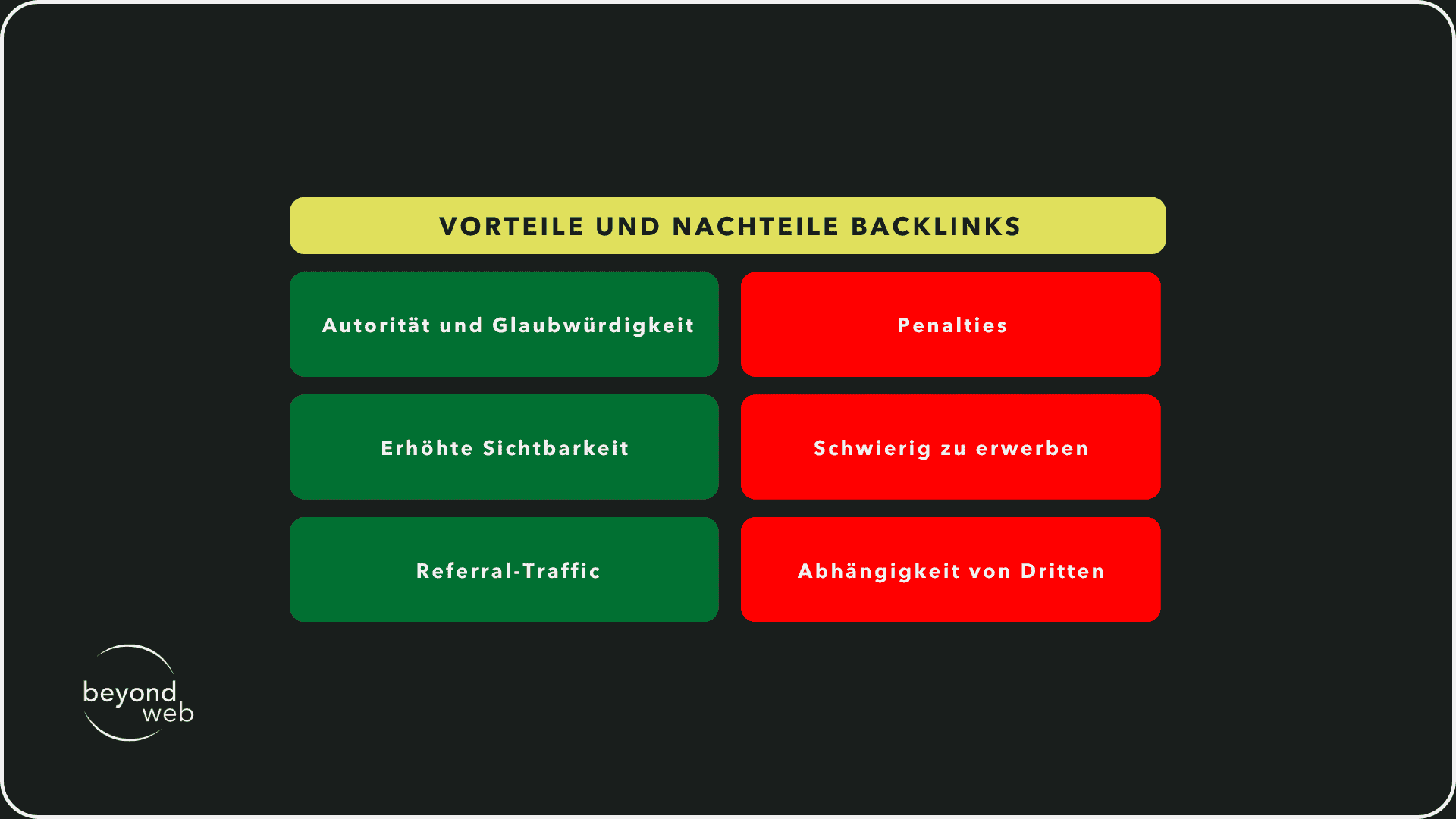
1. Autorität und Glaubwürdigkeit
Backlinks von hochwertigen und vertrauenswürdigen Quellen können die Autorität und Glaubwürdigkeit deiner Website in den Augen von Suchmaschinen erhöhen.
2. Erhöhte Sichtbarkeit
Backlinks können deine Seite in den Suchmaschinenrankings verbessern, was zu mehr organischem Traffic führt.
3. Referral-Traffic
Backlinks können auch Besucher direkt von den verlinkenden Webseiten zu dir bringen.
Neben den genannten Vorteilen, haben Backlinks aber auch einige Nachteile:
1. Penalties
Schlechte oder Spam-Backlinks können zu Strafen von Suchmaschinen führen.
2. Schwierig zu erwerben
Es kann zeitaufwendig und herausfordernd sein, hochwertige Backlinks zu erlangen.
3. Abhängigkeit von Dritten
Die Kontrolle über Backlinks liegt oft bei anderen Website-Betreibern.
Änderungen auf deren Seiten können sich auf die eigene Linkstruktur und somit auf das Ranking auswirken.
Interne Verlinkungen
Interne Verlinkungen sind Links, die von einer Seite deiner Website zu einer anderen Seite deiner Website führen.
Interne Verlinkungen zeigen dabei folgende Vorteile:
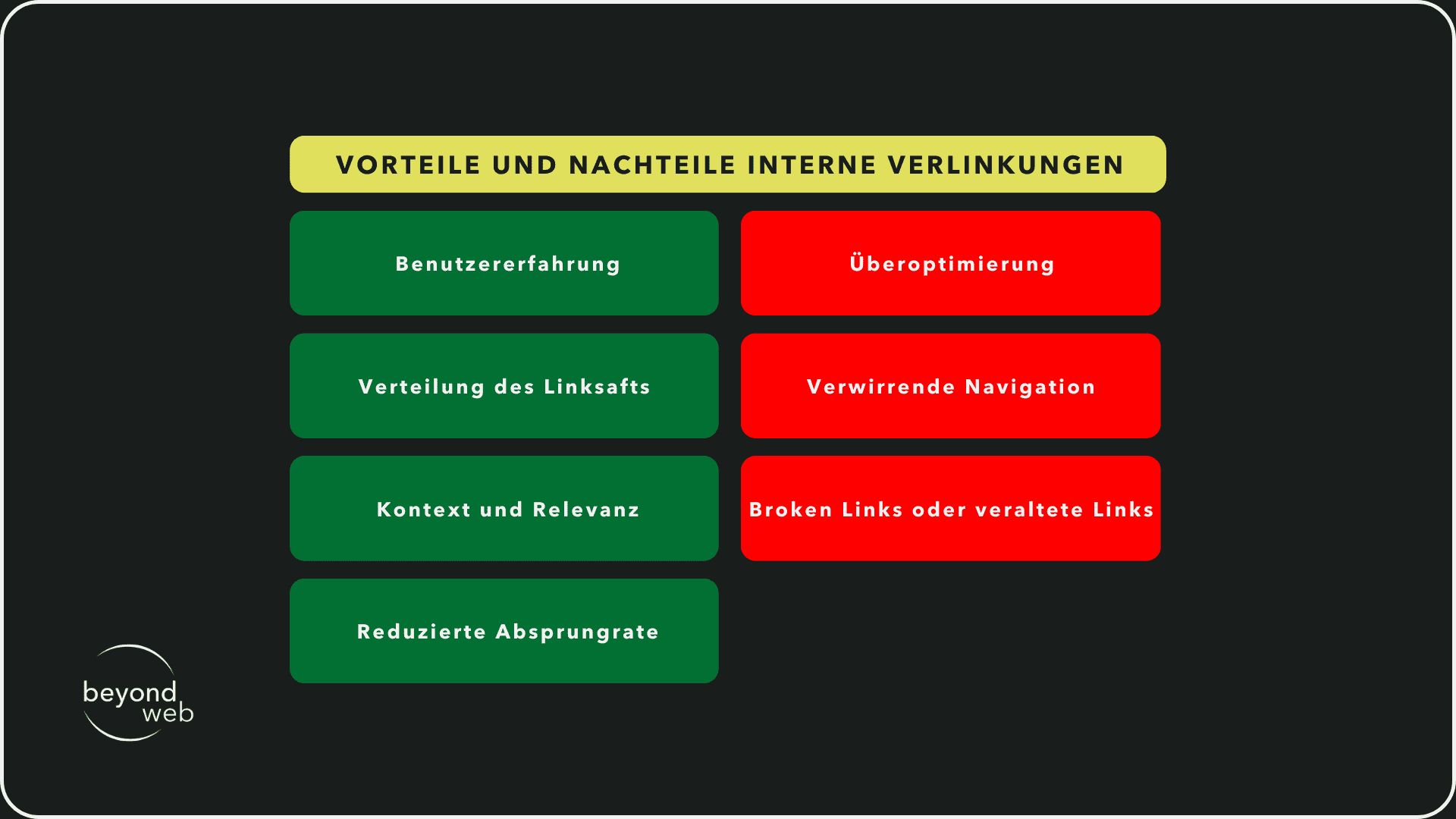
1. Benutzererfahrung
Sie helfen Benutzern, sich auf deiner Website zurechtzufinden und relevante Inhalte leichter zu entdecken.
2. Verteilung des Linksafts
Sie helfen dabei, den sogenannten «Linkjuice» auf deiner Website zu verteilen, sodass wichtige Seiten einen Boost erhalten.
3. Kontext und Relevanz
Interne Links helfen Suchmaschinen, den Zusammenhang und die Struktur deiner Website besser zu verstehen.
4. Reduzierte Absprungrate
Eine sinnvolle interne Verlinkung kann die Verweildauer und Interaktion der Benutzer auf deiner Website erhöhen.
Aber auch interne Verlinkungen weisen, genau wie Backlinks, einige Nachteile auf:
1. Überoptimierung
Zu viele interne Links oder das übermässige Verwenden von keywordreichen Anker-Texten können als Spam betrachtet werden.
2. Verwirrende Navigation
Ein Übermass an internen Links kann die Benutzerführung beeinträchtigen, indem es den Nutzern schwerfällt, die wichtigsten Inhalte oder den gewünschten Pfad auf der Website zu finden.
3. Broken Links oder veraltete Links
Interne Links erfordern Wartung.
Broken Links oder veraltete Links können das Benutzererlebnis beeinträchtigen und den SEO-Wert einer Seite mindern.
Insgesamt kann man sagen, dass es nicht wirklich eine Frage des «Entweder-Oder» ist.
Beide, Backlinks und interne Verlinkungen, sind in der SEO-Welt wichtig.
Während Backlinks oft als Indikator für die externe Glaubwürdigkeit und Autorität einer Website dienen, sorgen interne Verlinkungen für eine bessere Nutzererfahrung und helfen Suchmaschinen, den Kontext und die Struktur der Website zu verstehen.
Ein ausgewogenes Verhältnis von hochwertigen Backlinks und einer durchdachten internen Verlinkungsstruktur ist demnach für eine erfolgreiche SEO-Strategie unerlässlich.