

#1 – SEO Basics
SEO ist ein wichtiger Teil des Online-Marketings und bildet das Fundament für eine hohe Sichtbarkeit in Suchmaschinen wie Google.
Doch was genau ist SEO überhaupt und wie funktioniert es?
Um dir ein solides Verständnis dafür zu vermitteln, beginne ich in diesem Blog damit, dir die SEO-Basics genauer zu erklären.
Diese Grundlagen sind wichtig, um die weiterführenden Strategien und Techniken zu verstehen und anschliessend auch effektiv anwenden zu können.
Was ist SEO?
Suchmaschinenoptimierung (SEO) ist ein Prozess, der darauf abzielt, die Sichtbarkeit und das Ranking einer Website in organischen Suchmaschinenergebnissen (SERPs) zu verbessern.
Dadurch unterscheidet sich SEO fundamental von SEA.
Während SEO für alle Suchmaschinen relevant ist, liegt aufgrund der dominierenden Marktstellung im deutschsprachigen Raum der Schwerpunkt meist auf der Optimierung für Google.
Unter SEO versteht man eine Reihe von technischen, strukturellen und inhaltlichen Massnahmen, die darauf abzielen, die Position einer Website in den Ergebnislisten von Suchmaschinen für bestimmte Suchbegriffe zu verbessern.
Diese Massnahmen reichen von der Anpassung der Struktur und Technik der Website bis hin zur Erstellung und Optimierung von Inhalten.
SEO kann dabei in zwei Hauptkategorien unterteilt werden: OnPage-SEO und OffPage-SEO.
OnPage-SEO bezieht sich auf Optimierungen, die direkt auf der Website vorgenommen werden, wie die Verbesserung der technischen Leistung, der Inhaltsqualität und der Nutzererfahrung.
OffPage-SEO beinhaltet Massnahmen, die ausserhalb der eigenen Website stattfinden, wie Linkbuilding und die Generierung von sozialen Signalen.
Eine effektive SEO-Strategie verbessert nicht nur das Ranking in Suchergebnissen, sondern steigert auch die Benutzerfreundlichkeit der Website.
Dies führt zu höherem organischen Traffic, besserer Nutzerbindung und letztlich zu einer Steigerung von Konversionen und Umsatz.
Kurz gesagt ist SEO also ein unverzichtbarer Teil jeder digitalen Marketingstrategie.
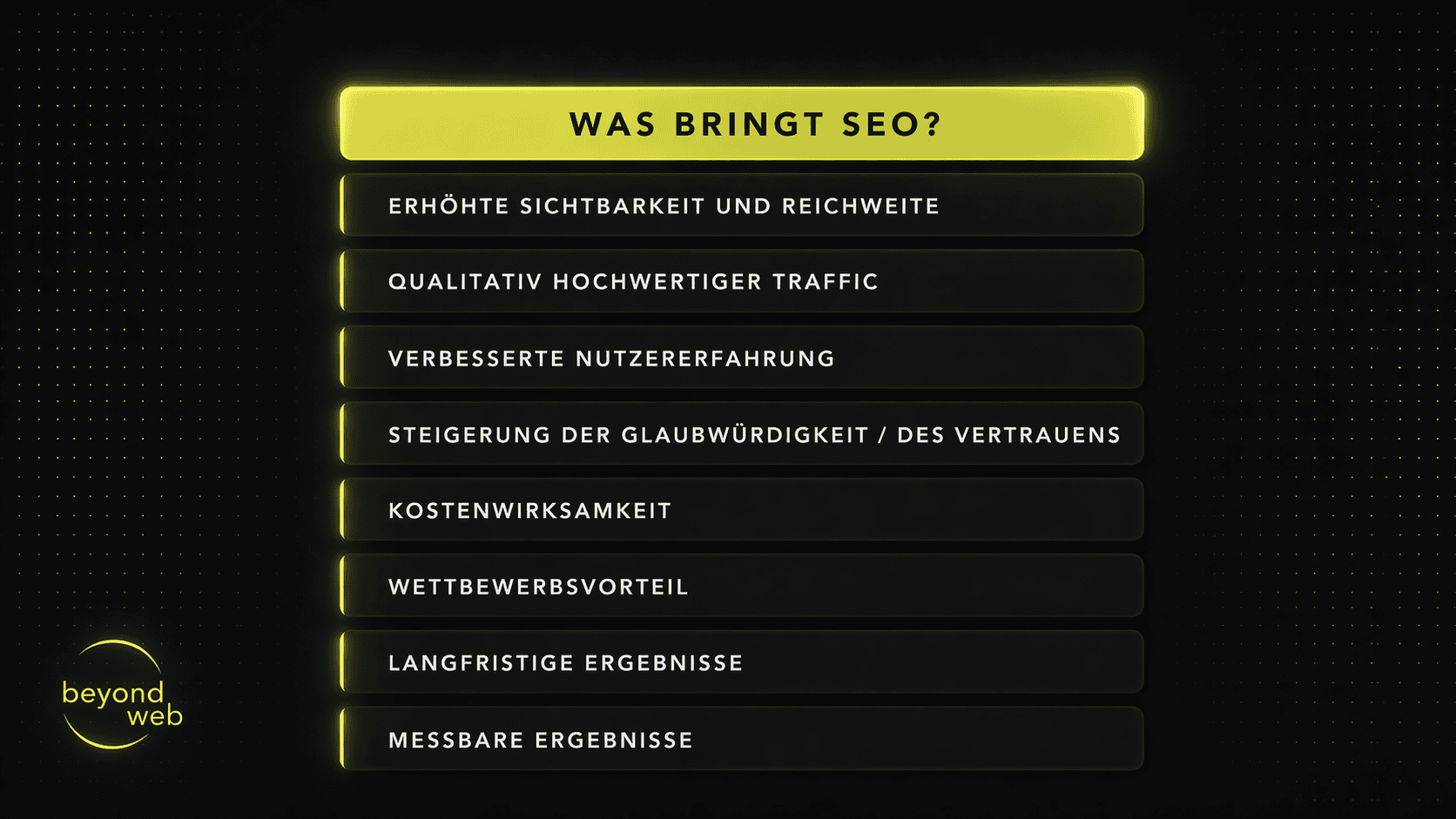
Was bringt SEO?
SEO, oder Suchmaschinenoptimierung, bietet zahlreiche Vorteile für Websites und deren Betreiber.
Ich nenne dir nun die wichtigsten Vorteile, die SEO mit sich bringt:
1. Erhöhte Sichtbarkeit und Reichweite
Durch die Optimierung deiner Website für relevante Suchbegriffe verbessert SEO die Position deiner Website in den Suchergebnissen.
Dies führt zu erhöhter Sichtbarkeit und Reichweite, da Nutzer häufiger auf die ersten Ergebnisse in Suchmaschinen klicken.
2. Qualitativ hochwertiger Traffic
SEO zieht Nutzer an, die aktiv nach Informationen, Produkten oder Dienstleistungen suchen, die deine Website bietet.
Dies führt zu qualitativ hochwertigem Traffic, da die Besucher bereits ein Interesse an dem haben, was du anbietest.
3. Verbesserte Nutzererfahrung
SEO beinhaltet die Optimierung der Website-Struktur und -Inhalte, was zu einer besseren Nutzererfahrung führt.
Eine benutzerfreundliche, gut strukturierte und informative Website hält Besucher länger auf deiner Seite und erhöht die Wahrscheinlichkeit von Konversionen.
Konversionen beziehen sich dabei auf die erfolgreiche Umwandlung von Website-Besuchern in gewünschte Aktionen.
Diese Aktionen können vielfältig sein und hängen von den spezifischen Zielen einer Website oder einer Marketingkampagne ab.
Ein häufiges Beispiel hierfür wäre der Kauf eines Produktes.
4. Steigerung der Glaubwürdigkeit und des Vertrauens
Websites, die auf den oberen Plätzen der Suchergebnisse erscheinen, werden oft als vertrauenswürdiger und glaubwürdiger wahrgenommen.
Vertrauenswürdigkeit bezieht sich in diesem Zusammenhang darauf, wie zuverlässig und sicher eine Website erscheint.
Glaubwürdigkeit hingegen bezieht sich auf die wahrgenommene Expertise und Autorität einer Website oder Marke.
Beides, sowohl die Vertrauenswürdigkeit als auch die Glaubwürdigkeit, können das Markenimage positiv beeinflussen.
5. Kostenwirksamkeit
Im Vergleich zu bezahlten Werbekampagnen kann SEO eine kostengünstigere Möglichkeit sein, Traffic zu generieren.
Obwohl SEO anfänglich eine Investition erfordert, führt es langfristig oft zu nachhaltigem organischen Traffic.
Im Gegensatz zu bezahltem Traffic, der durch Werbemassnahmen wie Google Ads oder Social Media Anzeigen generiert wird, kommt organischer Traffic natürlich zustande.
Das heisst, organischer Traffic bezeichnet die Besucher, die eine Website durch nicht bezahlte Suchergebnisse erreichen.
6. Wettbewerbsvorteil
Durch eine gute SEO-Strategie kann deine Website in den Suchergebnissen vor deinen Wettbewerbern erscheinen.
Dies kann dir einen entscheidenden Vorteil in deinem Marktsegment gegenüber der Konkurrenz verschaffen.
7. Langfristige Ergebnisse
Im Gegensatz zu bezahlter Werbung, die sofortige, aber kurzfristige Ergebnisse liefert, bietet SEO langfristige Vorteile.
Eine gut optimierte Website kann durch SEO über einen längeren Zeitraum hinweg konstanten Traffic generieren.
8. Messbare Ergebnisse
Mit verschiedenen Tools und Analysen lässt sich der Erfolg von SEO-Massnahmen genau messen und nachvollziehen.
Dies ermöglicht eine kontinuierliche Optimierung der Strategie.
Die nachfolgende Grafik zeigt dir noch einmal die wichtigsten Vorteile, die SEO mit sich bringt, im Überblick:
#2 – Wie funktionieren Suchmaschinen?
Suchmaschinen spielen eine zentrale Rolle im Internet, indem sie das riesige Netz an Informationen durchsuchbar und zugänglich machen.
Ihre Funktionsweise basiert auf drei grundlegenden Aufgaben:
- dem Durchsuchen und Indexieren von Webseiten
- dem Speichern und Kategorisieren dieser Informationen
- dem Bereitstellen der gesammelten Informationen zu einem spezifischen Thema auf Anfrage
In diesem Sinne agieren Suchmaschinen wie ein grosses, indexiertes Inhaltsverzeichnis des Internets.
Die Arbeitsweise einer Suchmaschine ist komplexer, als es auf den ersten Blick scheint.
Sie durchforstet nicht das gesamte Internet, sondern konzentriert sich auf das World Wide Web.
Andere Internetdienste wie E-Mail, FTP (File Transfer Protocol) oder Usenet bleiben aussen vor.
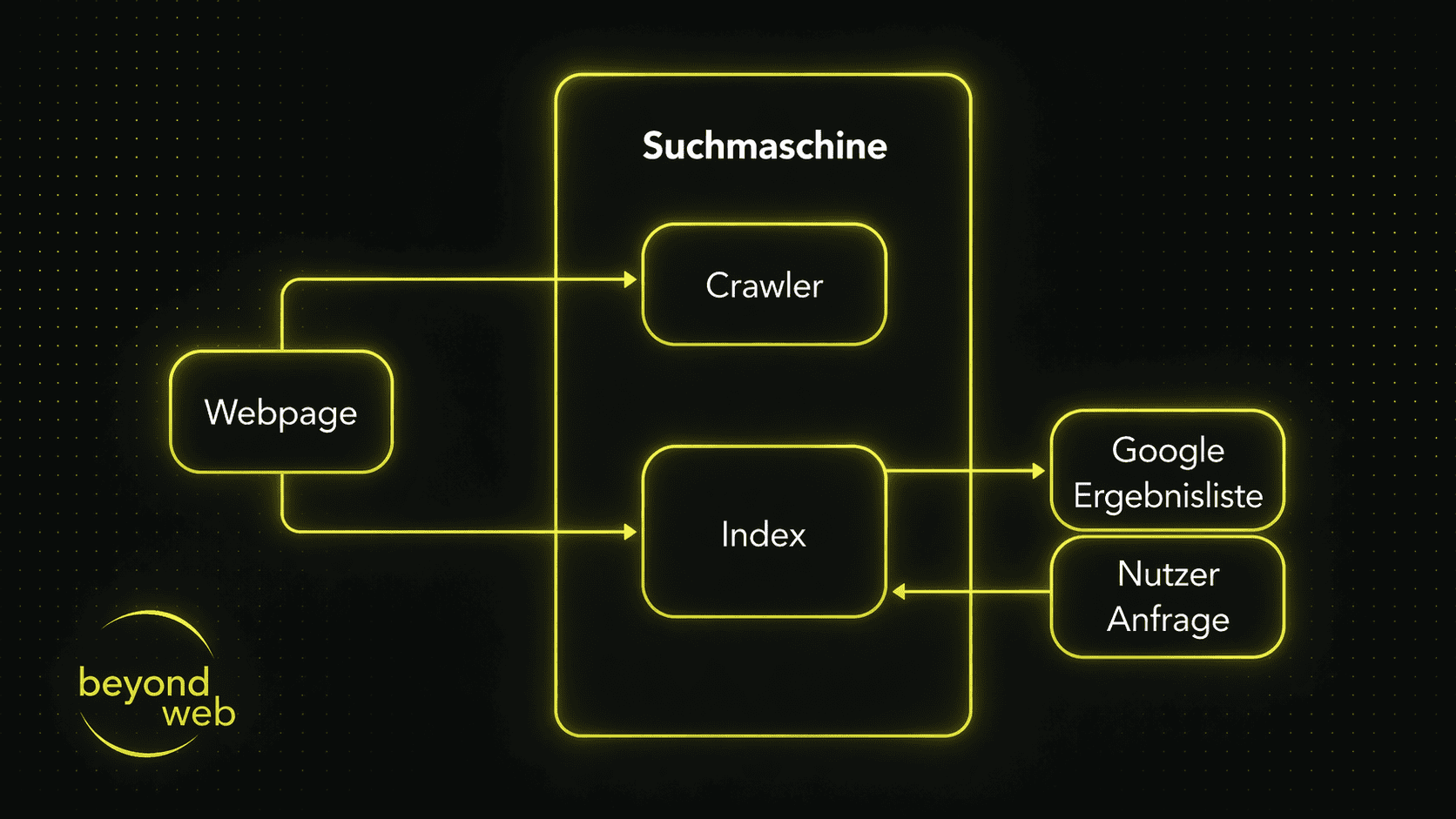
Bei einer Suchanfrage durchsucht die Suchmaschine also nur einen Teil des Internets, nämlich das, was im Suchmaschinenindex abgebildet ist.
Dieser Index ist ein katalogisiertes Abbild des World Wide Web, das in einem Cache gespeichert und regelmässig aktualisiert wird.
Wenn ein Nutzer ein Keyword oder eine Kombination von Keywords in die Suchmaschine eingibt, nutzt die Suchmaschine sogenannte Webcrawler, um den Index nach diesen Begriffen zu durchsuchen, und zeigt in Sekundenschnelle die relevantesten Ergebnisse.
Diese Ergebnisse werden in Form einer SERP (Search Engine Result Page) präsentiert, die eine nach Relevanz geordnete Liste von Verweisen auf verschiedene Websites zeigt.
Diese Suchergebnisse sind nicht statisch, sondern ändern sich regelmässig, da ständig neue relevante Seiten hinzukommen und die Suchmaschinen ihre Algorithmen fortlaufend anpassen.
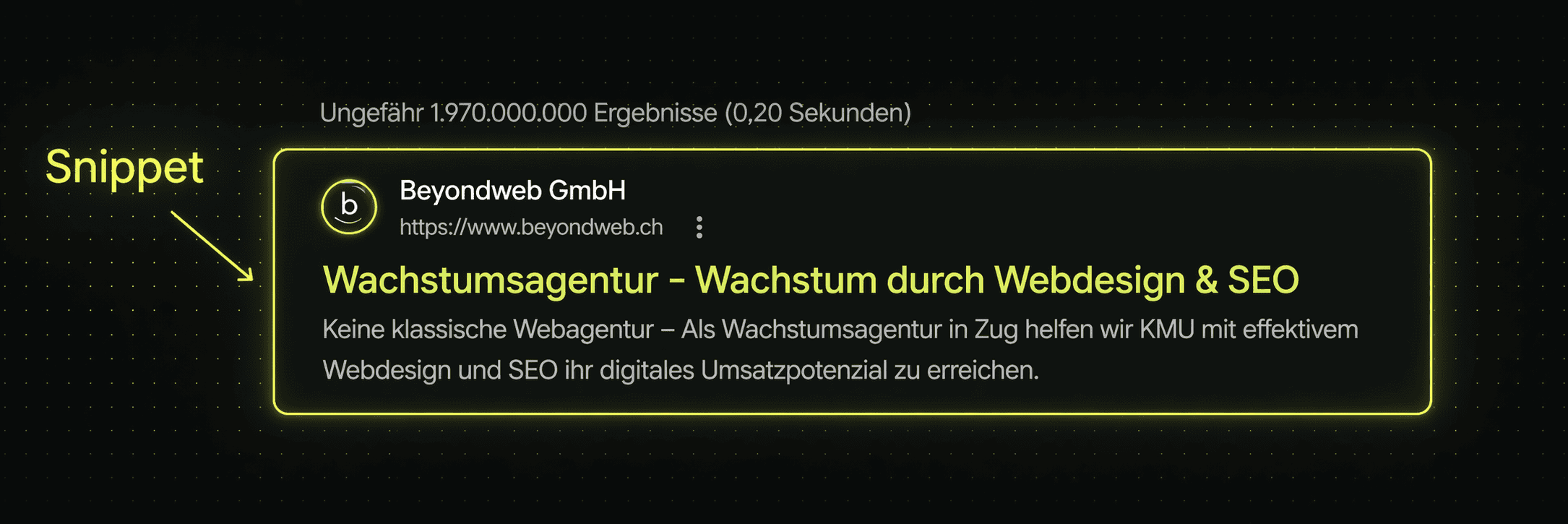
Interessant ist, dass die Suchergebnisse in Listenform erscheinen und sogenannte Snippets enthalten.
Ein Snippet ist eine kurze Vorschau des Inhalts einer Webseite, normalerweise nicht länger als 156 Zeichen, und gibt dem Nutzer einen ersten Eindruck von dem, was ihn auf der Seite erwartet.
Diese Snippets können entweder vom Betreiber der Website oder automatisch durch die Suchmaschine erstellt werden.
Zusammenfassend erfüllen Suchmaschinen eine essentielle Funktion, indem sie das Internet nach spezifischen Kriterien filtern und organisieren.
Sie ermöglichen den Nutzern, aus der immensen Menge an Informationen im World Wide Web genau das zu finden, was sie suchen, und tragen so massgeblich dazu bei, das Internet nutzbar und zugänglich zu machen.
#3 – Keyword Recherche
Die Keyword-Recherche ist ein weiterer, wichtiger Schritt in der Suchmaschinenoptimierung und bezieht sich auf die Suche und Analyse von Schlüsselbegriffen, auf die eine Landingpage oder eine gesamte Domain optimiert werden soll.
Das Hauptziel ist es, für die richtigen Keywords und Keyword-Kombinationen in den SERPs zu ranken, um so Traffic auf die Seite zu lenken.
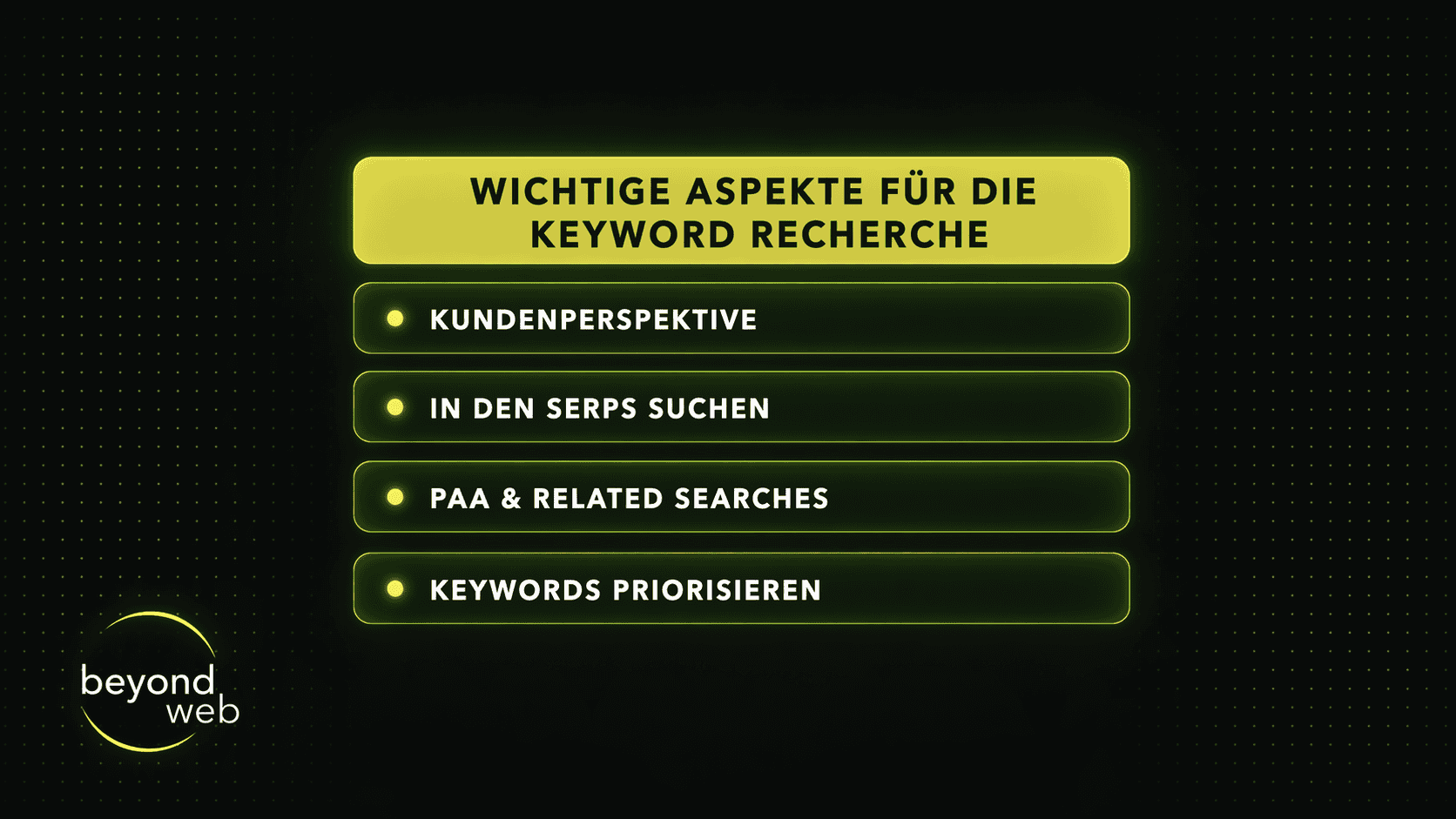
Im folgenden Abschnitt werde ich dir die wichtigsten Aspekte der Keyword Recherche vorstellen und genauer erläutern:
Kundenperspektive
Die Kundenperspektive ist ein Schlüsselelement bei der Suchmaschinenoptimierung.
Sie berücksichtigt, wie potenzielle Kunden oder Nutzer Suchmaschinen nutzen und welche Begriffe sie eingeben, um Informationen, Produkte oder Dienstleistungen zu finden.
Ein tiefes Verständnis dieser Perspektive ist entscheidend, um SEO-Massnahmen effektiv auszurichten und sicherzustellen, dass die Inhalte einer Website genau die Fragen und Bedürfnisse der Zielgruppe ansprechen.
Der Prozess, die Kundenperspektive zu erfassen, beginnt in der Regel mit einer umfassenden Marktanalyse.
Hierbei liegt der Fokus auf der Analyse der Zielgruppe, um deren Bedürfnisse, Interessen und Verhaltensweisen zu verstehen.
Ein wesentlicher Teil ist dabei auch das Nachvollziehen der Customer Journey, also des Weges, den ein Kunde von der ersten Wahrnehmung eines Bedürfnisses bis zur endgültigen Entscheidung für ein Produkt oder eine Dienstleistung durchläuft.
Während dieser Reise verändern sich die von den Kunden verwendeten Suchbegriffe.
In der Anfangsphase der Informationsbeschaffung tendieren Kunden dazu, allgemeinere Begriffe zu verwenden, während sie bei einer näher rückenden Kaufentscheidung zu spezifischeren Keywords neigen.
Die Analyse dieser Suchbegriffe und das Verständnis der dahinterliegenden Suchintentionen sind von grosser Bedeutung.
Sie ermöglichen es, zu unterscheiden, ob Nutzer nach allgemeinen Informationen suchen oder ob sie eine konkrete Kaufabsicht haben.
Durch das Erkennen und Verstehen dieser unterschiedlichen Suchintentionen können Inhalte und Keywords einer Website gezielt angepasst werden.
Indem man die Kundenperspektive in den Mittelpunkt der SEO-Strategie stellt, kann man nicht nur die Sichtbarkeit und den Traffic der Website verbessern, sondern auch Inhalte bereitstellen, die für die Zielgruppe wirklich relevant und wertvoll sind.
Dies trägt nicht nur zur Verbesserung der Nutzererfahrung bei, sondern erhöht auch die Wahrscheinlichkeit, dass Besucher zu treuen Kunden werden.
In den SERPs suchen
Die Suche in den SERPs ist ein weiterer Teil der Keyword-Recherche und der Suchmaschinenoptimierung.
Dieser Prozess umfasst das Durchsehen und Bewerten der Ergebnisseiten, die Suchmaschinen wie Google für spezifische Suchbegriffe bereitstellen.
Durch ein gründliches Begutachten der SERPs lassen sich wertvolle Einsichten gewinnen, wie Suchmaschinen Inhalte einstufen und welche Inhaltsarten bei den Nutzern besonders beliebt sind.
Bei der Betrachtung der SERPs liegt der Fokus darauf, die führenden Ergebnisse für ein bestimmtes Keyword oder eine Kombination von Keywords zu untersuchen.
Dies enthüllt, welche Inhaltsarten für bestimmte Schlüsselbegriffe erfolgreich sind, wie beispielsweise Blogbeiträge, Produktseiten oder Informationsartikel.
Ebenso wird ersichtlich, welche Themen und Unterthemen in diesen Inhalten behandelt werden, was wiederum Hinweise auf relevante Keywords und Themenbereiche für die eigene Content-Strategie liefert.
Ein weiterer wesentlicher Aspekt ist das Verstehen der Nutzerintention hinter den Suchanfragen.
Indem man beobachtet, welche Arten von Seiten für spezifische Anfragen ranken, lassen sich Schlussfolgerungen darüber ziehen, wonach Nutzer wirklich suchen.
Dies ermöglicht eine Unterscheidung zwischen informativen, transaktionalen oder navigationalen Suchabsichten und unterstützt dabei, Inhalte so zu gestalten, dass sie exakt den Bedürfnissen und Fragen der Nutzer entsprechen.
Darüber hinaus hilft die Betrachtung der SERPs dabei, die Strategien der Konkurrenz zu erkennen.
Man kann identifizieren, welche Unternehmen oder Websites für bestimmte Keywords ranken und wie sie ihre Inhalte aufbauen und präsentieren.
Diese Informationen sind von grosser Bedeutung, um die eigene SEO-Strategie entsprechend anzupassen und zu verfeinern.
PAA & Related Searches
PAA (People Also Ask) und verwandte Suchanfragen sind weitere, wichtige Elemente, die bei der Suchmaschinenoptimierung und Keyword-Recherche berücksichtigt werden sollten.
Beide bieten tiefe Einblicke in die Nutzerintention und erweitern das Verständnis darüber, wonach Zielgruppen suchen und welche zusätzlichen Informationen sie benötigen könnten.
PAA-Boxen sind ein Feature in Suchmaschinenergebnissen, insbesondere bei Google.
Sie zeigen eine Liste von Fragen an, die eng mit der ursprünglichen Suchanfrage zusammenhängen.
Diese Fragen sind oft direkt verknüpft mit den Interessen und Bedürfnissen der Nutzer, die eine bestimmte Suchanfrage eingeben.
Indem man diese Fragen analysiert, kann man nicht nur zusätzliche relevante Keywords identifizieren, sondern auch wertvolle Inhalte erstellen, die genau auf diese Fragen abzielen.
Die Beantwortung dieser Fragen auf der eigenen Website kann dazu beitragen, die Relevanz für Suchmaschinen zu erhöhen und gleichzeitig den Nutzern nützliche und zielgerichtete Informationen zu bieten.
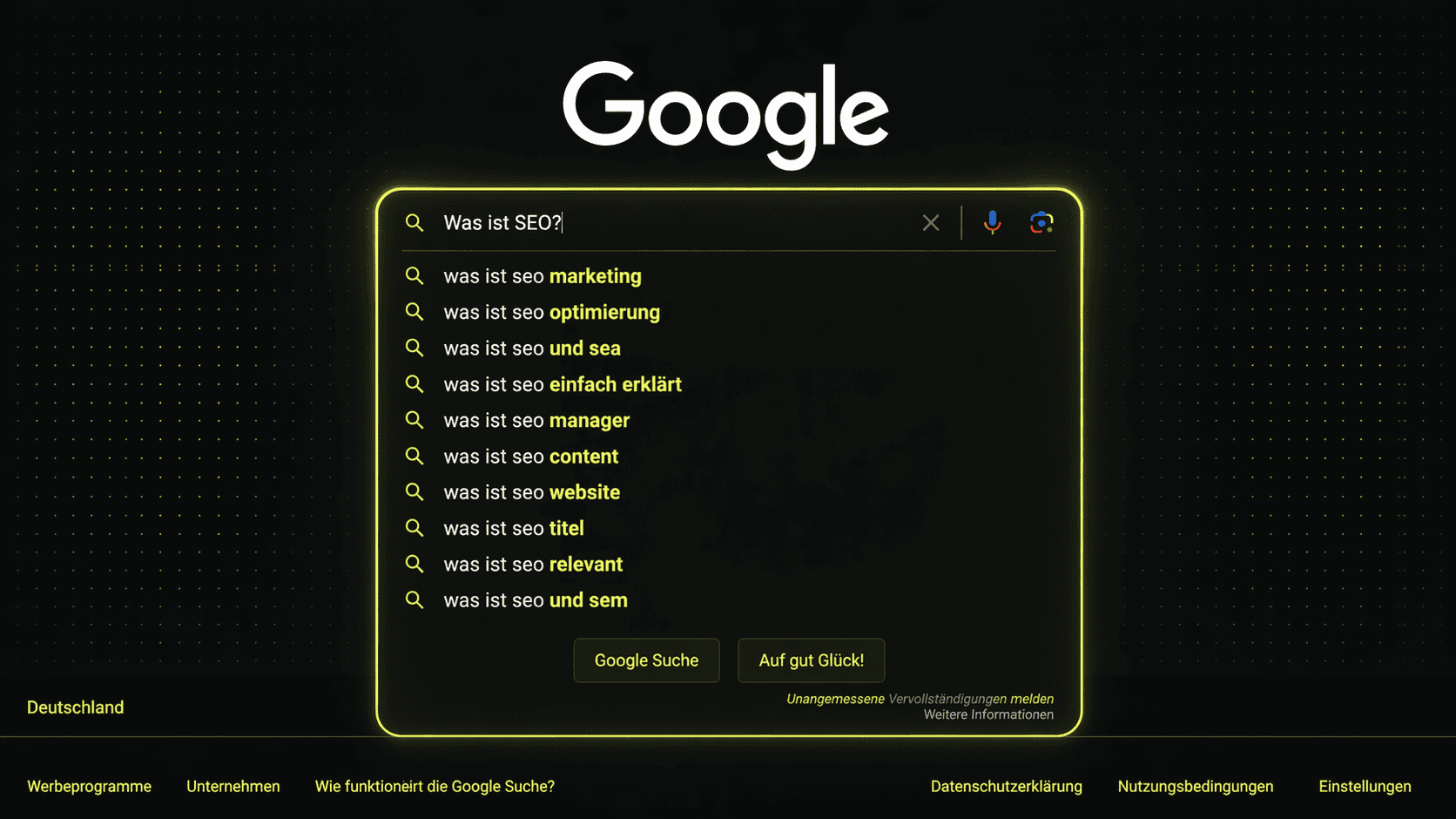
Ähnlich verhält es sich mit verwandten Suchanfragen, die am Ende der Suchergebnisseiten angezeigt werden.
Diese sind häufig Erweiterungen oder Variationen der ursprünglichen Suchbegriffe und bieten eine Perspektive darauf, welche anderen Themen oder Begriffe für Nutzer von Interesse sein könnten.
Durch die Einbeziehung dieser verwandten Suchanfragen in die eigene Keyword-Strategie können die Inhalte einer Website umfassender gestaltet und an die Bedürfnisse der Zielgruppe angepasst werden.

Die Integration von PAA und verwandten Suchanfragen in die SEO-Strategie ermöglicht eine umfassendere Abdeckung relevanter Themen und Keywords.
Dadurch wird nicht nur die Sichtbarkeit in Suchmaschinen erhöht, sondern auch die Nutzererfahrung verbessert, da die Inhalte genau auf das abgestimmt sind, wonach die Nutzer suchen.
Insgesamt tragen PAA und verwandte Suchanfragen dazu bei, die Inhaltsstrategie zu verfeinern und die Relevanz und Autorität einer Website in ihrem Themengebiet zu stärken.
Keywords priorisieren
Die effektive Priorisierung von Keywords ist ein zentraler Bestandteil jeder erfolgreichen SEO-Strategie.
Dieser Prozess erfordert eine umfassende Berücksichtigung verschiedener Faktoren, die das Ranking und die Sichtbarkeit einer Website in Suchmaschinen beeinflussen können.
Zunächst ist es wichtig, den Aspekt der Suchintention zu beachten.
Keywords lassen sich in vier Hauptkategorien einteilen: kommerziell, informativ, navigational und transaktional.
Kommerzielle Keywords beziehen sich auf Kaufinteressen und umfassen Begriffe wie „kaufen“, „Angebote“ oder „Preisvergleich“.
Informativen Keywords fehlt diese Kaufabsicht.
Sie liefern stattdessen Informationen, wie „Wie funktioniert …?“ oder „Beste Methoden für …“.
Navigationale Keywords sind hingegen auf eine bestimmte Marke oder ein Unternehmen ausgerichtet und transaktionale Keywords implizieren eine unmittelbare Handlung wie „jetzt buchen“ oder „downloaden“.
Eine effektive Integration von Keywords aus diesen vier Kategorien adressiert unterschiedliche Nutzerbedürfnisse und -intentionen entlang der verschiedenen Phasen der Kundenreise, bekannt als der Kunden-Funnel.
Dieser Funnel umfasst die Phasen Awareness (Bewusstsein), Interest (Interesse), Desire (Verlangen) und Action (Handlung).
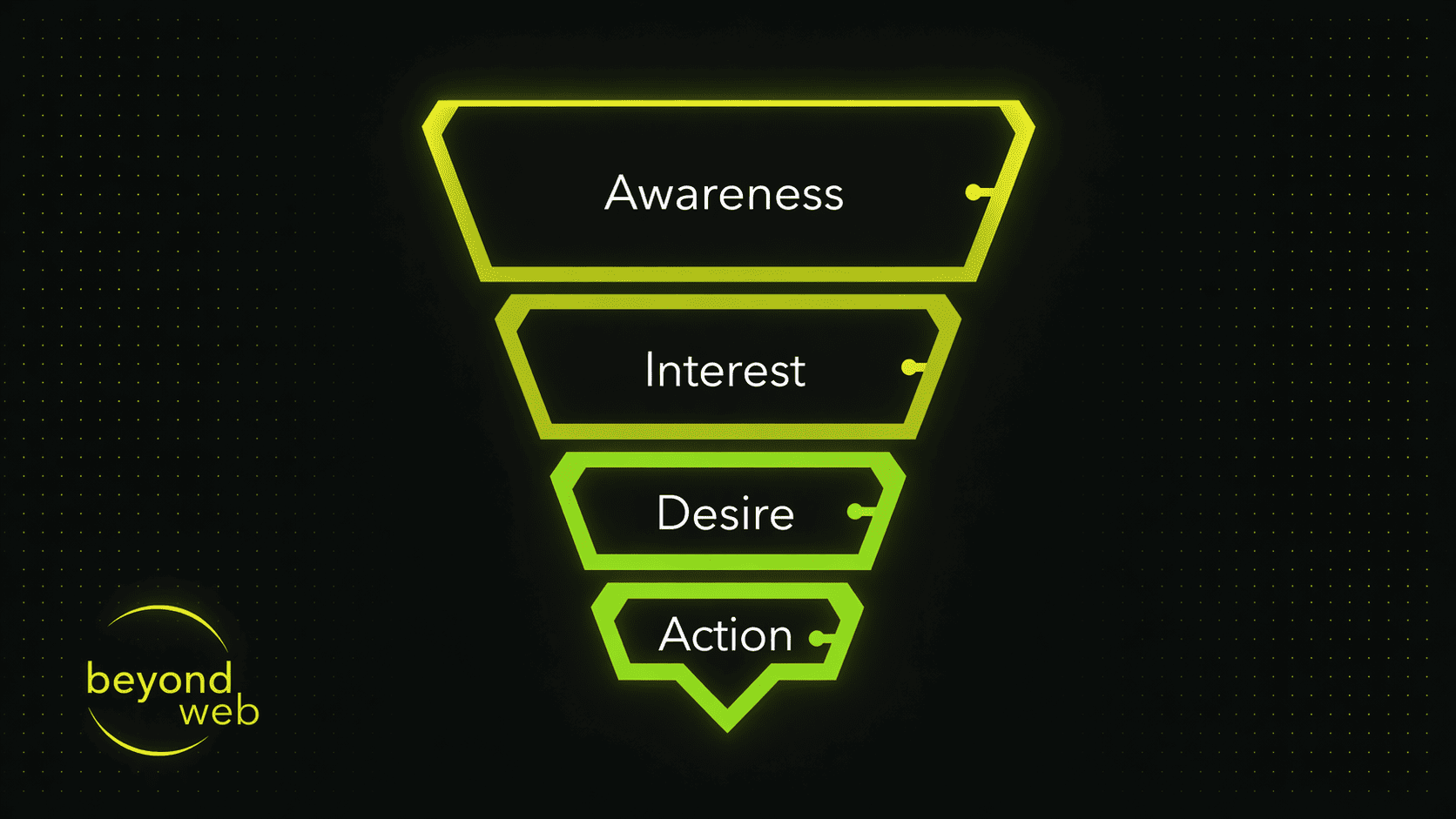
Ziel einer umfassenden SEO-Strategie ist es, die richtigen Keywords nicht nur aus den einzelnen Hauptkategorien auszuwählen, sondern diese auch so einzusetzen, dass sie jede Phase des Kunden-Funnels gezielt ansprechen.
Dadurch wird die Wahrscheinlichkeit erhöht, potenzielle Kunden erfolgreich anzusprechen, und es führt letztendlich auch zu höheren Konversionen.
Neben dem Aspekt der Suchintention ist die Bewertung des Suchvolumens sehr wichtig.
Keywords mit hohem Suchvolumen können zwar mehr Traffic anziehen, sind aber oft mit starker Konkurrenz verbunden.
Daher ist es wichtig, ein Gleichgewicht zu finden und auch Keywords mit mittlerem oder niedrigerem Suchvolumen zu berücksichtigen, die möglicherweise weniger Wettbewerb aufweisen und spezifischer für die Zielgruppe sind.
Auch die Relevanz der Keywords für das Geschäftsmodell oder die angebotenen Dienstleistungen ist ein wichtiger Faktor.
Keywords, die eng mit den Kernprodukten oder -dienstleistungen verbunden sind, sollten höher priorisiert werden, da sie qualifizierten Traffic anziehen, der zu Konversionen führen kann.
Ein weiterer, wichtiger Aspekt ist die Konkurrenzanalyse.
Mithilfe von Tools wie Ahrefs kann man die Konkurrenten untersuchen und herausfinden, für welche Keywords diese ranken.
Diese Analyse gibt Aufschluss darüber, welche Keywords in der Branche erfolgreich sind, und hilft, Trends und Muster zu erkennen.
Nach der Identifizierung der von Konkurrenten genutzten Keywords kann entschieden werden, ob es sinnvoll ist, diese in die eigene Keyword-Liste aufzunehmen.
Dies hängt von der Relevanz der Keywords, dem potenziellen Suchvolumen und der Wettbewerbsintensität ab.
Manchmal kann es auch strategisch klug sein, Nischen-Keywords zu wählen, um in diesen Bereichen eine Führungsposition zu erlangen.
Durch die Kombination aller genannten Aspekte kann eine umfassende und effektive SEO-Strategie entwickelt werden.
Diese Strategie sorgt nicht nur für eine verbesserte Sichtbarkeit in Suchmaschinen, sondern erhöht auch die Chancen, dass Website-Besucher tatsächlich Interesse an den angebotenen Produkten oder Dienstleistungen haben.
#4 – On Page SEO
On Page SEO ist ein grundlegender Aspekt, der sich auf die SEO Optimierung einzelner Webseiten konzentriert.
Dies umfasst insbesondere die Inhalte auf der Website, um ein besseres Ranking in Suchmaschinen zu erreichen und die Nutzererfahrung zu verbessern.
Dabei geht es bei der On Page SEO vor allem darum, die Qualität und Relevanz der Inhalte auf der Website sicherzustellen, um sowohl die Suchmaschinen als auch die Website-Besucher zufriedenzustellen.
Im Folgenden werden die wichtigsten Schlüsselelemente von On Page SEO erläutert, die dabei helfen, die Leistung einer Website in Suchmaschinen zu optimieren.
Keywords an den «richtigen Orten» platzieren
Die korrekte Platzierung von Keywords ist ein zentraler Bestandteil der On Page SEO.
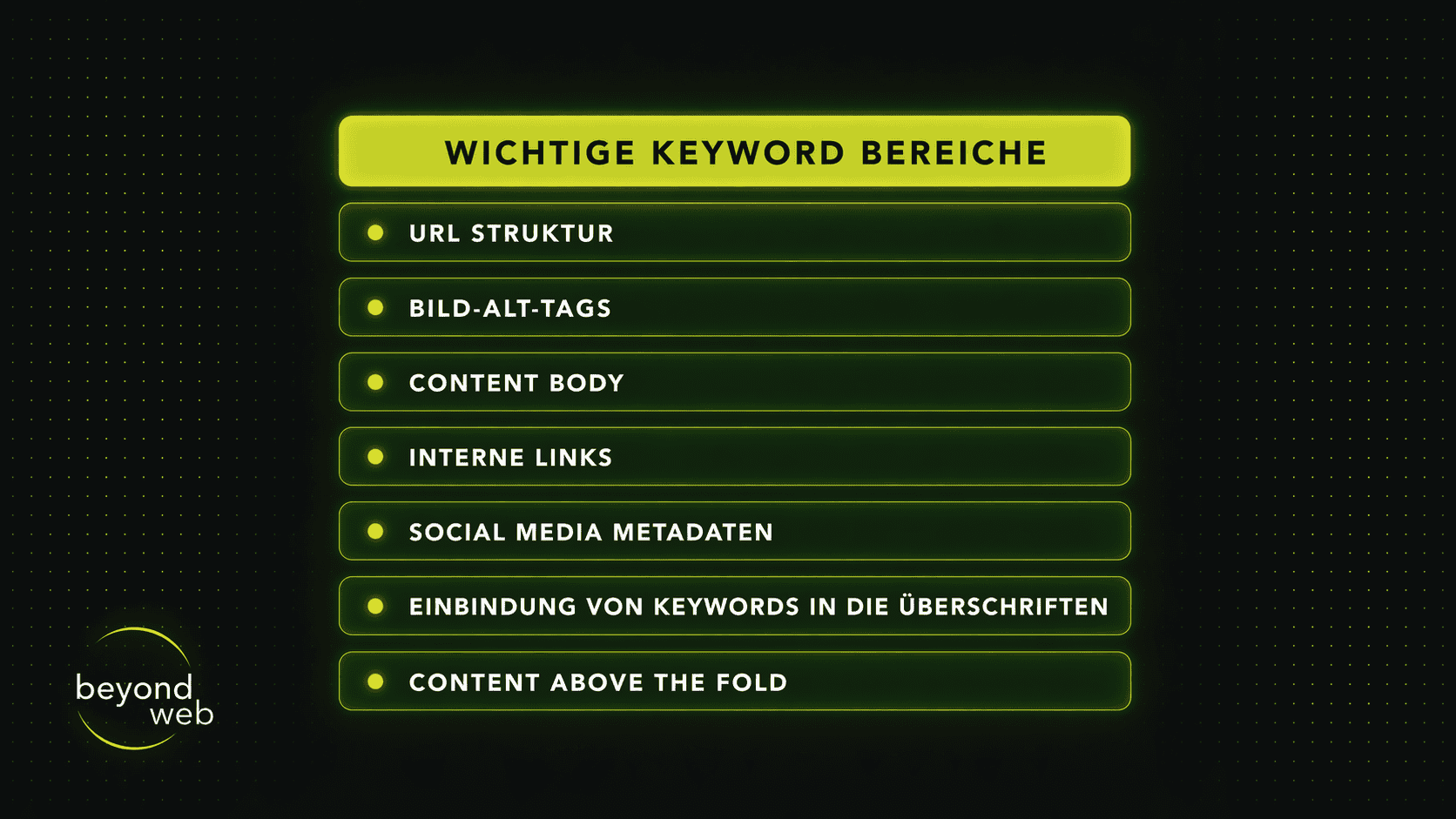
Neben dem Titel, den Überschriften, der Meta-Beschreibung und dem ersten Absatz des Inhalts gibt es weitere wichtige Bereiche, in denen Keywords sinnvoll eingesetzt werden können, um die Sichtbarkeit und das Ranking deiner Website zu verbessern:
1. URL-Struktur
Die Integration von Keywords in die URL deiner Seite kann dazu beitragen, die Relevanz des Inhalts für Suchmaschinen zu unterstreichen.
Eine saubere, keywordreiche URL ist nicht nur SEO-freundlich, sondern auch nutzerfreundlich, da sie den Inhalt der Seite klar kommuniziert.
2. Bild-Alt-Tags
Bilder bieten eine hervorragende Gelegenheit, Keywords einzubinden.
Durch das Hinzufügen von Alt-Tags mit relevanten Keywords verbesserst du nicht nur die Zugänglichkeit deiner Website, sondern erhöhst auch die Chancen, in bildbasierten Suchanfragen gefunden zu werden.
3. Content-Body
Neben dem ersten Absatz sollten Keywords über den gesamten Text verteilt werden.
Dabei ist es wichtig, ein Gleichgewicht zu finden, damit der Text natürlich und lesbar bleibt.
Keywords sollten im Kontext stehen und den Inhalt sinnvoll ergänzen.
4. Interne Links
Die Verwendung von Keywords in Ankertexten für interne Verlinkungen kann die SEO-Leistung verbessern.
Es hilft Suchmaschinen, die Verbindung zwischen verschiedenen Seiten deiner Website zu verstehen und die Relevanz bestimmter Keywords hervorzuheben.
5. Social Media Metadaten
Obwohl Social Media Metadaten nicht direkt das SEO-Ranking beeinflussen, können sie dennoch dazu beitragen, die Reichweite und Sichtbarkeit deiner Inhalte zu erhöhen.
Die Integration von Keywords in Social Media Titel und -beschreibungen kann die Klickrate erhöhen.
6. Einbindung von Keywords in die Überschriften
Ein wichtiger Bestandteil ist die sorgfältige Einbindung von Keywords in die Überschriften der Webseite.
Dies erhöht die Relevanz und Sichtbarkeit der Seite für spezifische Suchanfragen.
Jedoch ist es essentiell, beim Einbinden der Keywords in Überschriften und Texte darauf zu achten, kein Keyword Stuffing zu betreiben.
Keyword Stuffing, also das übermässige Verwenden von Schlüsselwörtern, kann sich negativ auf das Ranking auswirken, da Suchmaschinen dies als Manipulationsversuch werten können.
Stattdessen sollten Keywords natürlich und kontextbezogen in den Inhalt integriert werden, sodass sie den Fluss und die Lesbarkeit des Textes nicht beeinträchtigen.
7. Content above the fold
Ebenfalls wichtig ist die Platzierung von Content „above the fold“, also im sofort sichtbaren Bereich, wenn eine Website geladen wird.
Dies bedeutet, dass bereits im oberen Bereich der Webseite, ohne dass der Nutzer scrollen muss, relevanter Inhalt präsentiert wird.
Es ist empfehlenswert, dass dieser sichtbare Inhalt einen kleinen Text oder einen prägnanten Satz enthält, der das Ziel-Keyword oder eine Variation davon beinhaltet.
Die strategische Platzierung von Keywords an diesen Orten hilft demnach nicht nur dabei, Suchmaschinen die Relevanz deiner Inhalte zu signalisieren, sondern verbessert auch das Nutzererlebnis, indem sie Besuchern ermöglicht, schnell und einfach zu erkennen, ob deine Seite die Informationen enthält, nach denen sie suchen.
Die Grafik zeigt dir noch einmal im Überblick, in welchen wichtigen Bereichen du Keywords einsetzen solltest:
Vermeide „Thin Content“ und duplizierte Inhalte
„Thin Content“ bezeichnet Inhalte, die wenig bis keinen Mehrwert für den Nutzer bieten.
In der Regel handelt es sich dabei um Inhalte, die weniger als 400 Wörter im Haupttext umfassen.
Solche Inhalte sind oft oberflächlich, liefern keine neuen oder nützlichen Informationen und tragen nicht dazu bei, die Fragen oder Bedürfnisse der Zielgruppe zu erfüllen.
Stattdessen sollte der Fokus auf die Erstellung von detaillierten, gut recherchierten und informativen Inhalten gelegt werden, die echten Mehrwert bieten und sich von der Masse abheben.
Um solchen Inhalt erstellen zu können, muss auf folgende Punkte geachtet werden:
1. Inhaltstiefe
Ein wichtiger Aspekt ist die Inhaltstiefe.
Inhalte sollten umfassend und gründlich sein, verschiedene Facetten eines Themas beleuchten, häufig gestellte Fragen beantworten oder Expertenmeinungen und Fallstudien einbeziehen.
Dies zeigt nicht nur Expertise, sondern erhöht auch die Relevanz und den Wert der Website für Suchmaschinen und Nutzer.
2. Einzigartigkeit
Inhalte sollten originell sein und nicht von anderen Quellen kopiert werden.
Suchmaschinen, insbesondere Google, bevorzugen originelle Inhalte und können duplizierte Inhalte erkennen, was das SEO-Ranking negativ beeinflussen kann.
Eine Plagiatsprüfung kann dabei helfen, sicherzustellen, dass der Text wirklich einzigartig ist und keine ungewollten Überschneidungen mit bestehenden Inhalten aufweist.
Insgesamt ist es wichtig, eine eigene Perspektive oder einen einzigartigen Ansatz zu einem Thema zu bieten.
3. Aktualität der Inhalte
Veraltete Informationen können den Wert und die Glaubwürdigkeit einer Website beeinträchtigen.
Daher ist es ratsam, Inhalte regelmässig zu aktualisieren und auf den neuesten Stand zu bringen, um als relevante und vertrauenswürdige Informationsquelle zu gelten.
4. Vermeidung von Keyword-Füllung
Keywords sind zwar ein zentrales Element der SEO, doch ihre Übernutzung in Texten wirkt unnatürlich und kann von Suchmaschinen als Spam eingestuft werden.
Keywords sollten daher auf natürliche Weise in den Inhalt integriert werden, sodass sie den Lesefluss nicht stören und für den Leser einen Mehrwert darstellen.
Passe den Content auf die Suchintention an
Das Anpassen des Inhalts an die Suchintention ist ein entscheidender Schritt.
Die Suchintention, auch Nutzerintention genannt, bezieht sich auf das Ziel oder die Absicht, die ein Nutzer hat, wenn er eine Suchanfrage in einer Suchmaschine eingibt.
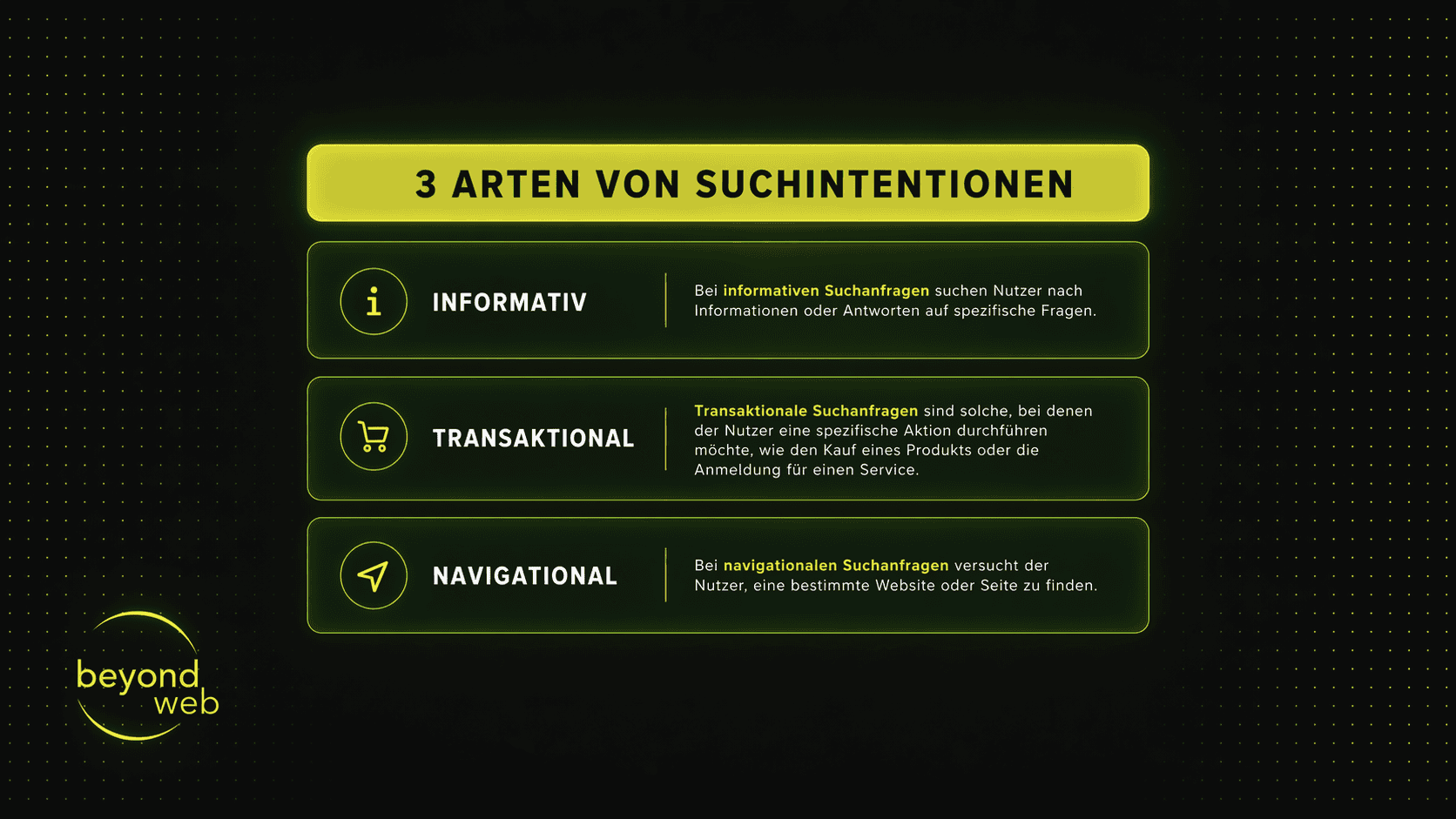
Die drei Haupttypen von Suchintentionen sind informativ, transaktional und navigational.
Im Folgenden werde ich dir den Unterschied zwischen diesen drei Suchintentionen erklären:
1. Informativer Content
Bei informativen Suchanfragen suchen Nutzer nach Informationen oder Antworten auf spezifische Fragen.
In diesem Fall sollte dein Inhalt darauf ausgerichtet sein, diese Informationen auf klare und verständliche Weise bereitzustellen.
Artikel, Blog-Beiträge, FAQs und Leitfäden eignen sich hervorragend für informative Suchanfragen.
Es ist wichtig, dass der Inhalt gründlich recherchiert und vertrauenswürdig ist, um die Glaubwürdigkeit zu gewährleisten.
2. Transaktionaler Content
Transaktionale Suchanfragen sind solche, bei denen der Nutzer eine spezifische Aktion durchführen möchte, wie den Kauf eines Produkts oder die Anmeldung für einen Service.
Für transaktionale Suchintentionen sollte der Inhalt direkt auf das Angebot und den Nutzen des Produkts oder der Dienstleistung ausgerichtet sein.
Klare Call-to-Actions (CTAs), Produktbeschreibungen, Preise und Angebote sind hierbei wichtige Elemente.
3. Navigationaler Content
Bei navigationalen Suchanfragen versucht der Nutzer, eine bestimmte Website oder Seite zu finden.
Hierbei sollte sichergestellt werden, dass die Webseite leicht auffindbar und der Zugang zu den Hauptbereichen der Website intuitiv ist.
Eine klare Struktur und gut sichtbare Navigationselemente sind daher unerlässlich.
Das Verständnis und die Anpassung an die Suchintention ermöglichen es, den Inhalt gezielt auf die Bedürfnisse der Nutzer abzustimmen.
Dies führt nicht nur zu einer besseren User Experience, sondern auch zu einer höheren Wahrscheinlichkeit, dass die Inhalte in Suchmaschinen gut ranken.
Indem man sicherstellt, dass der Content die Absichten und Erwartungen der Nutzer erfüllt, kann die Website effektiver Traffic generieren und die Besucherbindung erhöhen.
Fokussiere nur ein Fokus-Keyword pro Seite
Die Ausrichtung jeder Seite deiner Website auf ein spezifisches Hauptkeyword oder eine Keyword-Phrase ist sehr wichtig.
Diese Vorgehensweise ermöglicht es Suchmaschinen, den Hauptinhalt und die zentrale Botschaft jeder Seite leichter zu identifizieren und zu verstehen.
Die Auswahl des richtigen Fokus-Keywords für jede Seite erfordert Recherche und strategische Planung.
Dabei solltest du ein Keyword wählen, das nicht nur relevant für den Inhalt der Seite ist, sondern auch das Potenzial hat, Traffic anzuziehen.
Das Keyword sollte ausserdem in den wichtigsten Elementen der Seite wie dem Titel, den Überschriften, der Meta-Beschreibung und im Haupttext vorkommen.
Diese konsistente Verwendung des Keywords signalisiert Suchmaschinen die zentrale Thematik der Seite.
Es ist jedoch wichtig, trotzdem darauf zu achten, ein Gleichgewicht zu halten und eine Überoptimierung zu vermeiden.
Der Inhalt sollte immer natürlich und für den Nutzer wertvoll bleiben, ohne dass das Keyword zu häufig oder aufdringlich verwendet wird.
Insgesamt unterstützt die Fokussierung auf ein Hauptkeyword pro Seite Suchmaschinen dabei, den spezifischen Kontext und die Ausrichtung deiner Inhalte besser zu verstehen.
Das kann zu einer verbesserten Sichtbarkeit und einem höheren Ranking beitragen.
Verwende eine saubere Überschriftsstruktur (H-tags)
Die Verwendung einer klaren und hierarchischen Überschriftenstruktur ist ein wesentliches Element, das sowohl für Suchmaschinen als auch für Nutzer von grosser Bedeutung ist.
Eine strukturierte Anwendung von H-Tags (H1, H2, H3 usw.) auf deiner Webseite ermöglicht es, den Inhalt logisch zu gliedern und wichtige Informationen hervorzuheben.
Beginne immer mit einem H1-Tag für den Haupttitel deiner Seite.
Dieser Titel sollte das zentrale Thema oder Keyword der Seite enthalten und klar und prägnant sein.
Es ist wichtig, dass jede Seite nur ein H1-Tag hat, um die Hauptbotschaft zu betonen und Verwirrung zu vermeiden.
Für Unterüberschriften solltest du H2-Tags verwenden.
Diese helfen dabei, den Inhalt in thematisch zusammenhängende Abschnitte zu unterteilen und die Lesbarkeit zu verbessern.
H2-Tags können auch zur Verbesserung des SEO-Rankings beitragen, indem sie relevante Sekundär-Keywords enthalten.
Weiterführende Unterabschnitte können mit H3- oder H4-Tags strukturiert werden.
Diese unterstützen eine noch detailliertere Gliederung und helfen dabei, den Inhalt für den Nutzer übersichtlicher zu gestalten.
Bei der Verwendung dieser Tags ist es wichtig, eine logische Hierarchie zu befolgen und sie konsistent einzusetzen.
Neben der Verbesserung der Lesbarkeit und Nutzererfahrung tragen klare Überschriftenstrukturen dazu bei, dass Suchmaschinen den Inhalt deiner Seite besser verstehen und indexieren können.
Eine gut strukturierte Seite mit korrekt eingesetzten H-Tags hat somit bessere Chancen, in den Suchergebnissen höher zu ranken.
Füge interne und externe Verlinkungen hinzu
Die Integration von internen und externen Verlinkungen ist sehr wichtig, da sie sowohl die Nutzererfahrung als auch die Suchmaschinenoptimierung deiner Website wesentlich verbessern kann.
Interne Verlinkungen sind Links, die von einer Seite deiner Website zu einer anderen führen.
Sie sind essenziell für eine effiziente Navigation und helfen dabei, eine hierarchische Struktur innerhalb deiner Website aufzubauen.
Durch interne Links kannst du Nutzer zu weiteren relevanten und ergänzenden Inhalten führen, was nicht nur die Verweildauer auf deiner Website erhöht, sondern auch dazu beiträgt, die Autorität und das Ranking deiner Seiten in Suchmaschinen zu verbessern.
Darüber hinaus helfen interne Verlinkungen dabei, die Linkpower innerhalb deiner Website zu verteilen, und sie sorgen dafür, dass Suchmaschinen alle deine Seiten effektiv crawlen und indexieren können.
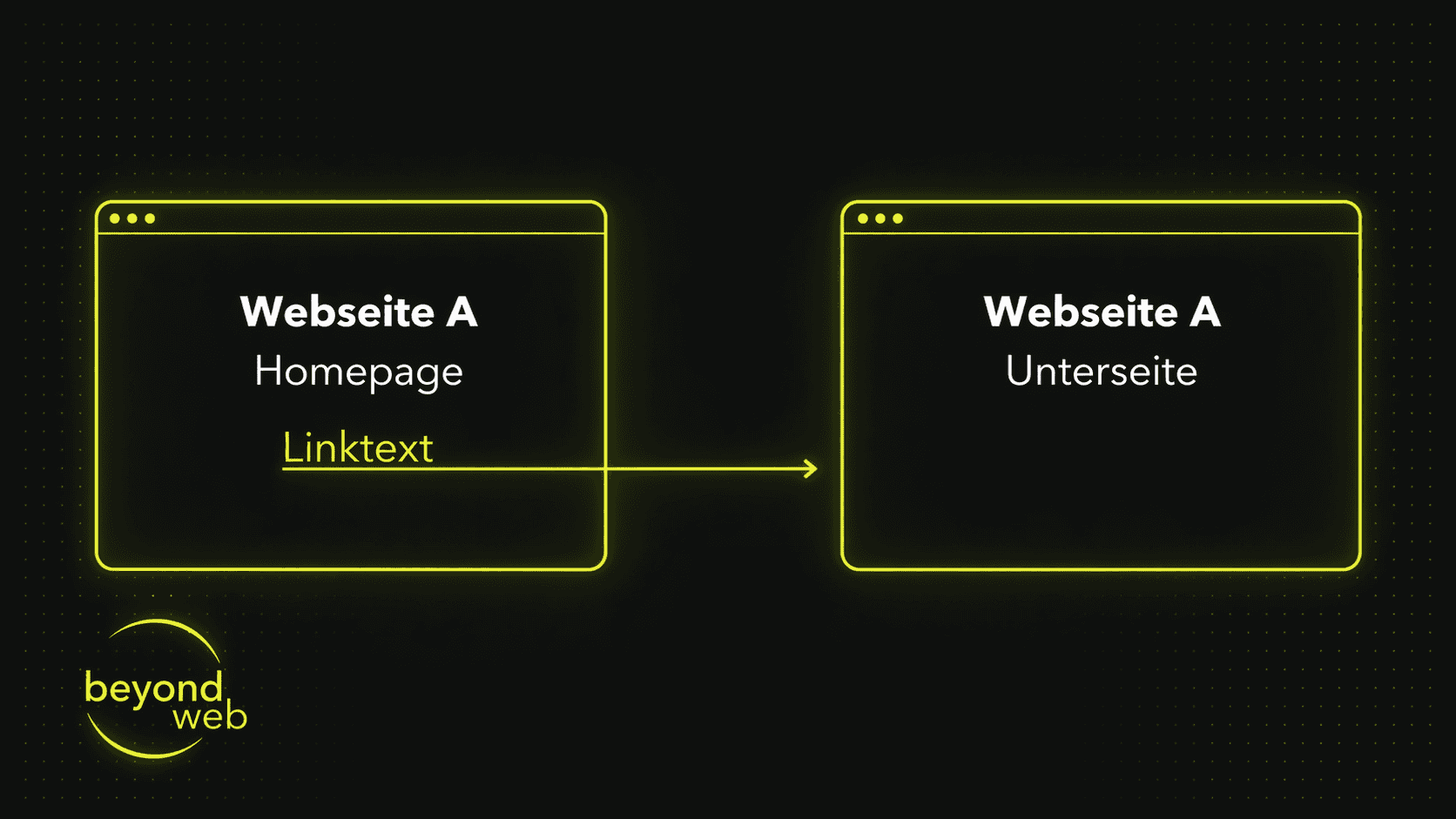
Externe Verlinkungen hingegen sind Links, die von deiner Website zu anderen Domains führen.
Diese Art von Links ist wichtig, um die Glaubwürdigkeit und Vertrauenswürdigkeit deiner Inhalte zu untermauern.
Indem du auf qualitativ hochwertige, vertrauenswürdige und thematisch relevante externe Quellen verlinkst, bietest du den Nutzern zusätzliche Informationen und zeigst gleichzeitig Suchmaschinen, dass deine Inhalte gut recherchiert und fundiert sind.

Beim Setzen von Links, sowohl intern als auch extern, ist es wichtig, relevante und natürliche Ankertexte zu verwenden.
Diese sollten den Inhalt der verlinkten Seite genau beschreiben und dem Nutzer einen klaren Hinweis darauf geben, was ihn beim Klicken auf den Link erwartet.
Füge eigene Rich Content Medien hinzu (Bilder, Videos etc.)
Die Integration von Rich Content Medien verbessert die Nutzererfahrung erheblich und trägt gleichzeitig zur Attraktivität deiner Website für Suchmaschinen bei.
Das ist deshalb so, weil visuelle Medien es ermöglichen, komplexe Informationen verständlich darzustellen.
Dadurch ziehen sie die Aufmerksamkeit der Nutzer auf sich, lockern den Textinhalt auf und führen zu einer Steigerung der Verweildauer auf der Seite.
Bei der Verwendung von Bildern ist es wichtig, diese mit relevanten Alt-Texten zu versehen.
Alt-Texte helfen Suchmaschinen, den Inhalt und Kontext von Bildern zu verstehen, und sind besonders wichtig für die Bildsuche.
Sie verbessern zudem die Zugänglichkeit deiner Website, da Screenreader Alt-Texte verwenden, um Bildinhalte für sehbehinderte Nutzer zu beschreiben.
Neben Bildern können aber auch Videos eine wertvolle Ergänzung zu deiner Website sein.
Sie bieten eine dynamische Möglichkeit, Inhalte zu präsentieren und komplexe Themen leicht verständlich zu machen.
Videos können auch zur Erhöhung der Nutzerinteraktion beitragen und bieten die Möglichkeit, deine Marke oder Produkte auf eine ansprechende und informative Weise zu präsentieren.
Grafiken und Infografiken sind weitere nützliche Tools, um Daten und Statistiken ansprechend zu visualisieren und damit die Lesbarkeit und Verständlichkeit deines Contents zu verbessern.
Sie können dazu beitragen, abstrakte Konzepte greifbar zu machen und komplexe Informationen auf eine leicht verdauliche Art und Weise zu vermitteln.
Es ist jedoch wichtig, dass alle Multimedia-Elemente richtig optimiert sind.
Dazu gehört, dass Dateigrössen minimiert werden, um die Ladezeiten der Website nicht negativ zu beeinflussen.
Zudem sollten alle Medien im Kontext des Inhalts und der Keywords, auf die du dich konzentrierst, stehen.
Aktualisiere deine Inhalte regelmässig
Die regelmässige Aktualisierung von Inhalten ist ein wichtiger Punkt in der On-Page-SEO-Strategie.
Indem du deine Inhalte kontinuierlich auffrischst und aktualisierst, signalisierst du Suchmaschinen, dass deine Website aktiv gepflegt wird und stets relevante Informationen bietet.
Dies ist besonders wichtig, da Suchmaschinen darauf ausgerichtet sind, den Nutzern die aktuellsten und relevantesten Informationen bereitzustellen.
Aktualisierte Inhalte können somit massgeblich dazu beitragen, dein Ranking in den Suchergebnissen zu verbessern.
Regelmässige Updates können dabei verschiedene Formen annehmen.
Es kann sich um das Hinzufügen neuer Informationen, das Aktualisieren von Statistiken oder Daten, das Überarbeiten veralteter Abschnitte oder das Hinzufügen neuer Abschnitte zu bestehenden Inhalten handeln.
Auch die Anpassung an aktuelle Trends oder Entwicklungen in deiner Branche kann Teil dieser Aktualisierungen sein.
Darüber hinaus ist es wichtig, dass deine Inhalte kontinuierlich auf ihre Relevanz und Genauigkeit überprüft werden.
Änderungen in der Industrie, neue Forschungsergebnisse oder technologische Entwicklungen können Auswirkungen auf die Aktualität deiner Inhalte haben.
Durch die regelmässige Überprüfung und Anpassung deiner Inhalte stellst du sicher, dass deine Website eine vertrauenswürdige und zuverlässige Informationsquelle bleibt.
Neben der Verbesserung deines Rankings in Suchmaschinen verbessern regelmässig aktualisierte Inhalte auch die Nutzererfahrung.
Nutzer, die auf aktuelle und informative Inhalte stossen, sind eher geneigt, länger auf deiner Seite zu verweilen, häufiger zurückzukehren und letztlich die von dir angebotenen Produkte oder Dienstleistungen in Anspruch zu nehmen.
#6 – Link Building
Link Building ist ein wesentlicher Aspekt der Suchmaschinenoptimierung (SEO), der sich auf das Erstellen von Verlinkungen zu deiner Website konzentriert.
Diese Verlinkungen, auch bekannt als Backlinks, sind entscheidend, da sie ein Indikator für die Popularität und Relevanz deiner Website sind.
Im Rahmen einer effektiven SEO-Strategie werden verschiedene Ansätze des Link Buildings genutzt, um die Autorität und Sichtbarkeit deiner Website zu steigern.
Im Folgenden werde ich dir drei Strategien des Link Buildings näher erläutern.
Passives Linkbuilding durch Content Marketing
Das Konzept des passiven Linkbuildings durch Content Marketing basiert darauf, Inhalte von solch hoher Qualität zu erstellen, dass sie von sich aus die Aufmerksamkeit anderer Webseitenbetreiber, Blogger und Nutzer auf sich ziehen.
Der Schlüssel zu diesem Ansatz liegt darin, Content zu produzieren, der nicht nur informativ und relevant ist, sondern auch einzigartig und ansprechend genug, um eine natürliche Verlinkung zu fördern.
Diese Art des Linkbuildings stützt sich auf die Erstellung einer breiten Palette von Inhalten.
Dazu gehören tiefgründige Blogposts, die komplexe Themen umfassend behandeln, Infografiken, die Daten und Fakten auf visuell ansprechende Weise präsentieren, detaillierte Studien, die neue Einblicke in deine Branche bieten, und Videos, die deine Botschaft auf unterhaltsame und einprägsame Weise vermitteln.
Der Fokus liegt dabei auf der Schaffung eines Mehrwerts für den Leser oder Betrachter, der über das übliche Mass hinausgeht.
Eine erfolgreiche Content-Marketing-Strategie, die passives Linkbuilding unterstützt, erfordert auch die Berücksichtigung von Aspekten wie Zielgruppenanalyse und Content-Planung.
Es ist wichtig, Themen zu identifizieren, die nicht nur relevant, sondern auch von Interesse für deine Zielgruppe sind.
Durch das Verstehen der Bedürfnisse und Fragen deiner Zielgruppe kannst du Inhalte erstellen, die genau diese Punkte ansprechen und somit die Wahrscheinlichkeit einer natürlichen Verlinkung erhöhen.
Zusätzlich zur inhaltlichen Qualität spielt die Verbreitung deiner Inhalte eine entscheidende Rolle.
Die Nutzung verschiedener Kanäle wie Social Media, E-Mail-Newsletter und Gastbeiträge auf anderen Blogs kann dabei helfen, deine Inhalte einem breiteren Publikum zugänglich zu machen.
Je mehr Sichtbarkeit deine Inhalte erhalten, desto höher ist die Wahrscheinlichkeit, dass sie geteilt und verlinkt werden.
Letztlich führt passives Linkbuilding durch Content Marketing nicht nur zu einer Steigerung der Anzahl an Backlinks, sondern trägt auch zur Stärkung deiner Markenautorität und zur Verbesserung deiner Online-Reputation bei.
Durch die kontinuierliche Produktion hochwertiger Inhalte etablierst du dich als vertrauenswürdige Quelle in deiner Branche, was wiederum langfristig zu einer stärkeren Online-Präsenz und verbesserten SEO-Ergebnissen führt.
Aktives Linkbuilding durch Outreach
Aktives Linkbuilding durch Outreach ist ein proaktiver Ansatz, der darauf abzielt, direkt Beziehungen zu anderen Webseitenbetreibern, Bloggern und Influencern aufzubauen, um hochwertige Backlinks zu erwerben.
Im Gegensatz zum passiven Linkbuilding, bei dem die Inhalte für sich selbst sprechen, erfordert dieser Ansatz eine direkte Kommunikation und Interaktion mit potenziellen Linkgebern.
Der Prozess beginnt in der Regel mit der Identifikation von relevanten und einflussreichen Webseiten, Blogs oder Social-Media-Persönlichkeiten in deiner Branche oder deinem Nischenbereich.
Dies kann beispielsweise durch die Analyse von Webseiten erfolgen, die bereits Inhalte ähnlich denen deiner eigenen Website veröffentlichen oder eine Zielgruppe ansprechen, die für dein Unternehmen von Interesse ist.
Sobald eine Liste potenzieller Kontakte erstellt wurde, folgt der nächste Schritt: das Outreach.
Hierbei ist es wichtig, individuell zugeschnittene Nachrichten zu formulieren, die den Mehrwert einer Verlinkung aufzeigen.
Ziel ist es, einen überzeugenden Grund zu liefern, warum eine Verlinkung zu deiner Website sowohl für den potenziellen Linkgeber als auch dessen Publikum von Nutzen sein könnte.
Dabei können verschiedene Ansätze verfolgt werden, wie das Angebot eines Gastbeitrags, das Teilen einer Studie oder die Vorstellung eines einzigartigen Produktes oder Dienstes.
Beim Outreach ist es entscheidend, professionell und respektvoll zu kommunizieren.
Das Aufbauen echter, langfristiger Beziehungen steht im Vordergrund, nicht der schnelle Gewinn von Backlinks.
Authentizität und eine auf gegenseitigem Nutzen basierende Herangehensweise können hier den Unterschied ausmachen.
Neben der direkten Kontaktaufnahme können auch andere Taktiken des aktiven Linkbuildings angewendet werden, wie das Teilnehmen an Branchendiskussionen, das Kommentieren von Blogbeiträgen oder das aktive Mitwirken in Foren und auf Social-Media-Plattformen.
Durch diese Aktivitäten kannst du deine Sichtbarkeit und Autorität in deiner Branche erhöhen und gleichzeitig potenzielle Möglichkeiten für Backlinks schaffen.
Aktives Linkbuilding durch Outreach ist eine Zeit und Ressourcen intensive Strategie, die jedoch bei korrekter Anwendung zu wertvollen und nachhaltigen Backlinks führen kann.
Diese Backlinks sind nicht nur für die Verbesserung des Rankings deiner Website wichtig, sondern tragen auch zur Steigerung deiner Glaubwürdigkeit und Autorität in deinem Fachgebiet bei.
Backlinks kaufen
Das Kaufen von Backlinks, eine Methode im Linkbuilding, die oft für Diskussionen sorgt, kann in manchen Fällen Vorteile bieten, birgt jedoch auch signifikante Risiken.
Dieser Ansatz, bei dem Backlinks direkt von anderen Webseiten gekauft werden, zielt darauf ab, die SEO-Performance einer Website kurzfristig zu steigern.
Allerdings kann diese Praxis, die auf den ersten Blick als schnelle Lösung zur Erhöhung der Linkpopularität erscheint, von Suchmaschinen wie Google negativ bewertet werden.
Werden solche gekauften Links erkannt, drohen Strafen, die das Ranking einer Website erheblich beeinträchtigen können.
Trotz der Gefahren, die mit dem Kauf von Backlinks verbunden sind, gibt es Situationen, in denen diese Methode, wenn sie wohlüberlegt und strategisch eingesetzt wird, positive Auswirkungen haben kann.
Wichtig ist dabei, Links von Webseiten zu erwerben, die thematisch zu deiner eigenen passen und eine logische Verbindung aufweisen.
Eine übermässige Anzahl an gekauften Links sollte vermieden werden, um das Linkprofil natürlich wachsen zu lassen und nicht künstlich aufgebläht wirken zu lassen.
Methoden wie gesponserte Beiträge oder gezielte Partnerschaften können durchaus akzeptable Wege sein, um Backlinks zu generieren, solange diese klar als solche ausgewiesen sind.
Diese Vorgehensweisen können dabei helfen, die benötigte Sichtbarkeit zu erreichen, ohne die Integrität der SEO-Strategie zu gefährden.
Im Endeffekt sollten beim Kauf von Backlinks stets Umsicht und Vorsicht walten.
Obwohl es unter bestimmten Bedingungen und bei sorgfältiger Anwendung von Nutzen sein kann, besteht stets das Risiko negativer Konsequenzen durch Suchmaschinen.
Unternehmen sind gut beraten, alle Vor- und Nachteile abzuwägen und zu prüfen, ob natürlichere und organischere Linkbuilding-Methoden nicht eine bessere Wahl für ihre langfristigen SEO-Ambitionen darstellen.
#7 – Technisches SEO
Technische SEO bezieht sich auf die Optimierung der technischen Aspekte einer Website, um die Crawling- und Indexierungseffizienz durch Suchmaschinen zu verbessern und die Nutzererfahrung zu optimieren.
Diese technischen Anpassungen sind entscheidend, um sicherzustellen, dass deine Website nicht nur inhaltlich, sondern auch in ihrer Struktur und Performance suchmaschinenfreundlich ist.
Im Folgenden werde ich die wichtigsten Aspekte der technischen SEO Grundlagen erklären.
Ladezeiten optimieren
Die Optimierung der Ladezeiten deiner Website ist ein wichtiger Faktor für eine positive Nutzererfahrung und ein entscheidendes Kriterium für ein gutes Ranking in Suchmaschinen.
Websites, die schnell laden, reduzieren nicht nur die Absprungrate, sondern erhöhen auch die Chancen, dass Besucher länger auf deiner Seite bleiben, sich tiefer mit den Inhalten auseinandersetzen und letztendlich zu Kunden werden.
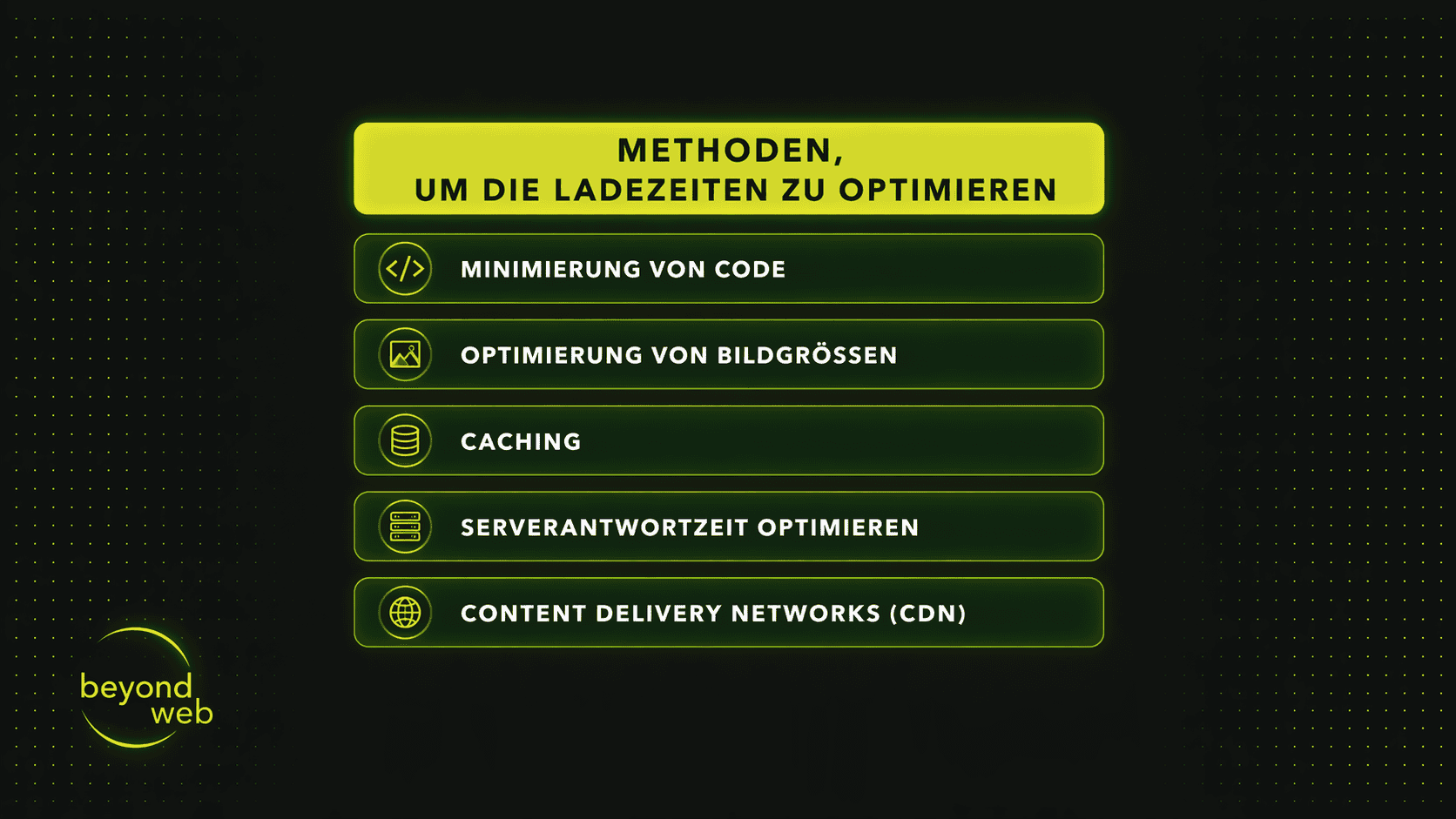
Um die Ladezeiten zu verbessern, gibt es eine Reihe von Massnahmen, die du ergreifen kannst.
Dazu gehört die Minimierung von Code, was bedeutet, unnötigen oder redundanten Code zu entfernen, um die Effizienz der Seite zu steigern.
Ein weiterer wichtiger Schritt ist die Optimierung von Bildgrössen.
Grosse, unkomprimierte Bilder können die Ladezeit einer Webseite erheblich verlangsamen.
Durch die Verwendung von Bildformaten wie WebP oder JPEG XR, die eine höhere Kompression bei gleichbleibender Qualität ermöglichen, sowie durch das Anpassen der Bildgrösse an die tatsächliche Anzeigegrösse auf der Webseite kannst du die Ladezeiten verbessern.
Caching ist ebenfalls eine effektive Methode, um die Ladezeiten zu optimieren.
Durch das Speichern von Teilen deiner Website im Browser des Nutzers können wiederkehrende Besucher schneller auf deine Seite zugreifen.
Dies reduziert die Ladezeit, da nicht alle Elemente der Webseite erneut heruntergeladen werden müssen.
Zusätzlich dazu kannst du die Serverantwortzeit optimieren, indem du auf leistungsfähige Hosting-Lösungen setzt und die Datenbankabfragen effizient gestaltest.
Das Verwenden eines Content Delivery Networks (CDN) kann ebenfalls hilfreich sein, insbesondere wenn deine Zielgruppe geografisch verteilt ist.
CDNs speichern Kopien deiner Webseite auf verschiedenen Servern weltweit und liefern Inhalte von dem Server, der am nächsten zum Nutzer liegt.
Insgesamt ist die Optimierung der Ladezeiten ein fortlaufender Prozess, der regelmässige Überprüfungen und Anpassungen erfordert.
Vermeide kaputte Links
Das Vorhandensein kaputter Links, die zu nicht existierenden oder fehlerhaften Webseiten führen, ist ein Problem, das nicht nur das Nutzererlebnis negativ beeinflusst, sondern auch die Glaubwürdigkeit und das Ranking deiner Website in Suchmaschinen beeinträchtigen kann.
Solche Links können für Besucher frustrierend sein und hinterlassen einen unprofessionellen Eindruck, was wiederum die Wahrnehmung deiner Marke schädigen kann.
Für Suchmaschinen stellen kaputte Links ein Hindernis dar, da sie den Crawling-Prozess erschweren.
Wenn ein Suchmaschinen-Crawler auf einen kaputten Link stösst, kann dies dazu führen, dass er nicht in der Lage ist, die gesamte Website effektiv zu indexieren.
Dies hat zur Folge, dass möglicherweise wichtige Seiten nicht in den Suchergebnissen erscheinen.
Die regelmässige Überprüfung und Korrektur kaputter Links ist daher ein wesentlicher Bestandteil des technischen SEOs.
Es gibt verschiedene Tools und Plugins, die dabei helfen können, kaputte Links auf deiner Website automatisch zu identifizieren.
Einmal identifiziert, sollten diese Links entweder aktualisiert oder entfernt werden, um sicherzustellen, dass alle Verbindungen auf deiner Website funktionsfähig sind.
Ein weiterer wichtiger Aspekt ist die Überwachung von externen Links.
Verweist du auf Inhalte anderer Websites, solltest du regelmässig überprüfen, ob diese noch verfügbar sind.
Änderungen auf externen Seiten, wie das Entfernen von Inhalten oder das Ändern von URLs, können zu kaputten Links führen.
Neben der technischen Seite ist es auch aus Nutzersicht wichtig, kaputte Links zu vermeiden.
Eine gut gepflegte Website, die frei von solchen Problemen ist, verbessert nicht nur die Nutzererfahrung, sondern erhöht auch die Verweildauer und Interaktionsrate der Besucher auf deiner Seite.
Füge Alt Texte zu Bildern hinzu
Das Hinzufügen von Alt-Texten zu Bildern auf deiner Website ist eine wichtige Massnahme, die sowohl die Suchmaschinenoptimierung (SEO) als auch die Zugänglichkeit der Webseite verbessert.
Alt-Texte sind Beschreibungen, die den Inhalt und Kontext von Bildern für Suchmaschinen und Benutzer, die aufgrund von Sehbehinderungen auf Screenreader angewiesen sind, verständlich machen.
Dies ist besonders relevant, da Bilder weder von Suchmaschinen noch von Benutzern mit einer vorhandenen Sehbehinderung direkt „gelesen“ werden können.
Die Alt-Texte liefern dann den benötigten Kontext.
Du solltest deshalb präzise und beschreibend sein, um den Bildinhalt adäquat wiederzugeben.
Es empfiehlt sich, relevante Keywords einzubeziehen, die sowohl zum Bild als auch zum übergeordneten Inhalt der Seite passen.
Dabei ist es wichtig, ein natürliches Mass zu wahren und Keyword-Stuffing zu vermeiden.
Das regelmässige Überprüfen und Aktualisieren von Alt-Texten ist Teil einer umfassenden Wartungsstrategie für deine Website.
Dies stellt sicher, dass deine Inhalte sowohl für Suchmaschinen optimiert als auch für alle Nutzer zugänglich sind, wodurch die Reichweite und Effektivität deiner Online-Präsenz insgesamt verbessert wird.
Verwende Meta-Titel und Metabeschreibungen bei allen Seiten
Die Verwendung von Meta-Titeln und Metabeschreibungen auf allen Seiten deiner Website ist ein entscheidender Schritt, um sowohl die Sichtbarkeit in Suchmaschinen als auch die Nutzererfahrung zu verbessern.
Diese Metadaten bieten eine hervorragende Gelegenheit, einen ersten Eindruck deiner Seite zu vermitteln, und sind oft der ausschlaggebende Faktor dafür, ob ein Nutzer auf dein Suchergebnis klickt oder nicht.
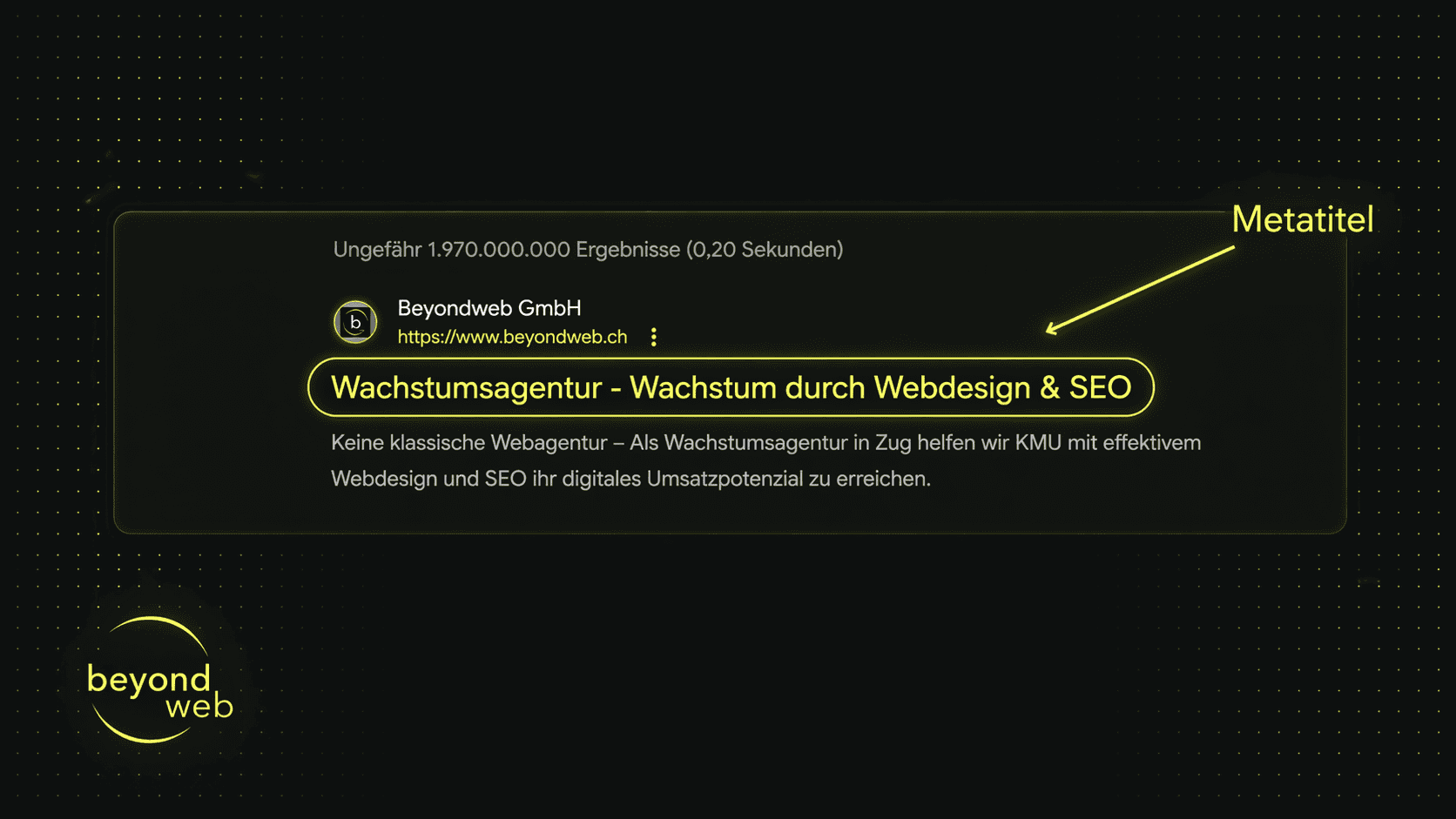
Meta-Titel fungieren als Titel deiner Webseite in den Suchergebnissen.
Sie sollten präzise und ansprechend formuliert sein, um sofort das Interesse der Nutzer zu wecken.
Gleichzeitig ist es wichtig, dass der Meta-Titel den Inhalt der Seite genau widerspiegelt und die Hauptkeywords enthält, für die die Seite ranken soll.
Ein gut optimierter Meta-Titel ist nicht nur für Suchmaschinen relevant, sondern hilft auch Nutzern, schnell zu erkennen, ob deine Seite das bietet, wonach sie suchen.
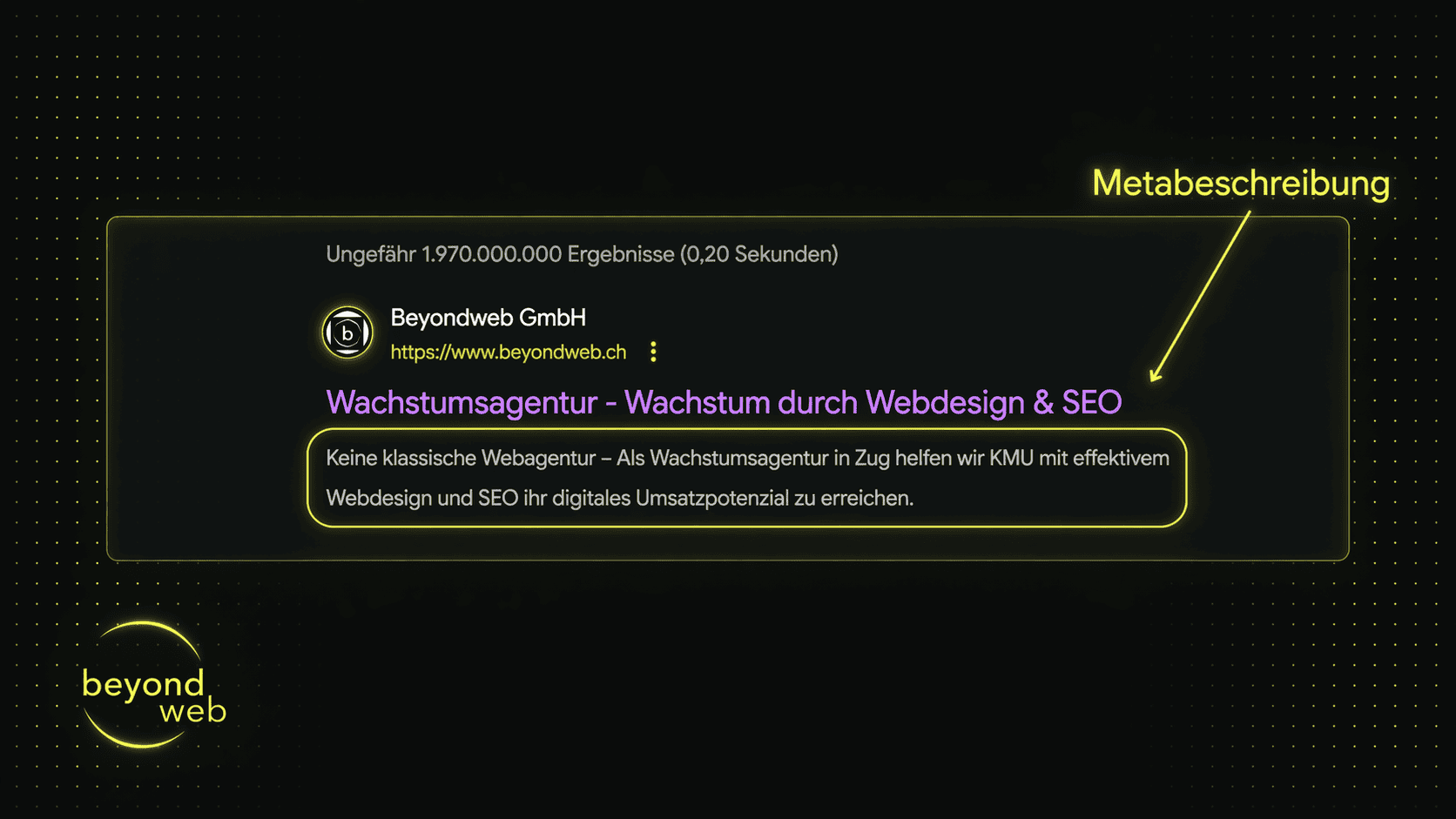
Metabeschreibungen hingegen bieten eine kurze Zusammenfassung des Seiteninhalts und sind unterhalb des Meta-Titels in den Suchergebnissen sichtbar.
Obwohl Metabeschreibungen nicht direkt das Ranking einer Seite beeinflussen, spielen sie eine entscheidende Rolle dabei, die Klickrate (Click-Through-Rate, CTR) zu erhöhen.
Eine gut formulierte Metabeschreibung, die relevante Keywords enthält und einen klaren Mehrwert oder eine Handlungsaufforderung (Call-to-Action) bietet, kann Nutzer effektiv dazu ermutigen, auf deine Seite zu klicken.
Es ist empfehlenswert, für jede Seite deiner Website individuelle Meta-Titel und -beschreibungen zu erstellen, die den einzigartigen Inhalt und Zweck jeder Seite hervorheben.
Dabei sollten die Meta-Titel prägnant sein und 50–60 Zeichen nicht überschreiten, um vollständig in den Suchergebnissen angezeigt zu werden.
Metabeschreibungen sollten informativ und einladend sein und idealerweise zwischen 150 und 160 Zeichen liegen.
#8 – Die 5 wichtigsten Metriken, die du bei SEO messen solltest
Die Messung und Analyse von Metriken ist unerlässlich, um den Erfolg deiner SEO-Bemühungen zu bewerten und zielgerichtete Strategien für die Zukunft zu entwickeln.
Es gibt eine Vielzahl von Metriken, die Aufschluss über verschiedene Aspekte deiner SEO-Strategie geben können.
Die Konzentration auf die wichtigsten Metriken hilft dabei, ein klares Bild von der Effektivität deiner SEO-Aktivitäten zu erhalten.
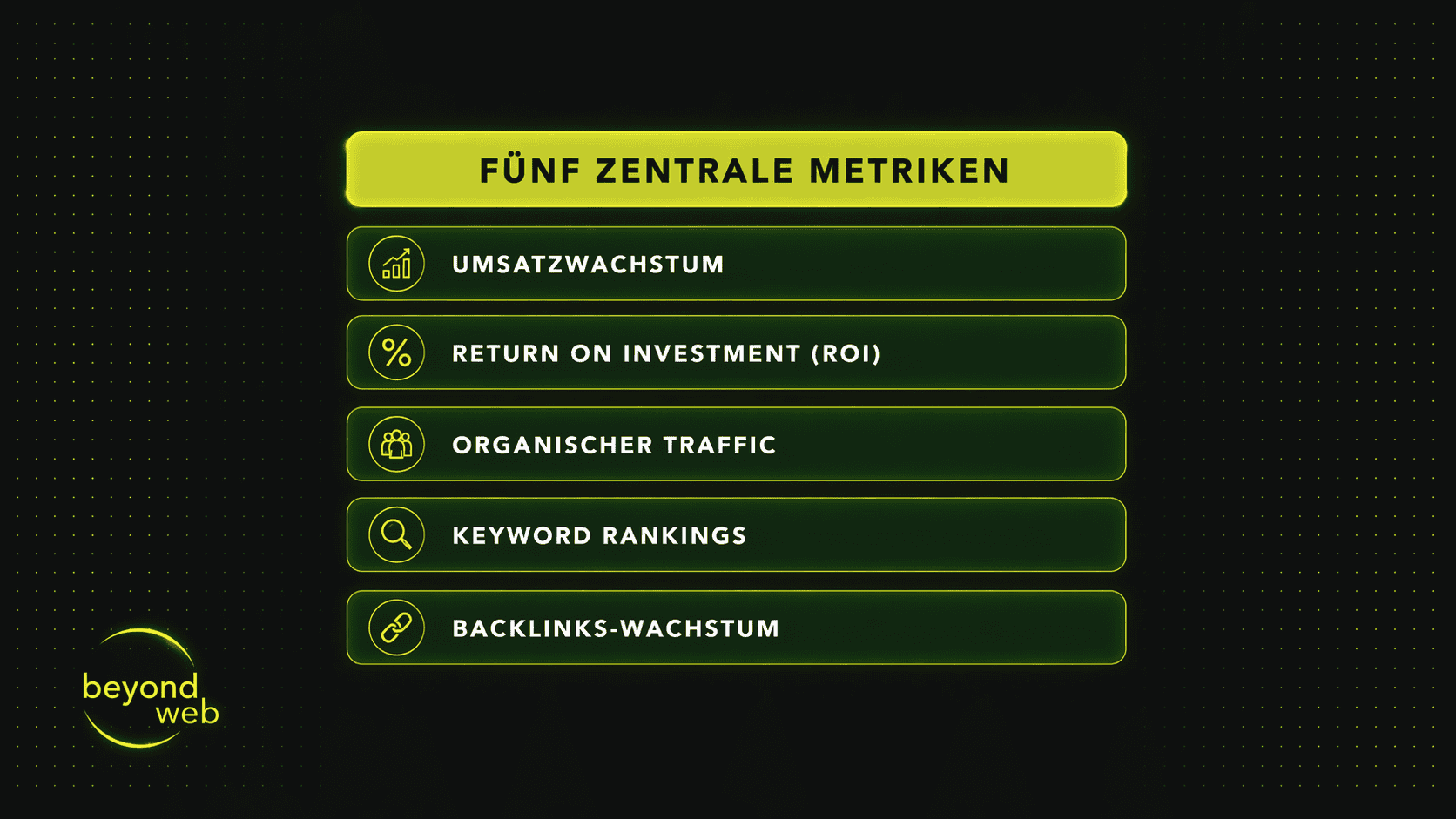
Im Folgenden Abschnitt werden dir fünf zentrale Metriken erläutert, die bei der Bewertung von SEO unverzichtbar sind.
Umsatzwachstum
Das Umsatzwachstum ist eine der aussagekräftigsten Metriken, um den direkten Einfluss deiner SEO-Bemühungen auf den Geschäftserfolg zu messen.
Eine Steigerung des Umsatzes kann ein deutliches Zeichen dafür sein, dass deine SEO-Strategie Früchte trägt, indem sie die Sichtbarkeit deiner Website in Suchmaschinen verbessert und mehr qualifizierten Traffic anzieht.
Dieser qualifizierte Traffic, also Besucher, die gezielt nach deinen Produkten oder Dienstleistungen suchen, ist mit einer höheren Wahrscheinlichkeit bereit, eine Kaufhandlung durchzuführen, was wiederum zu einer Steigerung des Umsatzes führt.
Um den Zusammenhang zwischen SEO und Umsatzwachstum zu analysieren, ist es sinnvoll, Tools wie Google Analytics zu nutzen.
Diese bieten detaillierte Einblicke in das Nutzerverhalten und ermöglichen es dir, den Pfad der Nutzer von der Suchanfrage bis hin zum Kauf nachzuvollziehen.
Durch das Verständnis dieses Pfades kannst du deine SEO-Strategie weiter optimieren und gezielt Massnahmen ergreifen, um die Nutzererfahrung und die Konversionsrate zu verbessern.
Return on Investment (ROI) von SEO
Der Return on Investment (ROI) ist eine zentrale Kennzahl, um die Wirtschaftlichkeit und Effizienz deiner Investitionen in Suchmaschinenoptimierung (SEO) zu bewerten.
Diese Metrik ermöglicht es dir, den finanziellen Erfolg deiner SEO-Bemühungen im Verhältnis zu den dafür aufgewendeten Kosten zu messen.
Ein positiver ROI weist darauf hin, dass die in SEO investierten Ressourcen nicht nur zu einer Verbesserung des Rankings und des Traffics geführt haben, sondern dass diese Verbesserungen auch zu einer Steigerung des Umsatzes oder Gewinns beigetragen haben.
Die Berechnung des ROI für SEO kann jedoch herausfordernd sein, da SEO-Ergebnisse oft nicht sofort sichtbar sind und sich über einen längeren Zeitraum entwickeln.
Zudem können SEO-Massnahmen indirekte Auswirkungen haben, wie die Steigerung der Markenbekanntheit oder die Verbesserung der Nutzererfahrung, die sich nicht unmittelbar in direkten Verkäufen niederschlagen.
Trotzdem ist es wichtig, den ROI regelmässig zu überprüfen, um sicherzustellen, dass deine SEO-Strategie effektiv und rentabel ist.
Organischer Traffic
Organischer Traffic ist ein wesentlicher Indikator für den Erfolg deiner SEO-Strategie.
Er umfasst jene Besucher, die deine Website durch unbezahlte Suchergebnisse finden, also ohne den Einsatz von bezahlter Werbung wie Google Ads.
Eine Zunahme des organischen Traffics deutet oft darauf hin, dass deine Website in den Suchmaschinen für wichtige Keywords besser rankt und somit eine höhere Sichtbarkeit erlangt hat.
Die Steigerung des organischen Traffics ist entscheidend, da sie zeigt, dass deine Inhalte und SEO-Massnahmen bei deiner Zielgruppe Anklang finden.
Im Gegensatz zu bezahltem Traffic, der oft kurzfristige Spitzen in der Besucherzahl erzeugen kann, ist organischer Traffic in der Regel nachhaltiger und kosteneffizienter.
Besucher, die über organische Suchergebnisse auf deine Seite kommen, suchen gezielt nach Informationen, Produkten oder Dienstleistungen, die du anbietest, was die Wahrscheinlichkeit von Konversionen erhöht.
Die Analyse des organischen Traffics liefert dabei wertvolle Einblicke in das Verhalten und die Präferenzen deiner Zielgruppe.
Tools wie Google Analytics ermöglichen es dir, zu verstehen, welche Keywords Besucher auf deine Seite bringen, wie lange sie dort verweilen und wie sie interagieren.
Diese Informationen sind entscheidend, um deine SEO-Strategie weiter zu verfeinern und zielgerichteter auf die Bedürfnisse deiner Besucher einzugehen.
Keyword Rankings
Die Platzierung deiner Keywords in den Suchmaschinenergebnissen ist eine entscheidende Metrik, um den Erfolg deiner SEO-Strategie zu messen.
Die Positionen deiner Keywords in den Suchergebnissen geben Aufschluss darüber, wie sichtbar deine Website für Nutzer ist, die nach diesen spezifischen Begriffen suchen.
Verbesserungen in den Keyword-Rankings sind oft ein klares Zeichen dafür, dass deine Inhalte für Nutzer relevanter geworden sind und Suchmaschinen diese als wertvoller und nützlicher einstufen.
Die Überwachung und Analyse der Keyword-Rankings ermöglichen es dir, die Wirksamkeit deiner SEO-Massnahmen zu bewerten und gegebenenfalls Anpassungen vorzunehmen.
Backlinks-Wachstum
Das Wachstum der Anzahl und Qualität der Backlinks, die auf deine Website verweisen, ist ein entscheidender Indikator für den Erfolg deiner SEO-Bemühungen.
Backlinks, also Links von anderen Websites zu deiner eigenen, sind für Suchmaschinen ein Zeichen der Glaubwürdigkeit und Autorität deiner Inhalte.
Ein Anstieg an hochwertigen Backlinks signalisiert, dass andere Webseitenbetreiber deine Inhalte als wertvoll und vertrauenswürdig ansehen, was wiederum positiv zur Stärkung deiner Position in Suchmaschinenergebnissen beiträgt.
Die Überwachung des Backlinks-Wachstums gibt dir deshalb wertvolle Einblicke in die Effektivität deiner Content-Strategie und deines Linkbuilding-Programms.
Es ermöglicht dir, die Auswirkungen deiner SEO-Strategie zu messen und zu verstehen, welche Arten von Inhalten oder Aktionen die meisten qualitativ hochwertigen Backlinks generieren.
Diese Erkenntnisse sind entscheidend, um deine SEO-Strategie weiter zu optimieren und zu fokussieren.
#9 SEO für lokale Unternehmen (Local SEO)
SEO für lokale Unternehmen, oft als Local SEO bezeichnet, ist ein spezialisierter Bereich der Suchmaschinenoptimierung, der darauf abzielt, die Sichtbarkeit von Unternehmen in lokalen Suchergebnissen zu verbessern.
Dies ist besonders wichtig für Unternehmen, die Dienstleistungen oder Produkte in einem bestimmten geografischen Bereich anbieten und lokale Kunden ansprechen möchten.
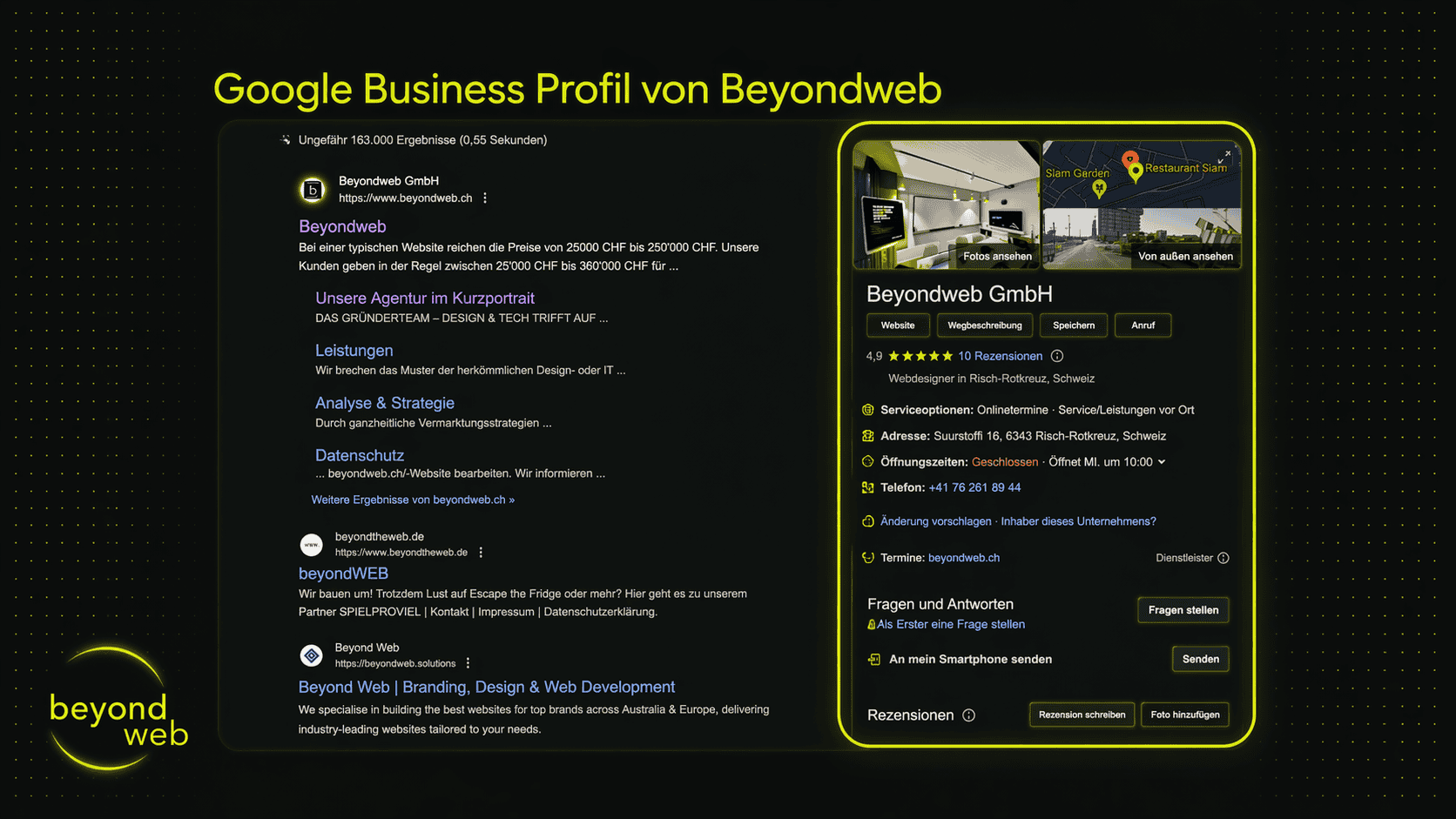
Google Business Optimierung
Die Optimierung deines Google Business Profils ist ein entscheidender Schritt, um die lokale Sichtbarkeit deines Unternehmens zu erhöhen.
Ein gut gepflegtes und optimiertes Google Business Profil kann deine Chancen verbessern, in den lokalen Suchergebnissen und im Google Maps Bereich angezeigt zu werden.
Dies umfasst die Aktualisierung von Geschäftsinformationen, Öffnungszeiten, Kontaktdaten und das Hinzufügen von Fotos.
Reputation Management
Das Management der Online-Reputation ist für lokale Unternehmen von grosser Bedeutung.
Bewertungen und Kundenfeedback auf verschiedenen Online-Plattformen beeinflussen die Wahrnehmung deines Unternehmens und können sich direkt auf die Entscheidungen potenzieller Kunden auswirken.
Ein proaktives Reputationsmanagement beinhaltet das Überwachen von Bewertungen, das Beantworten von Kundenfeedback und das Ergreifen von Massnahmen zur Verbesserung des Kundenerlebnisses.
Google Business Posts
Google Business Posts sind eine effektive Möglichkeit, aktuelle Informationen, Angebote, Veranstaltungen oder Neuigkeiten direkt in deinem Google Business Profil zu teilen.
Diese Posts erscheinen direkt in den lokalen Suchergebnissen und auf Google Maps, wodurch sie eine hervorragende Möglichkeit bieten, die Aufmerksamkeit lokaler Kunden zu gewinnen und aktuelle Informationen zu deinem Unternehmen zu verbreiten.
Generell ist es ratsam, vier- bis fünfmal pro Woche einen Beitrag zu veröffentlichen.
Selbst wenn diese Beiträge später verschwinden, signalisieren sie Google Aktivität und können somit eine positive Wirkung erzielen.
Mein Fazit
Abschliessend kann gesagt werden, dass die Suchmaschinenoptimierung ein unverzichtbarer und facettenreicher Bereich im digitalen Marketing ist.
Mit diesem Leitfaden hast du eine solide Grundlage, um die Online-Präsenz deiner Website zu verbessern und langfristig erfolgreiche Ergebnisse zu erzielen.
Dennoch kann es sinnvoll sein, professionelle Unterstützung in Betracht zu ziehen.
SEO ist ein kontinuierlicher Prozess, der Flexibilität und Anpassungsfähigkeit erfordert, weshalb sich die Beauftragung einer spezialisierten SEO-Agentur in der Schweiz lohnen kann.
Solche Agenturen verfügen über tiefgreifendes Fachwissen und Erfahrung, um deine SEO auf das nächste Level zu heben.
Sie können speziell auf die Bedürfnisse und Ziele deines Unternehmens zugeschnittene Strategien entwickeln, die neuesten Trends und Algorithmus-Updates berücksichtigen und somit sicherstellen, dass deine Website nicht nur heute, sondern auch in Zukunft erfolgreich ist.