


Welche Arten von Backlinks gibt es?
Backlinks können grob in interne und externe Links kategorisiert werden. Während interne Links verschiedene Seiten innerhalb derselben Domain miteinander verbinden, verweisen Backlinks von einer externen Website auf deine eigene Website.
Innerhalb dieser groben Unterteilung lassen sich verschiedene Arten von Backlinks identifizieren: Dofollow, Nofollow, Bildlinks und Trashlinks. Die Bedeutung und Einsatzgebiete dieser Arten werden im Folgenden näher beleuchtet.
Dofollow-Backlinks
Dofollow-Backlinks beanspruchen eine essenzielle Rolle bei der Positionierung einer Webseite innerhalb der Suchmaschinen. Diese Links ermöglichen es den Suchalgorithmen, der Verlinkung zu folgen, was nicht nur intrinsischen Mehrwert für eine Webseite schafft, sondern ebenso die verlinkte Seite durch die substanzielle Übertragung von Linkjuice signifikant stärkt.
Intrinsischer Mehrwert bedeutet dabei, dass ein Backlink, zum Beispiel in einem Blogartikel, für einen User einen Mehrwert bieten kann, da er erweiterte Informationen ausserhalb des Blogartikels ermöglicht.
Linkjuice stellt hingegen eine Metrik zur Quantifizierung der Stärke und Qualität eines Backlinks dar. Das heisst, hierdurch wird erkennbar, wie viel Power ein Backlink besitzt beziehungsweise wie sehr eine andere Seite durch diesen Backlink gestärkt wird.
Nofollow-Backlinks
Im Kontrast dazu stehen Nofollow-Backlinks, welche das genaue Gegenteil bewirken, indem sie Suchmaschinen explizit anweisen, dem jeweiligen Link nicht zu folgen. Somit wird die verweisende Seite nicht direkt mit der Ziel-Webseite verknüpft.
Aktuellen Algorithmen zufolge betrachtet beispielsweise Google Nofollow-Links primär als indikative Hinweise. Hierunter fallen beispielsweise Links aus sozialen Netzwerken, Foren, Pressemitteilungen, Gästebüchern, Wikipedia-Einträgen, Pingbacks und Verzeichnissen. Dennoch ist ihre Relevanz nicht zu unterschätzen, da sie wesentlich zur Diversität und somit zur Natürlichkeit des Backlinkprofils beitragen.
Natürlichkeit im Zusammenhang mit Backlinks bezeichnet dabei vor allem Profile, die auf der einen Seite verschiedene Backlinks besitzen, das heisst zum Beispiel eine Mischung aus DoFollow und NoFollow Backlinks, aber auch Profile, die zum Beispiel einige freiwillig gesetzte Links von themenrelevanten Quellen aufweisen.
Darüber hinaus können insbesondere soziale Medien durch Nofollow-Backlinks zu erhöhter Aufmerksamkeit und folglich zu einem Anstieg des Website-Traffics beitragen.
Bildlinks
Bildlinks stellen eine besondere Form von Verlinkungen dar, indem sie ein Bild als Linktext integrieren. Dies ermöglicht den Nutzern, durch einen einfachen Klick auf das Bild, zur Zielwebseite zu gelangen.
Hierbei kann eine Unterscheidung zwischen Dofollow und Nofollow auch im Kontext der Bildlinks vorgenommen werden, je nach strategischer Ausrichtung und SEO-Zielsetzung.
Trashlinks
Als Trashlinks, oder auch Spam-Links, werden solche Links bezeichnet, die vorwiegend von Seiten mit einer Vielzahl ausgehender Backlinks und gleichzeitig mangelhaftem Content sowie geringer Qualität gesetzt werden.
Trashlinks können sich als schädlich für das Linkprofil erweisen.
Es wird empfohlen, diese zu identifizieren und konsequent zu entfernen, um die Integrität und Authentizität des Backlinkprofils zu bewahren.
In der Praxis ergeben sich zahlreiche Quellen für Backlinks. Dabei ist zu beachten, dass nicht alle Links gleichermassen vorteilhaft für die SEO sind. Ein bewusster und qualitätsorientierter Linkaufbau ist daher essentiell.
Die nachfolgende Tabelle zeigt, welche Backlinks empfehlenswert sind und welche vermieden werden sollten:
| Empfehlenswerte Backlinks | Zu vermeidende Backlinks |
|---|---|
| Soziale Medien | Links von Web 2.0 Seiten |
| Zitate und Referenzen | Links von minderwertigen PBNs |
| Hochautoritative Leitartikel | Sitewide Links |
| Fachspezifische Verzeichnisse | Klassischer Linktausch |
| Gästebuch-Einträge | Gästebucheinträge von Guest Post Farms |
| Pressemitteilungen | Links von algorithmisch bestraften Seiten |
| Infografiken | |
| Links aus privaten Blog-Netzwerken (PBN) | |
| 3-Wege-Link-Austausch | |
| Forenlinks (zur Generierung von Linkmasse) |
Wie man DoFollow und NoFollow Links platziert
Grundsätzlich ist die Standard-Einstellung für einen Link DoFollow. Möchte man einen Link als NoFollow Link platzieren, kann dies über den HTML Code angepasst werden.
Dafür muss lediglich der Tag «nofollow» gesetzt werden. Hier zeigen wir an einem Beispiel anschaulich, wie sich der Unterschied zwischen einem DoFollow und einem NoFollow Link im HTML Code äussert:
Visuell sieht man keinen Unterschied bei den beiden Links. Lediglich im Code sorgt der Tag «rel=»nofollow» dafür, dass der Link zu einem NoFollow Link wird.
DoFollow und NoFollow auf WordPress-Websites einfügen
User einer WordPress-Website können bei der Platzierung von NoFollow Backlinks anders vorgehen.
Hierbei müssen folgende Schritte durchgeführt werden:
1. Der betreffende Text muss markiert werden
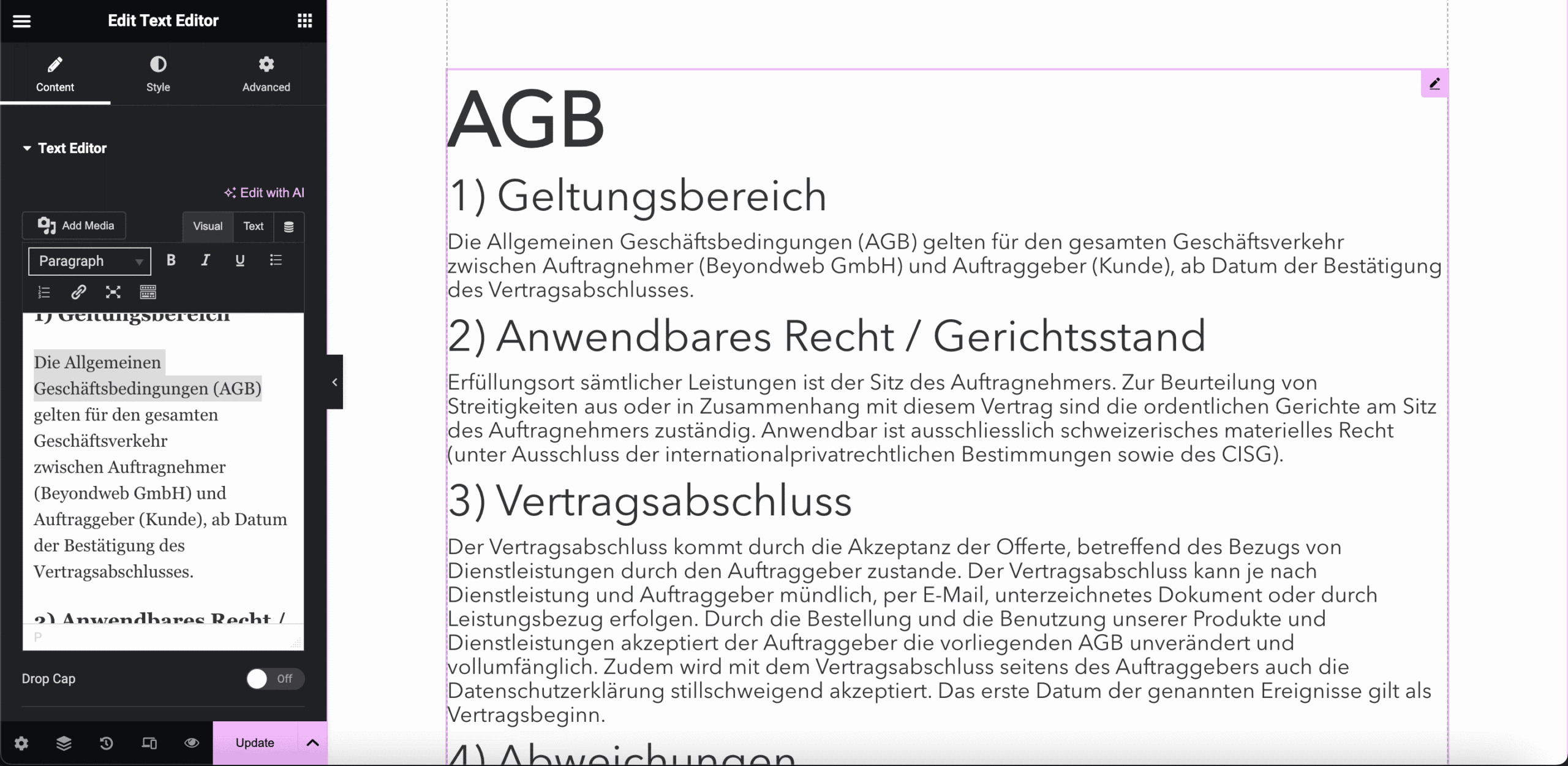
2. Der markierte Text muss anschliessend verlinkt und die entsprechende Ziel-URL hinterlegt werden. Anschliessend wird die Eingabe mit dem blauen Enterknopf bestätigt.
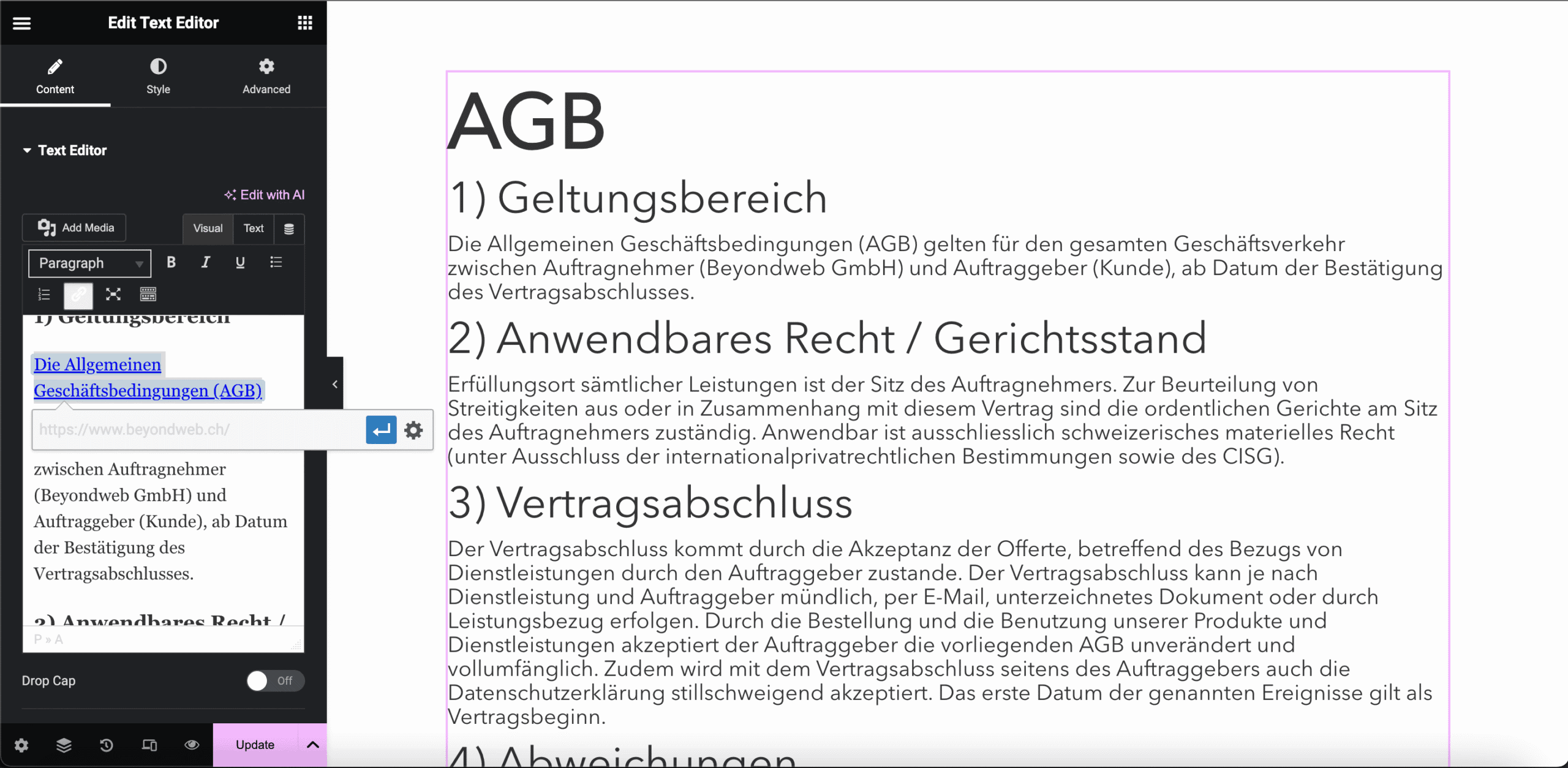
3. Anschliessend muss für das Platzieren eines NoFollow Links auf das Zahnrad geklickt und ein Häkchen bei «Add rel=»nofollow» gesetzt werden. Damit die Änderung übernommen werden kann muss zuletzt die Schaltfläche «Update» betätigt werden.
Welche Vorteile haben Backlinks für SEO?
Massgeblich bieten Backlinks den Vorteil, dass durch sie eine Steigerung der Online-Präsenz und die Glaubwürdigkeit einer Website verbessert werden kann.
Damit spielt die Nutzung von Backlinks eine zentrale Rolle bei der Offpage-Optimierung im Rahmen der Suchmaschinenoptimierung (SEO).
Diese Relevanz von Backlinks als Instrumentarium der SEO beruht auf der Wahrnehmung von Linkplatzierungen als eine Form von Vertrauensbekundung unter Websites.
Üblicherweise erfolgt eine Verlinkung zu einer anderen Website lediglich dann, wenn die verlinkende Website überzeugt ist, dass diese einen deutlichen Mehrwert für Leser oder Nutzer bietet.
Folglich signalisiert ein Backlink gegenüber Suchmaschinen wie Google die Autorität einer Website.
Je grösser die Autorität einer Website, desto grösser das Vertrauen seitens Google, desto besser kann man für entsprechende Keywords ranken.
Ahrefs-Fallstudie 2021: Der Einfluss von Backlinks auf das Website-Ranking
Eine instruktive Fallstudie von Ahrefs aus dem Jahr 2021 beleuchtet den erheblichen Einfluss von Backlinks exemplarisch.
In einem Experiment wurden über das Google Disavow-Tool die Backlinks von drei unterschiedlichen Blog-Artikeln manuell entfernt: ein Blogartikel über YouTube, ein Blogartikel über BING und ein Blogartikel über SEO Pricing (Stox 2021).
Am 17. August 2021 wurden sämtliche Backlinks von allen drei Websites entfernt, wodurch unmittelbar ein signifikanter Rückgang der Seitenaufrufe verzeichnet wurde (Stox 2021).
Die Websites wurden über einen Monat intensiv beobachtet. Dabei zeigte sich folgendes Bild:
- Der Youtube-Artikel zeigte einen Rückgang von 18%.
- Die SEO-Artikel zeigte einen Rückgang von 13,3%.
- Der Bing-Artikel zeigte hingegen kaum einen Rückgang.
Nach Wiedereinbindung aller zuvor entfernten Backlinks zeigten sich differenzierte Entwicklungen: während der YouTube-Artikel nach wie vor einen Traffic-Rückgang von 4% verzeichnete und auch der SEO Pricing Artikel nur zu 99% des ursprünglichen Traffics zurückkehrte, erlebte der BING-Artikel einen bemerkenswerten Anstieg des organischen Traffics um mehr als 44% (Stox 2021).
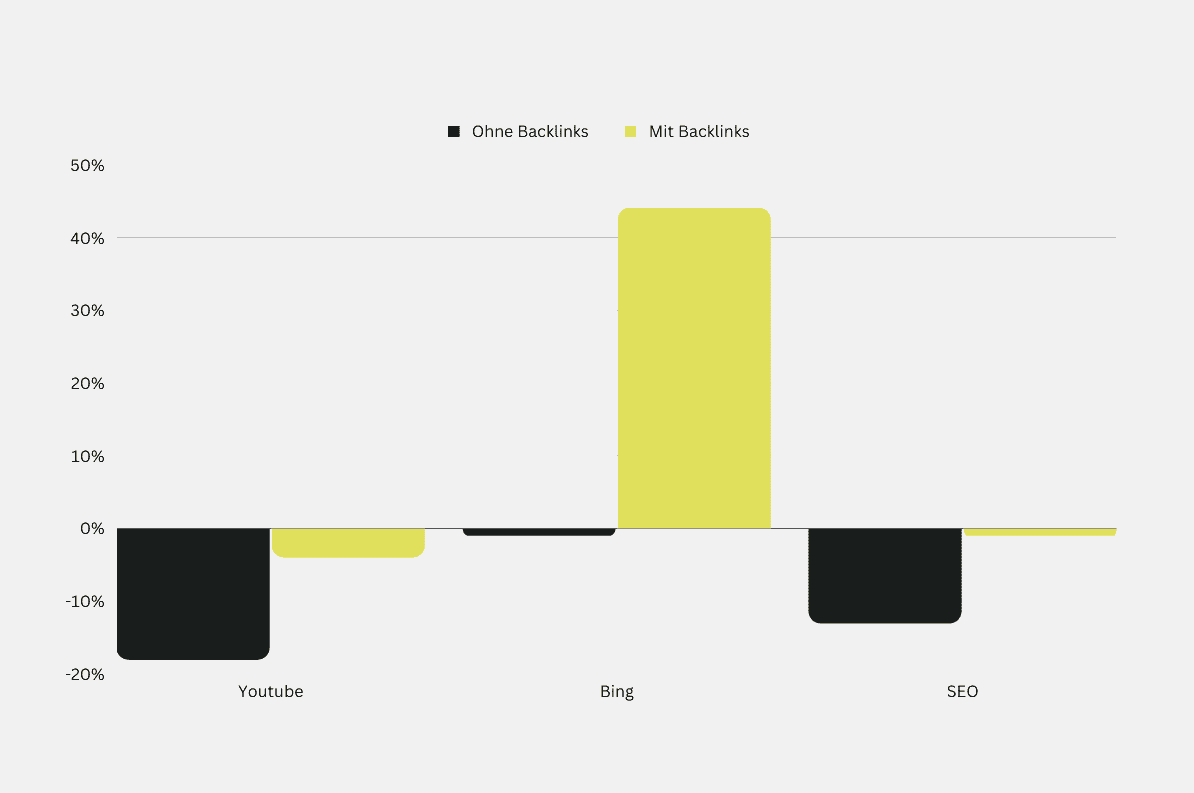
Diese Fallstudie unterstreicht eindrücklich, dass Backlinks nach wie vor ein zentraler Rankingfaktor sind und sich als vitales Instrument in der Suchmaschinenoptimierung etabliert haben (Stox 2021).
Zudem verdeutlicht die Studie, dass das Entfernen aller Backlinks, selbst nachdem sie wieder sichtbar gemacht werden, dauerhaften Schaden verursachen kann (Stox 2021).
Warum sind Backlinks wichtig für SEO?
Wie die vorangehende Fallstudie aufgezeigt hat, sind Backlinks ein fundamentaler Rankingfaktor für die Positionierung bei Google und daher unverzichtbar für die Suchmaschinenoptimierung (SEO).
Das Konzept ist einfach: Je mehr qualitativ hochwertige und relevante Backlinks eine Webseite besitzt, desto besser wird sie von Suchmaschinen wie Google eingestuft.
Seit dem Google Penguin Update 2012 wird besonders auf die Qualität der Links geachtet; diese fungieren als Empfehlungen der Suchmaschinen und erhöhen so die Relevanz und das Ranking einer Webseite.
Backlinks von renommierten und thematisch relevanten Webseiten ermöglichen es Google, Inhalte rascher zu erkennen und besser zu bewerten.
Für effektive SEO-Strategien ist demnach der natürliche Aufbau von hochwertigen Links von wesentlicher Bedeutung.
Backlinks im Zusammenhang mit OnPage und OffPage SEO
In der Welt der Suchmaschinenoptimierung (SEO) stellt sich oft die Frage nach dem Grad der Wichtigkeit von Backlinks im Vergleich zu OnPage und anderen OffPage SEO-Strategien.
Die OnPage-Optimierung bildet einen fundamentalen Pfeiler innerhalb der SEO und involviert alle Massnahmen, die direkt auf der Website implementiert werden, um ihre Sichtbarkeit, Rankings und Conversion-Raten zu potenzieren.
Hierzu zählen beispielsweise die Optimierung von Inhalten, die technische SEO und die Anpassung von Meta-Tags. Diese Faktoren sind essentiell, um eine robuste Basis für eine Webseite zu schaffen und ihre grundsätzliche Auffindbarkeit und Benutzerfreundlichkeit zu gewährleisten.
Im Gegensatz dazu konzentriert sich die OffPage-Optimierung auf alle Aktivitäten ausserhalb der eigenen Website, die dessen Ranking in den Suchmaschinen beeinflussen können.
Hierbei nimmt die Bedeutung von Backlinks eine prominente Rolle ein, insbesondere wenn sie von einer Domain stammen, die nicht der eigenen entspricht.
Beide SEO-Strategien, sowohl OnPage als auch OffPage, insbesondere in Bezug auf Backlinks, integrieren sich komplementär und sind von immenser Bedeutung, um eine Website in den Suchergebnissen nach vorne zu bringen.
Während OnPage-Optimierungen eine Webseite für Suchmaschinen und Nutzer zugänglicher und verständlicher gestalten, verstärken hochwertige Backlinks die externe Wahrnehmung und Glaubwürdigkeit im weiten Netz des Internets.
Es ist somit unerlässlich, sowohl OnPage als auch OffPage SEO – und hierbei speziell das Backlink-Profil – in jede umfassende SEO-Strategie zu integrieren.
Grundsätzlich sollten jedoch zuerst die Basics, wie eine saubere Nutzerführung, ein responsives Design und schnelle Ladezeiten priorisiert werden, bevor man sich damit beschäftigt Backlinks zu generieren.
Wie werden Backlinks im Google Algorithmus berücksichtigt?
Wie die Ahrefs-Studie aus dem Jahr 2021 gezeigt hat, sind Backlinks noch immer ein wesentlicher Rankingfaktor. Doch was sagen aktuellere Zahlen über den Einfluss von Backlinks?
Laut neusten Untersuchungen des US-amerikanischen SEO-Gurus Evan Bailyn sind Backlinks (Stand Oktober 2023) immer noch ein wesentlicher Baustein im Google-Ranking und machen ganze 14% des Rankings aus.
Auch wenn die Bedeutung von Backlinks durch die neusten Google Suchmaschinen-Updates im 3. Quartal 2023 leicht an Bedeutung eingebüsst haben, sind sie immer noch der drittwichtigste Faktor im Google Algorithmus (Bailyn 2023).
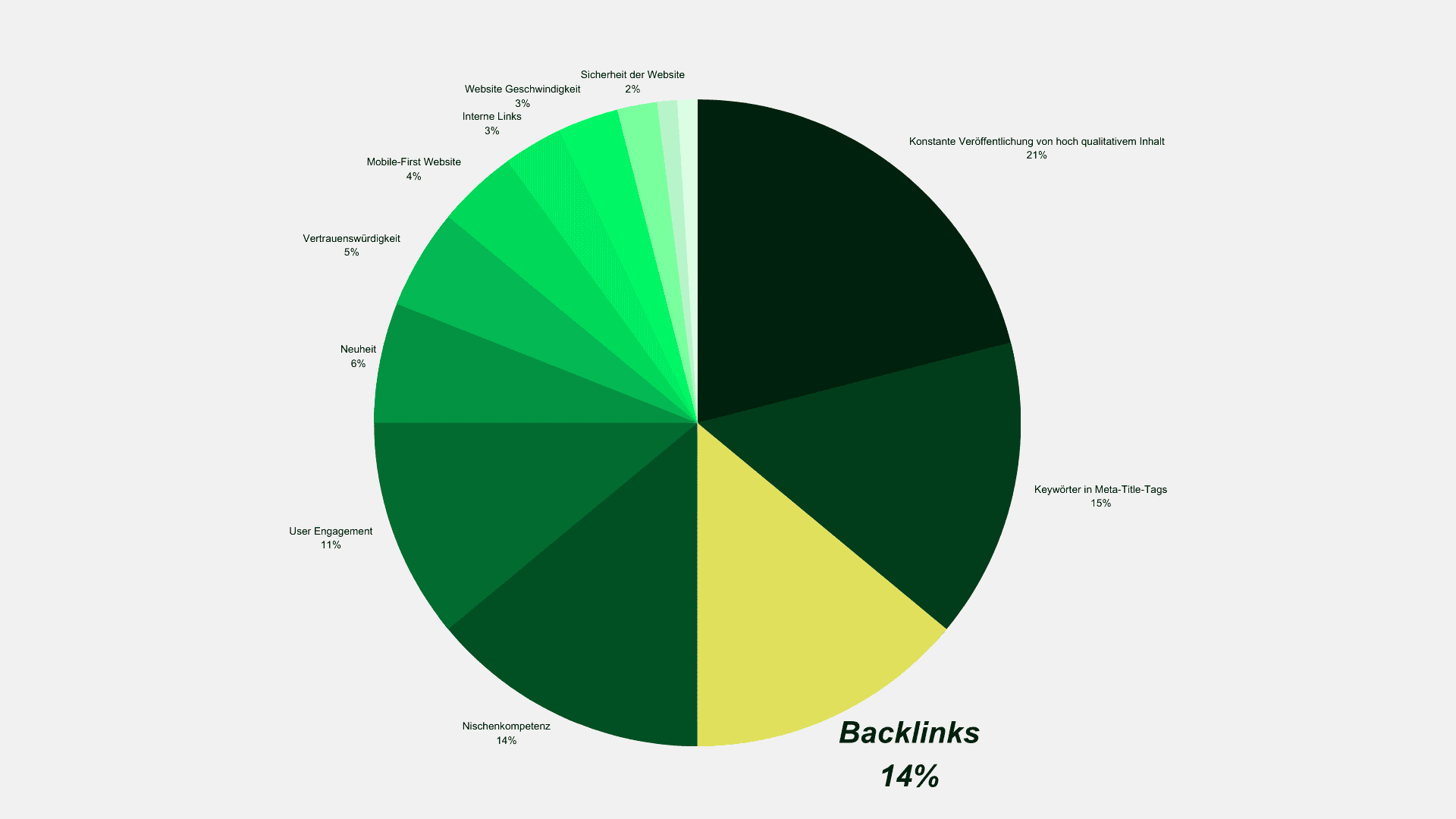
Laut Evan Bailyn steht die konsequente Veröffentlichung von qualitativ hochwertigen Inhalten nach wie vor an erster Stelle.
Das hat einen Grund: Google schätzt Websites, die kontinuierlich über einen längeren Zeitraum wertvolle Informationen bereitstellen.
Diese Websites werden schneller indexiert und erhalten bessere Rankings. Und nicht zu vergessen: Wer gute Inhalte bietet, dem wird auch eher von anderen Seiten vertraut und man wird verlinkt (Bailyn 2023).
Jetzt könnte man sich fragen: was macht eigentlich einen guten Link aus?
Das hängt von einigen Dingen ab wie zum Beispiel vom Linktyp und wie gut der Inhalt zum Link passt.
Ein spezielles Augenmerk sollte auf dem Ankertext (Engl. Anchor Text) liegen, also dem klickbaren Text, der zur verlinkten Seite führt. Dieser sollte farblich oder durch Unterstreichung hervorgehoben und thematisch möglichst passend zur verlinkten Seite sein.
Links, die ins Nirgendwo führen, weil die Seite nicht mehr existiert, sind nicht nur schlecht für das Erlebnis der Nutzer, sondern ziehen auch Strafen von Google nach sich. Zur Identifizierung solcher defekten Links können diverse online verfügbare Tools, wie zum Beispiel der Broken Link Checker, herangezogen werden.
Um wirklich alle Möglichkeiten des digitalen Marketings auszuschöpfen und Google-Strafen zu umgehen, lohnt es sich, ein Unternehmen zu beauftragen, das auf digitales Marketing spezialisiert ist.
Eine professionelle Schweizer SEO-Agentur kann dabei helfen, die Qualität und Relevanz von Backlinks und der gesamten SEO-Strategie kontinuierlich zu überwachen und zu verbessern.
Wie hängen Backlinks und das Domain Rating (DR) zusammen?
Das Domain Rating (DR) ist eine Metrik, die vom SEO-Tool Ahrefs ins Leben gerufen wurde. Das DR repräsentiert einen essenziellen Indikator für die Vertrauenswürdigkeit einer Webseite und wird auf einer Skala von 0 bis 100 dargestellt.
Dabei gilt: je höher der DR-Wert, desto mehr Vertrauen signalisiert die Seite laut Ahrefs.
Das DR spielt demnach eine Schlüsselrolle, um die Glaubwürdigkeit und Autorität einer Webseite zu bewerten.
Hierbei ist es hilfreich zu wissen, dass er in seiner Funktion der sogenannten Domain Authority (DA) ähnelt, die ebenso die Relevanz und Robustheit einer Webseite widerspiegelt, aber von einem anderen SEO-Tool namens MOZ erfunden wurde.
Beide Metriken, DR und DA, sind zentrale Werkzeuge, wenn es darum geht, die Autorität einer Webseite in den Suchergebnissen von Suchmaschinen, wie beispielsweise Google, zu evaluieren.
Wichtig zu beachten an der DR-Skala von Ahrefs ist, dass es keine lineare Skala ist, sondern eine exponentielle Skala. Das heisst, je höher man auf der Skala kommt, desto schwieriger wird es, seinen Wert noch weiter zu steigern.
Hier sind einige Beispiele von bekannten Domains, ihren DR-Werten und Anzahl Backlinks:
- Facebook.com = DR 100 mit 2.1 Milliarden Backlinks
- NYTimes.com = DR 94 mit 282 Millionen Backlinks
- Wikipedia.org = DR 86 mit 86.2 Millionen Backlinks
- 20min.ch = DR 84 mit 18.3 Millionen Backlinks
- Migros.ch = DR 82 mit 3.1 Millionen Backlinks
- Galaxus.ch = DR 74 mit 3.8 Millionen Backlinks
- Brack.ch = DR 73 mit 74’000 Backlinks
- Lindt.ch = DR 57 mit 3.3 Millionen Backlinks
Die ausgewählten Beispiele illustrieren die signifikante Relevanz von Backlinks.
Ein Backlink von einer Webseite mit einem hohen DR kann einen substantiellen positiven Einfluss auf die eigene Webpräsenz ausüben, während Verlinkungen von Seiten mit einem niedrigen DR potentiell schädlich sein können.
Auffällig ist auch, dass die Quantität der Backlinks nicht zwingend einen direkten Einfluss auf die DR-Skala nimmt. Lindt.ch erreicht mit 3.3 Millionen Backlinks einen DR von 57, während die Website Brack.ch mit nur 74.000 Backlinks einen signifikant höheren DR-Wert von 73 aufweist.
Das unterstreicht also die Prämisse, dass die Backlink-Qualität eine höhere Gewichtung als deren Quantität einnimmt.
Die umfassende Kenntnis sowohl des eigenen DR als auch der DRs potenzieller Konkurrenzwebseiten bildet das Fundament für die Entwicklung einer gezielten Linkbuilding-Strategie, wobei Verlinkungen von Webseiten mit hohen DR-Werten besonders erstrebenswert sind.
Welche Faktoren bestimmen den Wert eines Backlinks?
Es stellt sich nun die Frage: Woran erkenne ich gute Backlinks?
Die Frage nach dem Wert eines Backlinks stellt sich primär bei DoFollow Backlinks da sie – im Gegensatz zu NoFollow Links – den sogenannten Linksaft (Engl. Linkjuice) an die verlinkte Seite weitergeben und somit deren Wertigkeit und Autorität in den Augen der Suchmaschine stärken.
Um den Wert eines solchen Backlinks beurteilen zu können, existieren diverse Faktoren. Insbesondere die nachfolgenden sind von grösster Bedeutung und sollten unbedingt berücksichtigt werden:
Thematische Relevanz
Einer der ausschlaggebendsten Faktoren für die Qualität eines Backlinks ist die thematische Relevanz der referenzierenden Domain/Website. Hierbei geht es im Wesentlichen darum, ob das Thema der Quellseite zum Inhalt der verlinkten Webseite passt.
Aus der Perspektive des Nutzers betrachtet, ergibt dies durchaus Sinn: Die Quelle ist dann thematisch relevant, wenn der Nutzer einen triftigen Grund hat, den Link anzuklicken.
Suchmaschinen, wie Google, setzen auf die Annahme, dass thematisch relevante Links dazu dienen, den Besucherinnen und Besuchern zusätzlichen Mehrwert zu bieten.
Backlinks, die nicht nur geklickt, sondern auch dazu führen, dass User längere Zeit auf der verlinkten Seite verweilen, senden starke positive Signale an die Suchmaschinen. In der Konsequenz kann dies sich im Google-Algorithmus vorteilhaft auswirken und als positiver Ranking-Faktor dienen.
Bei themenfremden Backlinks, die mit höherer Wahrscheinlichkeit gekauft wurden oder lediglich das Ziel verfolgen, die Position in den Suchergebnissen zu pushen, schrillen bei den Suchmaschinen die Alarmglocken.
Mittlerweile sind sie äusserst versiert darin, Link Spam und Links zu themenfremden Seiten, die keine Klicks generieren, zu identifizieren und entsprechend nicht als Ranking-Faktor zu berücksichtigen.
Google hat mit Aktualisierungen, wie den Penguin Updates, erhebliche Anpassungen in der Bewertung von Backlinks vorgenommen und dabei auch Domains, die in umfangreichem Masse Link Spam betrieben haben, mit Abstrafungen belegt.
Folglich ist es sehr wichtig, Backlinks, die thematische Relevanz aufweisen, gezielt zu positionieren. Selbst unter Backlinks mit vergleichbarer Stärke würde jener mit thematischer Relevanz signifikant höher und positiver bewertet werden als ein Link ohne entsprechenden thematischen Bezug.
Anzahl ausgehende Domains
Ein zusätzlicher bedeutender Faktor stellt die Anzahl der ausgehenden Domains dar. Es ist hierbei wichtig, dass die Anzahl der ausgehenden Links moderat bleibt.
Eine übermässige Menge an ausgehenden Links kann den Wert eines Backlinks von einer Webseite reduzieren. Aber was bedeutet das konkret?
Hier ein Beispiel zur Veranschaulichung:
Stell dir vor, eine Website mit einem Domain Rating (DR) von 50 verlinkt auf deine Seite. Diese Website hat allerdings bereits 1 Million Backlinks auf verschiedene andere Seiten platziert.
In einem solchen Szenario würde der auf deine Seite weitergeleitete „Linkjuice“ nur ein Millionstel des Gesamtwerts betragen, da die Kraft der Links über alle gestreuten Verbindungen verteilt wird.
Wenn dieselbe Website mit einem DR von 50 ausschliesslich auf deine Seite verlinkt, würde der Backlink den gesamten verfügbaren Linkjuice von dieser Seite erhalten (bei der Annahme es gibt keine internen Verlinkungen).
Traffic
Website Traffic, auch als Benutzeraufkommen bekannt, bezieht sich auf die Anzahl der Besucher, die eine Webseite in einem definierten Zeitraum aufsuchen.
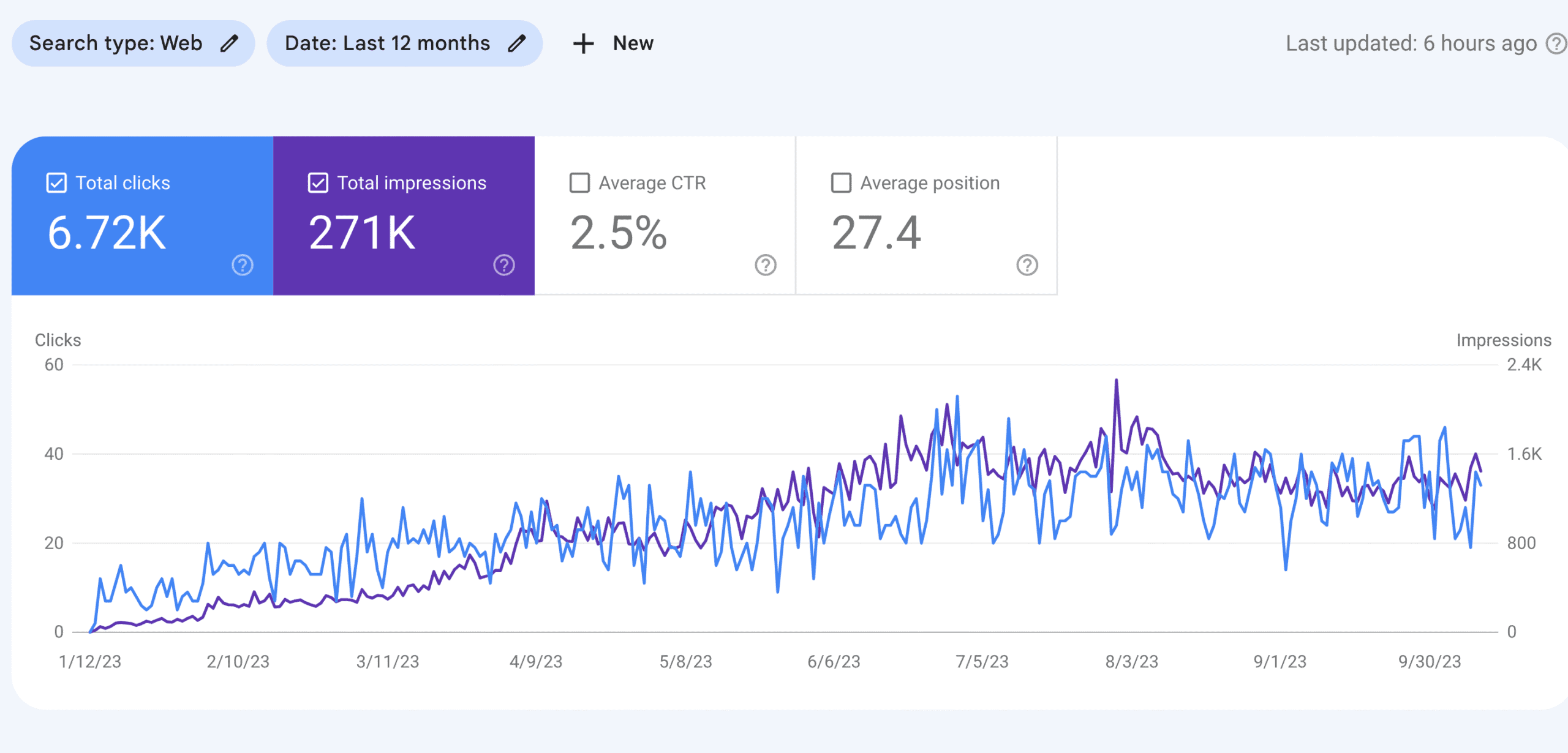
Je mehr Traffic vorhanden ist, desto grösser ist der proportionale Anteil an Besuchern, die potenzielles Interesse an einem Produkt oder einer Dienstleistung haben könnten.
Erhalte ich nun einen Backlink von einer Website mit einem hohen Traffic, wird auch mehr Linkjuice an meine Website weitergegeben. Dann bedeutet das, dass die Suchmaschinen den Backlink hochwertiger einstufen. Dementsprechend wichtig ist es, Backlinks von Websites zu erhalten, die einen hohen Traffic aufweisen.
Innerhalb einer Domain herrschen dabei meistens grosse Unterschiede. In den meisten Fällen wird die Homepage, also die Startseite, mehr Besucher anziehen als spezifischere Unterseiten wie z. B. die „Über Uns“-Seite.
Deshalb haben Backlinks, die von der Startseite kommen, oft einen höheren Wert als Links von anderen Unterseiten einer Website.
Platzierung
Neben den bereits genannten Faktoren ist auch die korrekte Positionierung des Backlinks von grosser Bedeutung.
Das bedeutet, dass ein Backlink, der beispielsweise in der Landing Sektion einer Webseite platziert ist, allein aufgrund seiner herausstechenden Position einen verhältnismässig höheren Einfluss generiert, als ein Backlink, der ganz unten im Footer der Website platziert wird.
Ebenso ist die Position des Backlinks innerhalb der Seitenstruktur ausschlaggebend.
Ein Backlink auf der Homepage, mit dem meist grössten Traffic einer Domain ist mehr Wert als ein Backlink, der lediglich irgendwo auf einer Unterseite positioniert ist, wo sich kaum ein User durchklickt.
Followed vs. Nofollowed
Zuletzt sollte beachtet werden, welche Links als followed und welche als nofollowed gekennzeichnet werden.
Insbesondere Backlinks von Websites mit einer hohen Spam-Rate und von gesponserten Beiträgen sollten stets als nofollowed gesetzt werden, da sie den Wert des Backlinks und somit auch den Wert der Website negativ beeinträchtigen können.
Mit welchen Metriken bestimme ich, ob ein Backlink qualitativ gut oder schlecht ist?
Viele der Dinge, die den «Wert» eines Backlinks bestimmen, wie zum Beispiel die thematische Relevanz, sind nicht quantitativ messbar. Trotzdem sollten die Aspekte nicht ausser Acht gelassen werden.
Wir haben mit dem Backlink-Experten David Hahn von SEO Galaxy gesprochen, und ihn gefragt, welche Metriken für die Auswahl von Backlinks berücksichtigt werden sollten.

Nach David Hahn sollten grundsätzlich alle Metriken eines Links berücksichtigt werden, wenn wirklich nur auf die Qualität geachtet wird. Als allgemeine, pauschale Mindestmetriken für den Backlinkkauf werden von ihm folgende vorgeschlagen:
- Domain Rating | > 15
- Domain Authority | > 10
- organischer Traffic | > 250
- Referring Domains | > 50
- OVI | > 0,5
- SI | > 0,1
- bestmögliches Verhältnis von eingehenden zu ausgehenden Backlinks | ✓
- hohe thematische Relevanz | ✓
| Mindestmetriken für Backlinks | Werte |
|---|---|
| Domain Rating | > 15 |
| Domain Authority | > 10 |
| organischer Traffic | > 250 |
| Referring Domains | > 50 |
| OVI | > 0,5 |
| SI | > 0,1 |
| bestmögliches Verhältnis von eingehenden zu ausgehenden Backlinks | ✓ |
| hohe thematische Relevanz | ✓ |
Dabei gilt: je höher die Metriken sind, desto besser.
David Hahn hebt hervor, dass bei der Linkplanung speziell darauf geachtet werden soll, dass die Linkquelle bereits Rankings hat, thematisch relevant ist und dass die Domain definierte Mindestmetriken aufweist, welche je nach Kunde, Ziel und Budget individuell festgelegt werden müssen (Hahn 2023).
Trotzdem können in einigen Fällen auch Linkquellen sinnvoll sein, die nicht allen Mindestmetriken entsprechen, aufgrund ihrer hohen thematischen Relevanz oder aufgrund des starken Rankings jedoch trotzdem in die Linkplanung inkludiert werden sollen (Hahn 2023).
Zudem kann es in gewissen Situationen auch sinnvoll sein, Links von Domains mit einem hohen DR aber wenig Traffic anzupeilen. Dies ist beispielsweise dann sinnvoll, wenn mehr Linkmasse, also eine höhere Quantität von Links, im Linkprofil generiert werden soll.
Zudem muss bei der Bewertung von Backlinks mit Hilfe von Metriken beachtet werden, dass unterschiedliche Tools aufgrund unterschiedlicher Datenbanken andere Zahlen für die identische Metrik anzeigen.
So beziehen sich beispielsweise der Sichtbarkeitsindex von Sistrix (SI) und der Online Value Index von XOVI (OVI) beide nur auf die «geschätzte Sichtbarkeit» einer Domain, welche durch verschiedene SEO-Tools und deren eigenes Keyword-Set unterschiedlich bestimmt wird.
Somit kann eine Nischendomain nie dieselbe Sichtbarkeit wie eine Domain in einem grossen Themenbereich, wie beispielsweise „Kochen“, erreichen. Daher sollte die Sichtbarkeit einer Linkquelle nicht als einziger Faktor in der Linkplanung betrachtet werden, sondern verschiedene Metriken herbeigezogen werden (Hahn 2023).
EXKURS: Was sind Ankertexte und warum sind sie wichtig?
Ankertexte (Engl. Anchor Text) sind essenzielle Elemente moderner Webseiten. Sie verbergen Hyperlinks, welche Besucher von einer Seite zu einer anderen, der sogenannten Zieladresse, führen.
Durch Ankertexte können relevante, weiterführende Inhalte verlinkt werden, um dem Nutzer Mehrwert zu bieten, indem auf externe Seiten oder andere Bereiche der eigenen Website verwiesen wird. Typischerweise wird der Text, der den Hyperlink enthält, farblich hervorgehoben.
Ankertexte sind aus zwei Hauptgründen unverzichtbar:
1. Nutzerwert
Sie erlauben den Nutzern, zusätzliche, relevante Informationen schnell und einfach zu erreichen.
2. SEO-Vorteile
Ankertexte fördern SEO, indem sie die Seitenarchitektur durch interne Verlinkungen für die Suchmaschine explizit verdeutlichen.
So sind Ankertexte sowohl für den Benutzer als auch für die Suchmaschinenoptimierung ein wesentliches Tool, um Mehrwert und Kontext bereitzustellen.
Arten von Ankertexten:
Die Wahl der Ankertexte ist für die Natürlichkeit des Linkprofils entscheidend. Wir bei Beyondweb unterscheiden zwischen fünf verschiedenen Arten von Ankertexten: Branded, Target, URL, Thematisch und sonstigen Ankertexten.
| Anker Arten | Definitionen |
|---|---|
| Branded Anchor | Ein «Branded Anchor» bezieht sich auf einen Ankertext, der den Markennamen oder andere markenspezifische Begriffe verwendet, um auf eine Webseite zu verlinken. |
| Target Anchor | Ein «Target Anchor» ist ein Ankertext, der speziell ein Ziel-Keyword oder eine keywordreiche Phrase verwendet, um eine Webseite zu verlinken, mit dem Ziel, das Ranking für dieses spezielle Keyword in den Suchmaschinen zu verbessern. |
| URL Anchor | Ein URL Anchor ist ein Typ von Ankertext, der direkt die URL der verlinkten Webseite verwendet anstatt eines beschreibenden oder markenbezogenen Wortes oder Satzes. |
| Thematisch Anchor | Ein thematischer Anchor ist ein Ankertext, der speziell mit dem Thema oder Inhalt der verlinkten Seite verknüpft ist und relevanten, themenbezogenen Kontext für die Verlinkung bietet. |
| Sonstige Anchor | Hierunter fallen alle anderen Anchor, die sich keiner der anderen Kategorien klar zuordnen lassen, wie zum Beispiel «Hier für weitere Informationen klicken». |
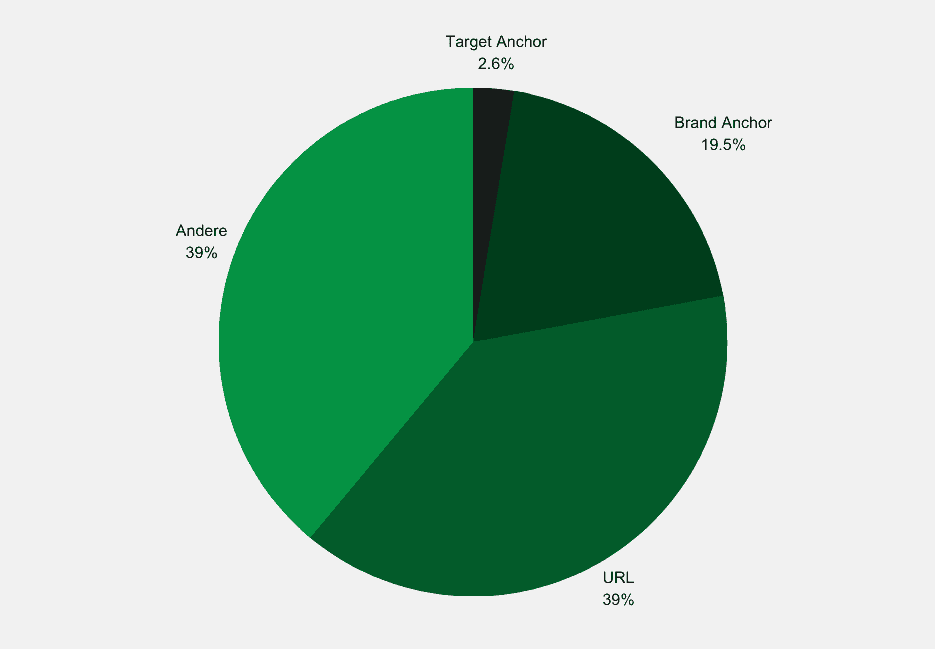
Das Ziel muss sein, eine möglichst «natürliche» Mischung dieser verschiedenen Ankertexte hinzubekommen. Falls beispielsweise ausschliesslich «Target Anchors» verwendet werden, die sich auf Keywords konzentrieren, kann das Risiko einer Überoptimierung und somit einer Strafe von Google bestehen.
Um die «natürlichste» und für die Suchmaschine optimale Verteilung von Ankertexten zu finden, sollte man daher die Ankertexte der Top fünf platzierten Konkurrenten bei den Suchergebnissen für ein bestimmtes Keyword untersuchen und den aggregierten Durchschnitt ermitteln.
Die folgende Abbildung zeigt beispielhaft, wie anschliessend die Ankertexte und ihre relative Verteilung prozentual dargestellt werden kann.
Backlinks der eigenen Website selbst überprüfen
Durch eine Backlink-Analyse können alle eingehenden Links zu einer Webseite überprüft und mögliche Schwachstellen im Linkprofil identifiziert werden.
Dies ist wichtig, um festzustellen, ob die verlinkenden Seiten thematisch passend und qualitativ hochwertig sind, oder ob sie unerwünschten oder schädlichen Inhalt aufweisen. Folgende Tools können für diesen Zweck eingesetzt werden:
Google Search Console (GSC)
Die Google Search Console (GSC) ist ein kostenloser Dienst von Google, der es ermöglicht, die Sichtbarkeit und Präsenz einer Website in den Suchergebnissen zu überwachen, zu analysieren und zu optimieren.
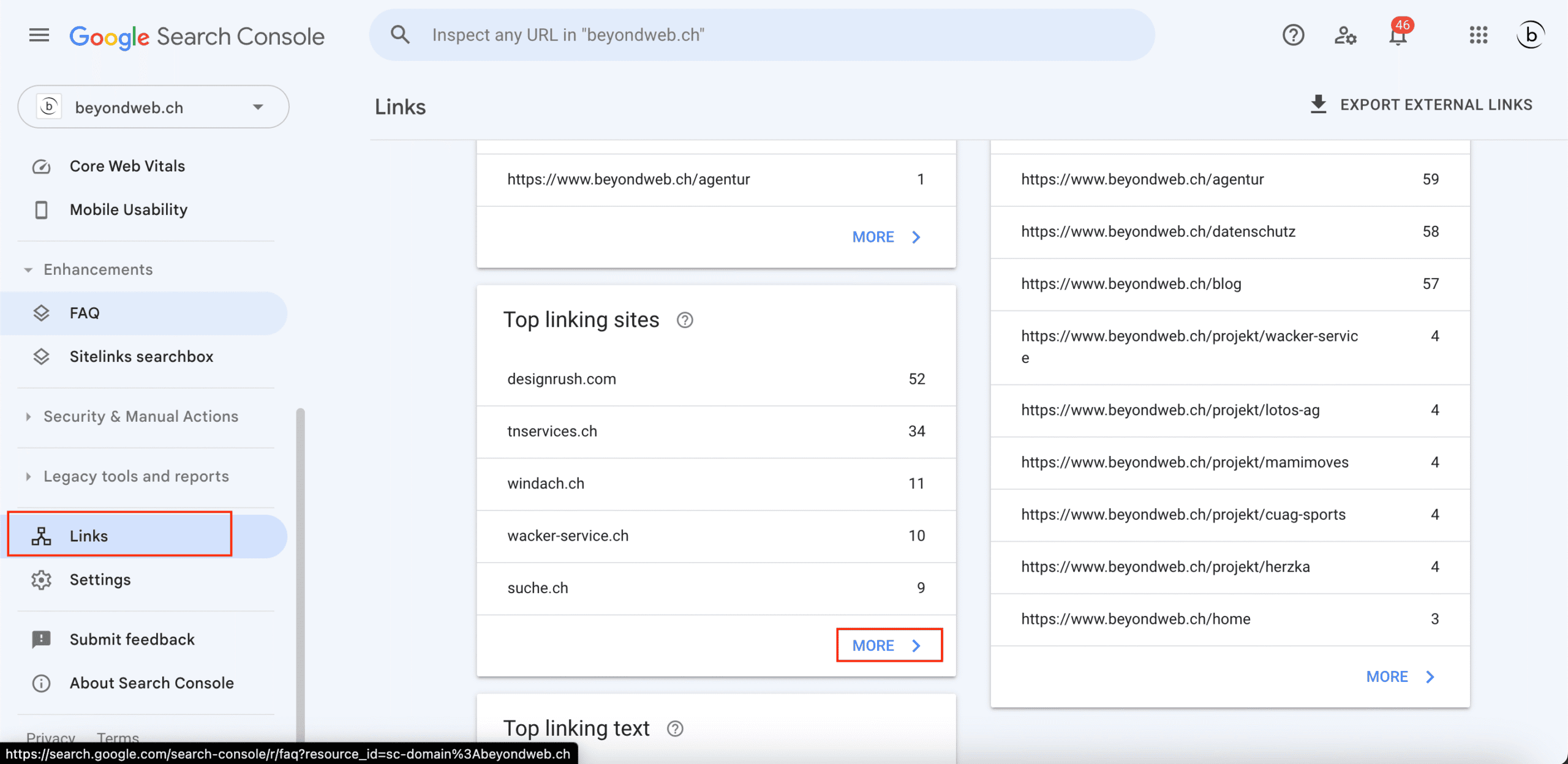
Dabei bietet das Programm detaillierte Einblicke und Analysen zu verschiedenen Faktoren der Website und ermöglicht es, eventuelle Fehler oder Probleme, wie gehackte Inhalte oder unnatürliche Links, zu identifizieren und zu beheben.
Es stellt sich nun die Frage: wie gelange ich zu diesen Informationen?
Die folgende Abbildung erleichtert das Verständnis für den Prozess. Um zu den «Top Linking Sites» zu gelangen, kann im GSC in der linken Spalte der Tab «Links» ausgewählt werden.
Ahrefs Backlink Checker
Das Tool Ahrefs ermöglicht eine einfache und schnelle Überprüfung der Backlinks einer Domain. Jeder ermittelte Backlink wird mit relevanten SEO-Metriken wie Domain Rating, URL Rating, Domain Traffic etc. angezeigt, was eine Einschätzung des Linkwerts erleichtert.
Der Ahrefs Backlink Checker ist ein essenzielles Hilfsmittel für das Linkbuilding. Er ermöglicht die Analyse sowohl des eigenen Backlinkprofils als auch das der Konkurrenz und potenzieller neuer Linkquellen.
Ahrefs betreibt, nach eigener Angabe, den weltweit zweitaktivsten Web Crawler nach Google, weshalb die Backlink-Datenbank und somit die Datenbasis des Backlink Checkers von Ahrefs sehr umfangreich ist.
Hier gelangst du direkt zum Ahrefs Backlink Checker.
Wie kann ich Backlinks erzeugen?
Es gibt viele verschiedene Strategien, um mehr Backlinks zu generieren. Im folgenden Abschnitt werden drei grundsätzliche Methoden erklärt:
Backlinks manuell platzieren
Manuell platzierte Backlinks sind Links, die du selbst auf anderen Websites platzierst, z.B. in Kommentaren, Foren oder auf Social-Media-Plattformen.
Diese Methode erfordert aktive Beteiligung und Interaktion mit anderen Websites und Communities. Hierbei sollte stets auf Relevanz und Qualität der Artikel und Themen geachtet werden, um nicht als Spam wahrgenommen zu werden.
Manchmal kann auch das Schreiben von einem Gastbeitrag auf thematisch relevanten Blogs eine Möglichkeit sein, manuell Backlinks zu setzen.
Backlinks verdienen
Verdiente Backlinks entstehen in erster Linie durch die Bereitstellung von qualitativ hochwertigen, informativen und nutzbaren Inhalten, oftmals auch als ‚Linkable Assets‘ bezeichnet.
Dies sind Inhalte, die aufgrund ihres einzigartigen und wertvollen Charakters besonders linkwürdig sind. Wenn deine Inhalte von hoher Qualität und Relevanz sind, ist die Wahrscheinlichkeit, dass andere Websites einen Link zu deiner Seite setzen, deutlich höher.
Solche Backlinks sind besonders wertvoll, da sie von Google als natürliche, verdiente Empfehlungen wahrgenommen werden. Methoden zur Gewinnung dieser Backlinks beinhalten die Kreation verschiedener Content-Arten wie Artikel, Blogposts, Infografiken, Studien, Tutorials und Videos, die speziell auf die Interessen deiner Zielgruppe zugeschnitten sind.
Beispielsweise könnte eine nützliche Studie detaillierte Einblicke in aktuelle Trends deiner Branche bieten, während eine wirksame Infografik komplexe Daten auf eine leicht verständliche und visuell ansprechende Weise präsentieren könnte.
Backlinks kaufen
Das Kaufen von Backlinks ist eine Praxis, bei der du für Links zu deiner Website von anderen Websites bezahlst. Gekaufte Backlinks können kurzfristig zu erhöhten Rankings führen, stellen jedoch ein erhebliches Risiko dar.
Diese Praxis ist nämlich von Google und anderen Suchmaschinen strengstens verboten und kann zu Strafen führen, einschliesslich der Entfernung deiner Website aus dem Suchindex.
Trotzdem existieren im Bereich der Off-Page-SEO Dienste durchaus legale und akzeptierte Praktiken, um gegen Bezahlung Inhalte auf sogenannten Publisher-Websites zu platzieren.
Beispielsweise können Artikel gegen eine Gebühr auf einer Publisher-Website veröffentlicht werden. Dies ist eine Form des gekauften Backlinks, bei der man für die Veröffentlichung von Inhalten zahlt.
Die Preise belaufen sich beispielsweise bei Forbes zwischen 850 und 9500 US-Dollar, während die Publikation von Branded Content bei 20min.ch bei 4250 CHF beginnt.
Insgesamt ist es ratsam, sich auf den Aufbau von natürlichen und verdienten Backlinks zu konzentrieren, um langfristigen Erfolg zu erzielen. Hierbei kann auch ein SEO-Experte zu Rate gezogen werden.
Häufig gestellte Fragen rund um Backlinks
Abschliessend werden in diesem Abschnitt die häufigsten Fragen zu Backlinks dargelegt und erläutert:
Wie erkenne ich schädliche Backlinks?
Schädliche Backlinks können den Ruf deiner Website bei Suchmaschinen beeinträchtigen.
Um schädliche Backlinks zu erkennen, solltest du auf Folgendes achten:
1. Irrelevante Websites
Wenn die Links von Websites kommen, die nichts mit deinem Inhalt oder deiner Branche zu tun haben.
2. Spam-Websites
Wenn die Links von Websites mit zweifelhaftem Inhalt, vielen Anzeigen und wenig relevantem Inhalt kommen.
3. Überoptimierter Ankertext
Wenn der Ankertext mit Keywords überladen ist.
4. Geringe Domainautorität
Websites mit niedriger Domainautorität können potenziell schädlich sein.
5. Schneller Backlink-Aufbau
Ein unnatürlich schneller Zuwachs an Backlinks kann auf schädliche Backlinks hinweisen.
Wie kann man schlechte/toxische Backlinks löschen?
Um schlechte oder toxische Backlinks zu löschen, können folgende Schritte durchgeführt werden:
1. Backlinks analysieren
Nutze Tools wie Google Search Console oder Ahrefs um dein Backlink-Profil zu analysieren.
2. Webmaster kontaktieren
Nach Identifikation der schädlichen Backlinks, kannst du die Webmaster der entsprechenden Seiten kontaktieren und darum bitten, die Links zu entfernen
3. Disavow-Tool von Google
Wenn der Webmaster den Link nicht entfernt, kannst du das Disavow-Tool von Google verwenden, um Google mitzuteilen, dass bestimmte Links bei der Bewertung deiner Website nicht berücksichtigt werden sollen.
Kann SEO ohne Backlinks funktionieren?
Backlinks variieren in ihrer Bedeutung für die Suchmaschinenoptimierung (SEO) deutlich je nach Branche und Wettbewerb. Für lokale Unternehmen ohne Ambitionen auf nationaler oder internationaler Ebene können lokale Backlinks, auch „Local Citations“ genannt, ausreichend sein.
Sobald jedoch die Konkurrenz steigt und diese in SEO investiert, wird der Aufbau eines soliden Backlink-Profils unverzichtbar.
Zwar gibt es Studien von Matt Diggity, die zeigen, dass auch ohne Backlinks ein extrem hoher Traffic-Gain erzielt werden kann, jedoch betont auch er, dass SEO ohne Backlinks eine deutlich längere Zeit in Anspruch nimmt (Diggity 2023).
Backlinks dienen demnach als Boost, wodurch die Rangverbesserung deutlich beschleunigt und das SEO vorangetrieben werden kann.
Mittels Tools wie Ahrefs lässt sich präzise analysieren, wie viel die Konkurrenz in Backlinks investiert, da die aufgebauten Links sichtbar sind.
Unter der Annahme, dass starke Backlinks durchschnittlich 500 CHF kosten, lässt sich ziemlich genau berechnen, wie viel investiert werden muss, um mit der Konkurrenz mitzuhalten.
Auch wenn Aspekte wie hochwertige Inhalte, On-Page-SEO, technische SEO und Benutzererfahrung zur Website-Optimierung beitragen, bleibt ein robustes Backlink-Profil ein essenzieller und empfehlenswerter Teil jeder umfassenden SEO-Strategie, insbesondere in einem intensiven Wettbewerbsumfeld.
Quellenangaben
Bailyn, Evan (2023): The 2023 Google Algorithm Ranking Factors [online]
https://www.searchlogistics.com/learn/seo/link-building/zero-links/ [abgerufen am 11.10.2023]
Diggity, Matt (2023): How to Grow Traffic 114.25% With a Content Driven SEO Plan (Case Study) [online] https://diggitymarketing.com/finance-lead-generation-seo-case-study/ [abgerufen am 11.10.2023]
Hardwick, Joshua (2019): Nofollow- vs. Follow-Links: Alles, was du wissen musst [online]
https://ahrefs.com/blog/de/nofollow-links/ [abgerufen am 12.10.2023]
Stox, Patrick (2021): Do Links Still Matter for Rankings? A Study by Ahrefs [online]
https://ahrefs.com/blog/impact-of-links/ [abgerufen am 11.10.2023]