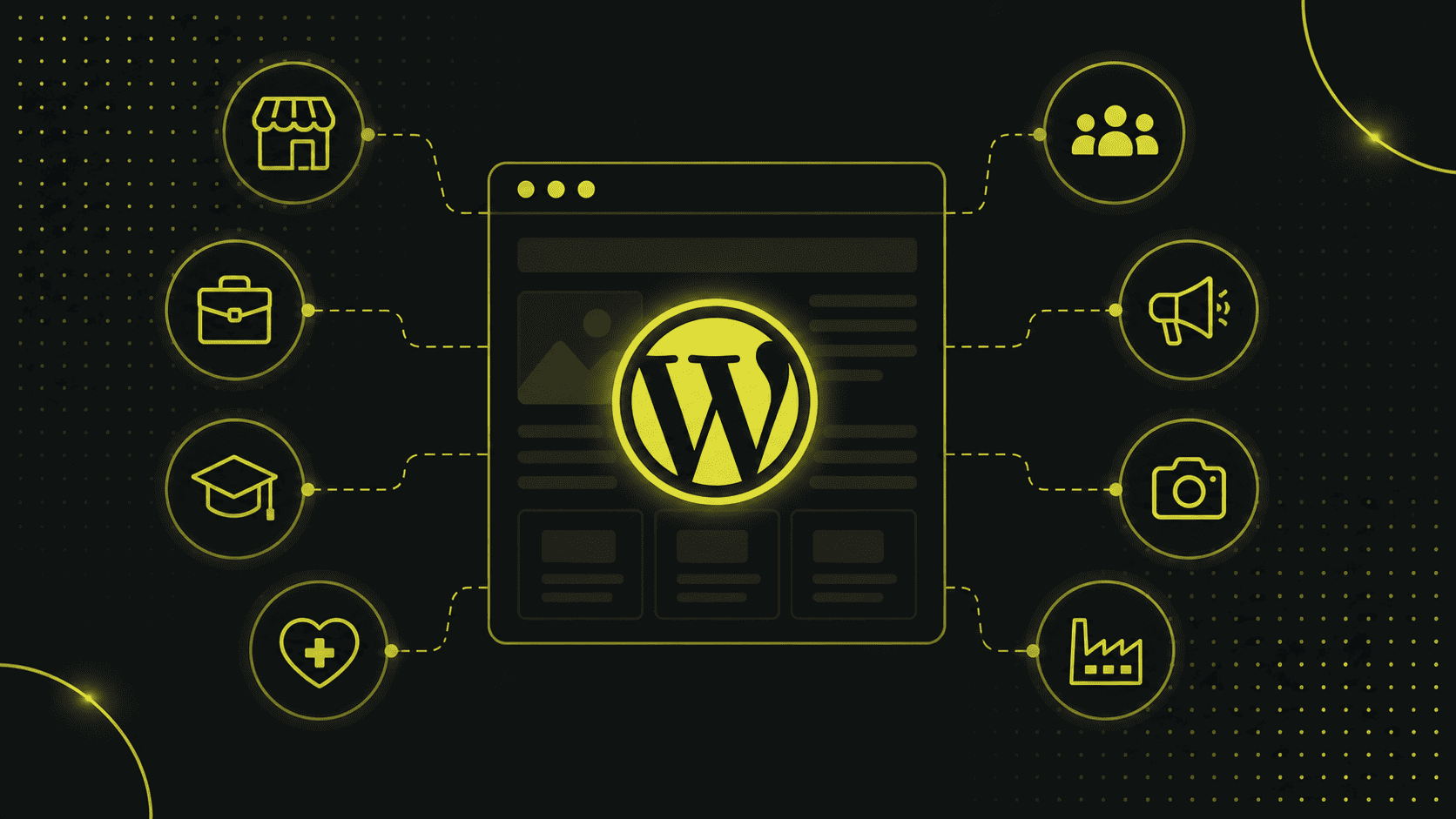


What is SEO and why is it important?
Search Engine Optimization (SEO) and an associated SEO strategy are very important to make a website more visible in search results.
Since search engines like Google are the first place most users turn to when looking for information, products, or services, your website’s ranking in search results is the main factor determining your success.
Because most users mainly click on the links that appear on the first page of the search results.
Accordingly, the first three positions receive the largest share of clicks and therefore more organic traffic, which in turn increases the chance that potential customers will visit your website and interact with it.
To increase the visibility of your website and your online presence in the search results, there are a variety of SEO measures that you can implement.
This includes on-page optimizations such as keyword research, content optimizations, meta tags and technical aspects such as loading speed and mobile optimizations.
Off-page SEO strategies, such as building backlinks, also help to increase the authority and credibility of a website.
Since search engine algorithms are constantly evolving, SEO is not a one-off process, but requires continuous adaptation and optimization.
By regularly monitoring performance and adjusting the strategy, a website can be successfully placed in the search results in the long term.
| Why is SEO important? |
|---|
|
Erhöhte Sichtbarkeit |
|
Mehr organischer Traffic |
|
Höhere Interaktion |
|
Langfristiger Erfolg |
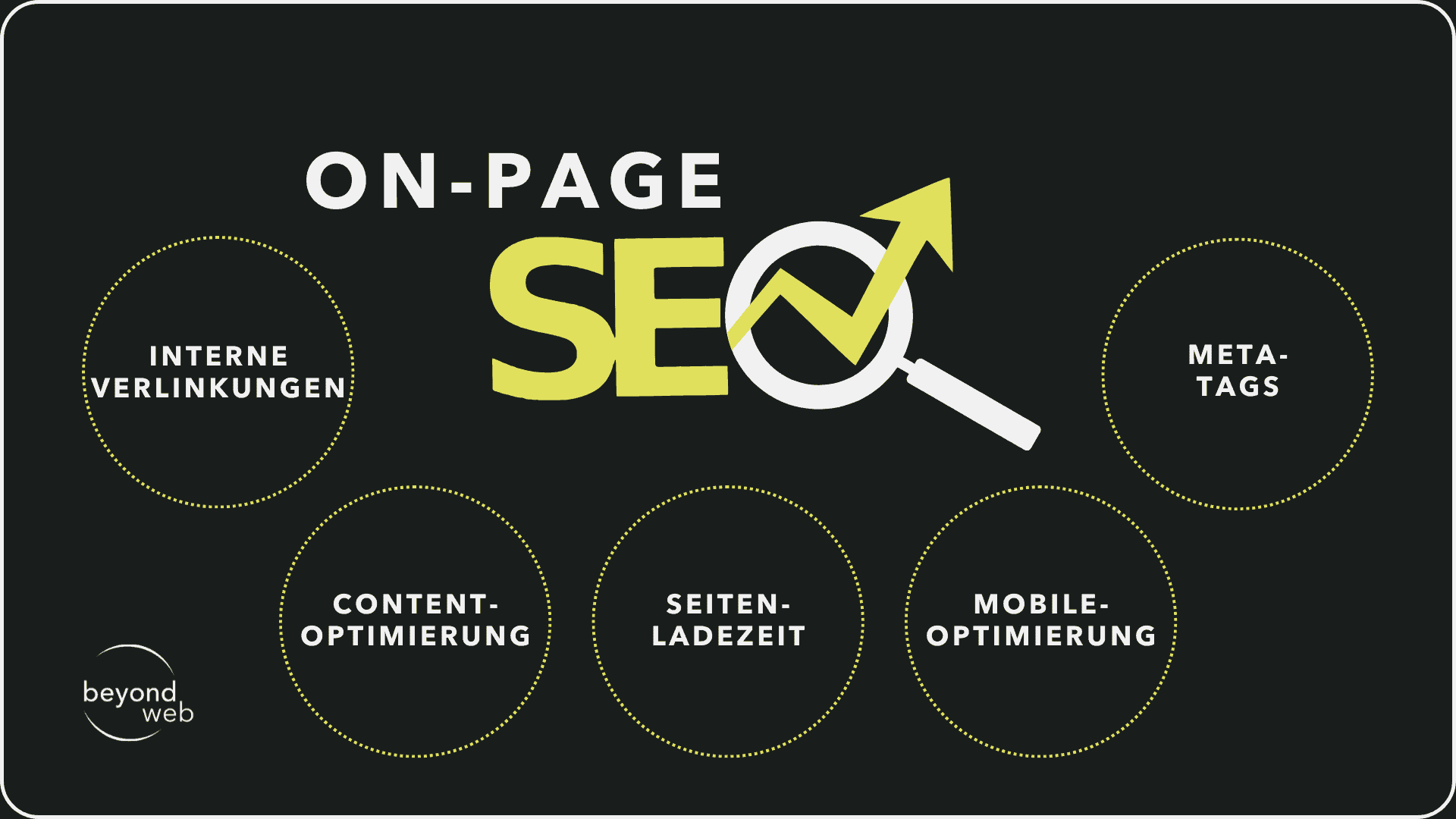
On-page SEO
On-Page-SEO beschäftigt sich mit allen Massnahmen, die auf deiner eigenen Website durchgeführt werden, um sie für Suchmaschinen und Nutzer attraktiv zu machen.
The main focus is on optimizing content and structural aspects, with the most important areas being as follows:
Content optimization
Bei der Content-Optimierung geht es nicht nur darum, Inhalte zu erstellen, sondern vor allem darum, sicherzustellen, dass diese hochwertig, relevant und gut strukturiert sind.
The basis for this is targeted keyword research.
Through these you can ensure that the topics your target group is looking for are covered.
In addition, you should make sure that your content has a certain depth.
Search engines like Google prefer texts that are comprehensive and offer readers real added value.
This means that it is not enough to just scratch the surface of a particular topic.
Your content should rather provide detailed information, insights or current developments.
In addition to keyword research and the depth of your content, the readability of your text also plays an important role.
Content that is well structured, with short paragraphs, clear headings and, where appropriate, lists or enumerations, makes it easier for readers to understand the text.
Visual elements such as images, infographics or videos also help and make complex content much clearer.
In general, you should make sure that your content is updated regularly.
Correspondingly, content optimization requires continuous maintenance and adaptation in order to meet both the needs of readers and the requirements of search engines.
Meta tags
Meta tags are very important because they help search engines to better understand the content of a website.
This makes them one of the most important elements of search engine optimization.
The most important meta tags include the following:
- Title tags: A title tag serves as the title of the page and is displayed in the search results.
- Meta descriptions: The meta description provides a brief summary of the content of your page. It should encourage users to click on your link.
- Headings (H1, H2, H3, etc.): Headings structure the text and help both search engines and readers to quickly grasp and navigate the content.
Internal links
Internal links are an important aspect of on-page optimization, as they help both users and search engines navigate a website efficiently.
This is because all relevant pages are linked together by a well thought-out linking structure.
This not only increases user-friendliness, but also the findability of important content.
In addition, a meaningful hierarchy makes it easier for search engines such as Google to crawl and index a page, which increases the chances of better rankings.
Mobile optimization
More and more users are accessing websites via mobile devices.
It is therefore important that your website is also optimized for different screen sizes and devices, as this is the only way to ensure a smooth user experience.
Mobile optimization is not only important for users, but also a relevant ranking factor for search engines such as Google.
Pages that work well on smartphones and tablets have a better chance of ranking higher in search results and generating more traffic.
Page load time
Another important factor is the page load time.
It contributes significantly to the user experience and search engine rankings.
Because if your website loads slowly, many users will bounce very quickly.
This increases your bounce rate and, conversely, has a negative effect on the ranking of your website.
Fast loading times, on the other hand, not only ensure satisfied visitors, but also increase the chances of better rankings in the search results.
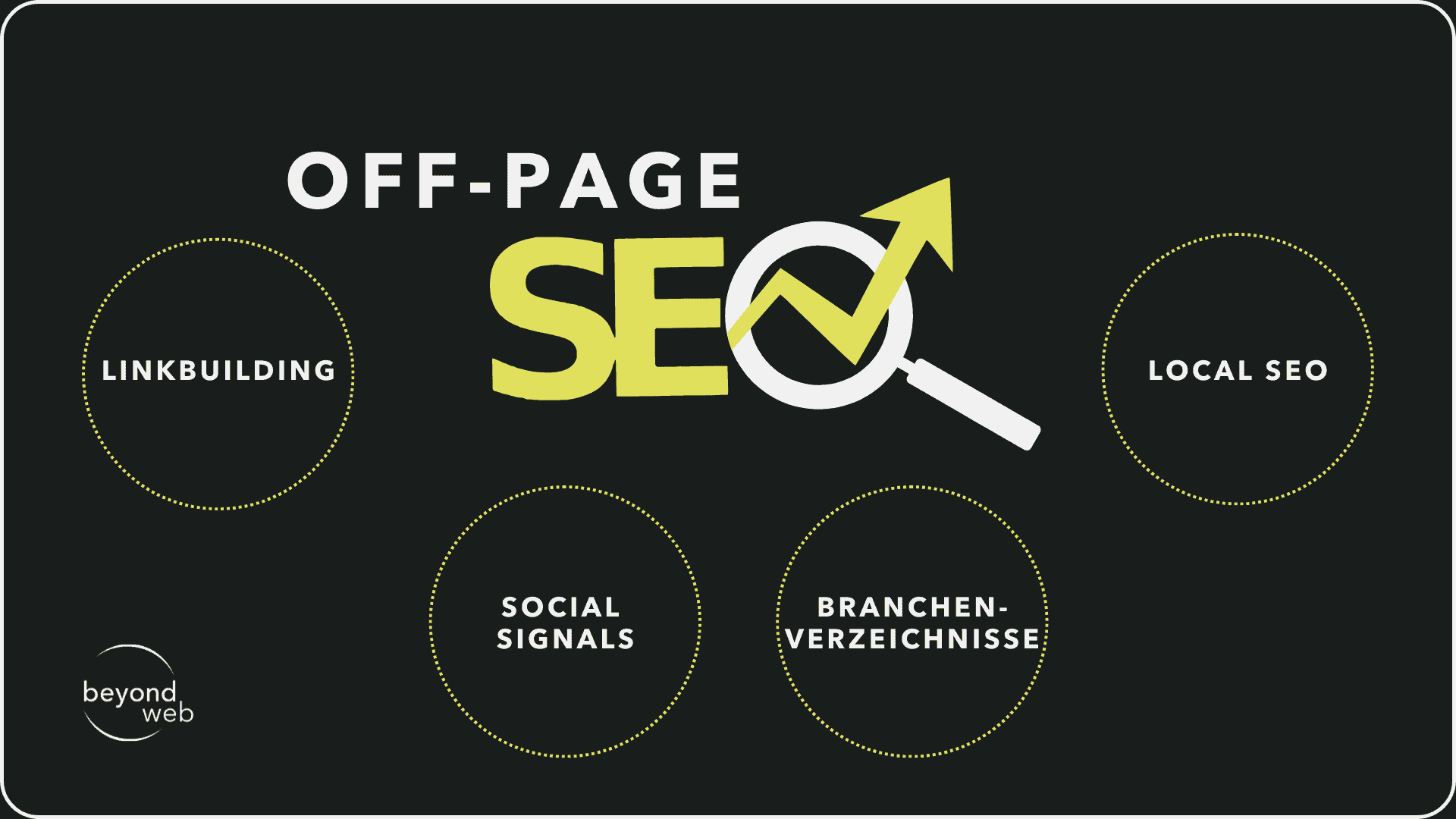
Off-page SEO
In addition to on-page SEO, off-page SEO is also an important component.
Off-page SEO refers to all measures that are taken outside of your own website and have an impact on your visibility and reputation.
Off-page SEO strategies, also known as off-page optimization, are crucial for success in a highly competitive environment.
The central focus here is on building backlinks, as these are seen by search engines such as Google as a signal of trust.
The most important off-page SEO measures include the following:
Link building
Linkbuilding ist einer der wichtigsten Bereiche des Off-Page-SEO.
It contributes significantly to strengthening the authority and relevance of your website in the eyes of search engines such as Google.
Aber Achtung: Im Bereich des Linkbuilding kommt es stark auf die Qualität der Links an!
Backlinks from authoritative and topic-relevant websites in particular signal to search engines that the linked page is trustworthy and valuable.
This allows them to positively influence the ranking.
However, links that come from low-quality or spammy sites can damage the reputation of your website and even lead to a loss of ranking.
According to this, the following applies to every link building strategy: quality over quantity.
Social Signals
Social signals, i.e. interactions on social media such as likes, shares and comments, do not have a direct influence on search engine rankings, but they can indirectly help to increase the visibility and traffic of your website.
This is because a strong presence on social platforms can increase awareness of your brand, which in turn increases the likelihood of your content being linked to and recommended by other users.
And this increased visibility and the links can ultimately have a positive effect on your ranking and therefore also on the success of your website.
Business directories and local SEO
Business directories and local SEO are particularly important for local companies.
This is because entries in local and industry-specific directories such as Google My Business improve visibility in search results.
In addition, they make it easier for potential customers to find the company.
Reviews and positive mentions in these directories also contribute to credibility and findability.
Targeted optimization of entries can improve your ranking in local search results and significantly increase your reach.
Basics of SEO optimization
Before I explain how you can do SEO yourself, I would like to explain a few basics.
Because these form the backbone of every successful SEO strategy.
Keyword research
One of the most important foundations of SEO optimization is keyword research.
Use it to identify keywords that potential customers use to search for your products or services.
With the right selection of keywords, your content can be targeted to the needs of the target group and thus also increase visibility in the search engines.
Tools for keyword research
There are many different tools on the market that you can use to carry out keyword research.
You can use some of them free of charge, while others are subject to a charge.
A good free tool is the Google Keyword Planner, among others.
It provides basic data such as search volume and keyword ideas that you can use to get started.
The tool is particularly suitable for users who want to gain initial insights into the search behavior of their target group.
Of course, there are also advanced tools such as SEMrush and Ahrefs.
Diese weisen deutlich mehr Funktionen auf und liefern detaillierte Analysen.
This includes competition ratings, keyword difficulties or even suggestions for similar keywords.
The tools from SEMrush and Ahrefs are particularly helpful for developing comprehensive strategies and specifically improving the visibility of your website.
Understanding and using search intent
The search intention describes the reason why a user submits a specific search query to search engines such as Google.
It is very important to understand the search intention of the respective user in order to create content that is precisely tailored to their needs and expectations.
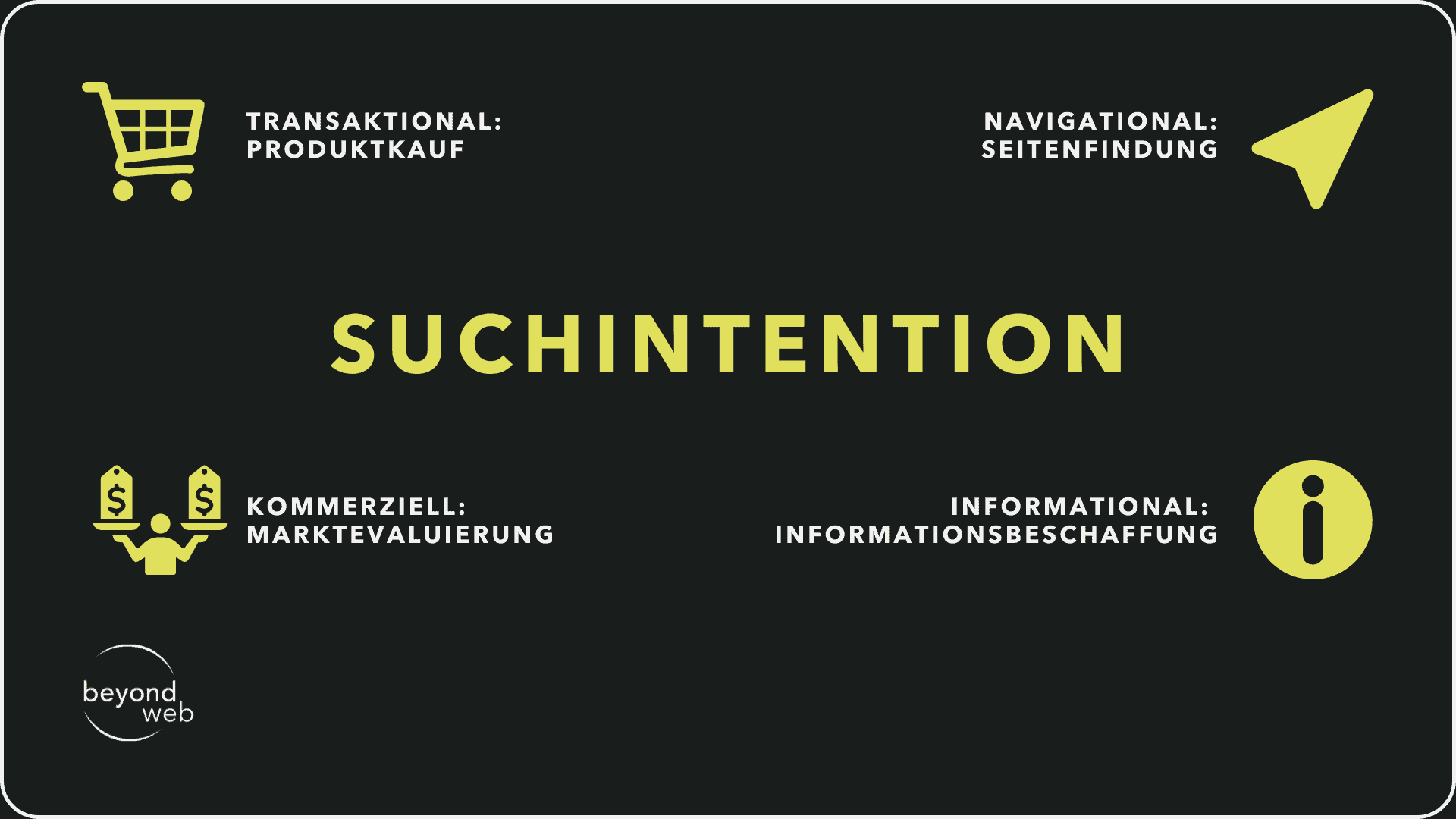
In principle, we distinguish between four different types of search intention.
1. Informelle Suchintention
Eine sehr häufige Form ist die informelle Suchintention.
This is about the user searching for general information.
He wants to gain knowledge and, for example, get answers to a specific question.
2. Transaktionale Suchintention
Bei der transaktionalen Suchintention möchte der Nutzer eine Handlung durchführen.
An example of this would be the conclusion of a purchase.
Suchanfragen wie «Laptop kaufen» oder «beste Schuhe online bestellen» deuten darauf hin, dass der Nutzer eine Transaktion plant.
3. Navigationale Suchintention
Bei der navigationalen Suchintention sucht der jeweilige Nutzer nach einer bestimmten Website oder einem Unternehmen.
An example of a navigational search query would be "Facebook login" or "Amazon website".
With these search queries, the goal becomes clear very quickly and you can see that the user wants to go directly to a specific page.
4. Kommerzielle Suchintention
Die kommerzielle Suchintention kommt oft in der Recherchephase vor einer Kaufentscheidung zum Zug.
The user wants to compare products or search for reviews in order to find out about the purchase.
This type of search intention is therefore aimed at finding out about various options before making a decision.
By correctly interpreting the purpose of search queries, you can offer targeted content that picks up the user at the right point in their customer journey and thus both improve the user experience and increase conversion rates.
Technical SEO basics
Technical optimizations also play a major role in the area of search engine optimization.
Because technical SEO is crucial for influencing how search engines perceive your website.
Although good content and relevant keywords are very important, they are of very little use if search engines such as Google have difficulties crawling your website or if users are put off by long loading times.
Crawling and indexing
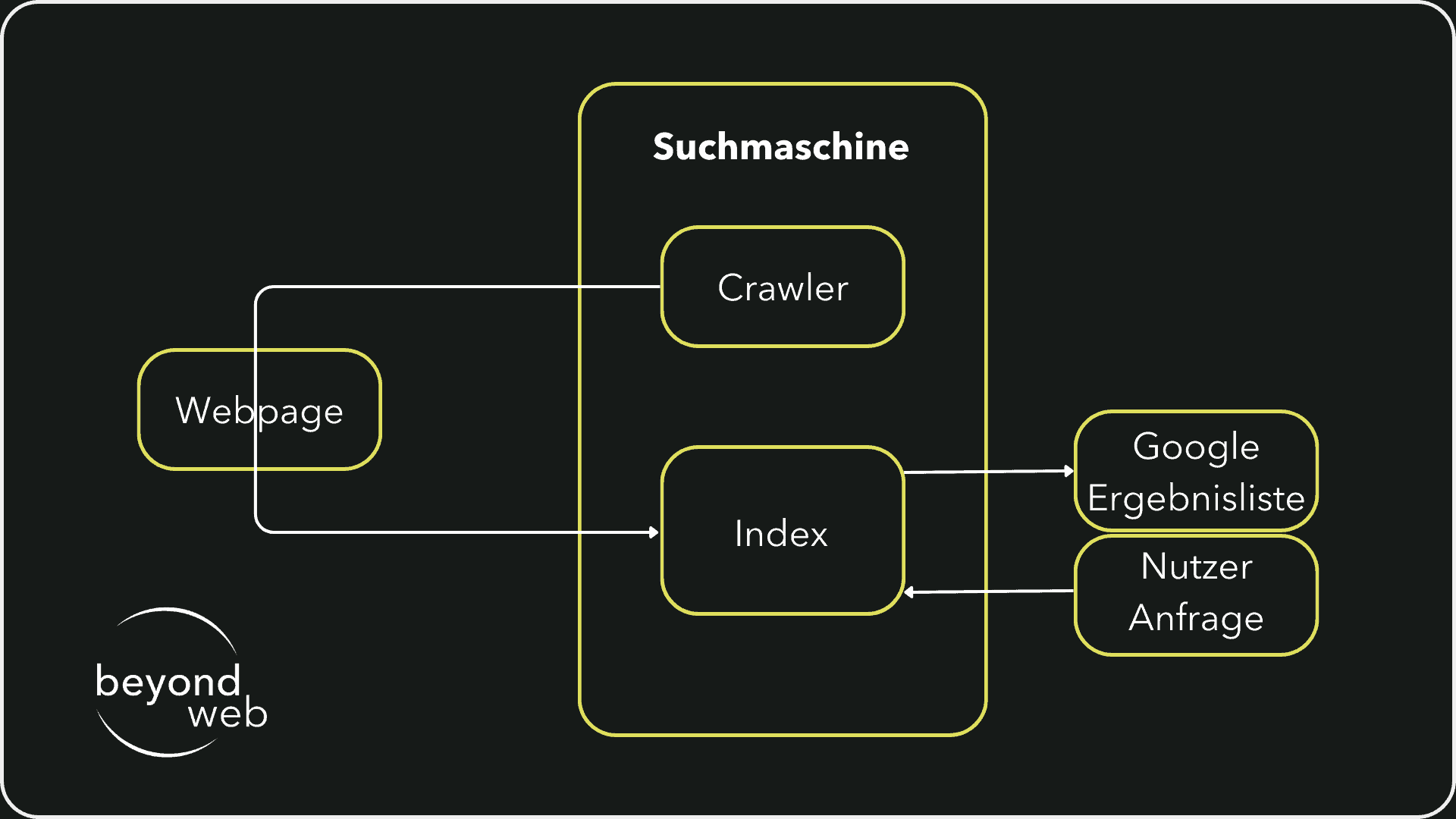
Crawling and indexing are fundamental processes in the context of search engine optimization (SEO).
When crawling, so-called "crawlers" or "bots" from search engines such as Google search the internet and record the content of a website.
These crawlers follow the links within a website to discover new pages and content.
They analyze texts, images, meta tags and other important elements to evaluate the relevance and structure of the page.
Only pages that have been crawled have the chance to appear in the search results.
Indexing follows crawling.
The search engine decides whether the crawled content is included in the search engine index, which means that it can be displayed in the search results.
Not every page that is crawled is automatically indexed.
Factors such as duplicate content, low-quality content, or technical issues can prevent certain pages from being included in the index.
To ensure that the crawling and indexing process runs smoothly, a well-structured sitemap is essential.
A sitemap lists all the important pages of the website and helps the crawlers to capture the content efficiently.
Also important is the correct use of the Robots.txt file, which instructs search engines which pages to crawl and which to ignore.
This prevents unnecessary or sensitive content, such as admin areas, from entering the search engine index.
Mobile optimization and page speed
Mobile optimization is essential today, as more and more users are accessing websites via smartphones and tablets.
A website must be optimized for mobile devices to ensure a positive user experience.
The loading speed is just as important, as slow pages lead to higher bounce rates and can have a negative impact on search engine rankings.
Tools such as Google PageSpeed Insights offer you valuable insights into the loading speed and give you concrete suggestions on how you can improve the performance of your website.
Content optimization
As already mentioned, the content on your website is one of the most important elements.
It not only determines how well your site ranks in search results, but also how well it fulfills the needs of your visitors.
Effective content optimization ensures that your content is relevant and appealing to both search engines and your target audience.
Creation of high-quality, unique content
High-quality, unique content is crucial for SEO success.
Your content must therefore not only be relevant and informative, but first and foremost appealing.
Your content must answer users' needs and questions.
You should also make sure that your content is regularly checked and updated.
Meta tags: title, meta description and headings
Meta tags such as title and meta description are important elements that influence how your website is displayed in search results.
A concise, keyword-optimized title and a convincing meta description can demonstrably increase the click-through rate.
Structured data and rich snippets
Structured data helps search engines to better understand the content of your website.
By implementing schema markup, you can create rich snippets that improve the appearance of your website in search results.
Practical steps for implementation
Now that we have discussed the strategic basics, it's time to put your SEO measures into practice.
I would like to give you a step-by-step guide so that you have the opportunity to do your SEO yourself.
Do on-page SEO yourself
On-page SEO includes all the optimizations you can make directly on your website to improve both the user experience and search engine friendliness.
The following aspects are part of on-page SEO and can be improved:
URL structure and SEO-friendly URLs
A clear and SEO-friendly URL structure improves user-friendliness and makes it easier for search engines to crawl your pages.
You should therefore make sure to use short, descriptive URLs that contain the main keyword.
To achieve this, you should:
- Remove unnecessary words and special characters
- Use the main keyword in the URL
An example of an SEO-friendly URL would be: https://www.beyondweb.ch/blog/backlink-guide-2024
Optimization of images and media
Images and other media should be optimized to reduce loading times.
You can use tools such as TinyPNG for this.
Also make sure to use alt tags to describe the content of the images.
This also contributes to accessibility.
It is also important that you use the correct file format - JPEG for photos, PNG for graphics.
Use of internal links and anchor texts
Internal links help to distribute page authority on your website and make it easier for users and search engines to find relevant content.
You should therefore use descriptive anchor text that describes the topic of the linked content.
Do off-page SEO yourself
While on-page SEO focuses on what you can do directly on your website, off-page SEO is about external factors that strengthen the reputation and authority of your website.
A strong focus here is on building high-quality backlinks.
Backlink building: tips and strategies
Backlinks are like recommendations from other websites.
The more trustworthy the source, the better.
There are various ways to build backlinks.
This includes:
- writing guest posts for blogs in your industry
- das Teilen deines Contents in den sozialen Netzwerken
- asking satisfied partners or customers whether they link to you.
Local SEO optimization
For local companies, local SEO optimization is one of the most important points.
You should definitely create a Google My Business profile.
The profile must not only be complete, but should also have an SEO-optimized title and an SEO-optimized description.
Optimizing a Google Business profile with all its factors can quickly overwhelm a layperson.
As a Swiss local SEO agency, we at Beyondweb therefore offer you various options with optimal support from one of our SEO experts.
Social signals and their importance
Although social signals (likes, shares, comments) do not directly influence the ranking, they contribute to increasing brand awareness and traffic, which can have an indirect positive effect on SEO.
Do technical SEO yourself
Technical SEO ensures that your website is easily accessible for search engines and secure for users.
You can ensure that your website is crawled and indexed efficiently by implementing XML sitemaps and Robots.txt files correctly and using the Google Search Console.
In addition, the security of your website, especially the use of HTTPS, plays an important role in user trust and ranking in search results.
XML sitemaps and Robots.txt
An XML sitemap helps search engines to find and index all pages of your website.
The Robots.txt file specifies which pages are to be crawled by search engines and which are not.
Therefore, make sure that you not only create an XML sitemap (e.g. with a WordPress plugin such as Yoast), but that you also specify in the Robots.txt file which pages should not be crawled.
Troubleshooting with Google Search Console
Google Search Console is a free tool for monitoring and troubleshooting your website.
It is particularly worth using the following functions:
- The check for crawling errors (e.g. 404 pages).
- Checking which search terms lead users to you.
- Testing and responding to security issues
HTTPS and security aspects
The use of HTTPS instead of HTTP is important for security and user trust.
Search engines also prefer secure websites, which has a positive effect on the ranking.
Du solltest dir deshalb ein SSL-Zertifikat besorgen und darauf achten, dass alle alten HTTP-Links weitergeleitet werden.
Common mistakes when doing SEO yourself
If you take care of your SEO yourself and don't rely on SEO experts, mistakes can quickly occur.
To prevent this from happening to you, I would like to show you the most common mistakes and how you can avoid them.
Over-optimization and keyword stuffing
The problem:
Many people think that the more often they use a keyword, the better.
However, if a text is overloaded with keywords, it looks unnatural - for readers and search engines.
That's called keyword stuffing, and it can cause search engines to penalize your site.
How to do it right:
- Write for your readers first, not for the search engine.
- Only integrate keywords where they really fit, e.g. in the headline, in the first paragraph and in subheadings.
- Use synonyms and related terms to make the text appear natural.
Neglect of technical SEO
The problem:
Many people only care about the content and forget the technical basics.
However, slow loading times, poor mobile display or errors in the code can prevent search engines from indexing your page correctly.
How todo it right:
1. optimize loading time
Compress images, use a caching plugin (e.g. WP Rocket) and choose a fast hosting provider.
2. mobile optimization
Your website should look and function just as well on a cell phone as it does on a computer. Test this regularly with the Google Mobile-Friendly Test.
3. error in the code
Use tools such as Google Search Console to identify problems (e.g. broken links or pages that cannot be indexed).
Missing or incorrect backlinks
The problem:
Backlinks are like recommendations from other websites.
But not all recommendations are equally good.
Links from dubious sites (e.g. spam sites) or from completely irrelevant industries can do more harm than good to your website.
This is how you do it right:
1. quality over quantity
One backlink from a trustworthy, thematically relevant page is more valuable than 100 links from inferior websites.
2. Avoid spam
Don't buy backlinks and stay away from dubious offers such as "1000 backlinks for 10 euros".
3. networking
Write guest posts, work with partners or offer high-quality content that others are happy to share and link to.
Success monitoring and continuous optimization
Successful search engine optimization does not end with the implementation of optimization measures.
Vielmehr ist SEO ein fortlaufender Prozess, der regelmässige Kontrolle und Anpassungen erfordert.
In order to ensure that you achieve the desired results, you need to monitor your success accordingly.
Metrics and KPIs for measuring success
To find out whether your SEO strategy is working, you need clear facts and figures.
By keeping an eye on the most important key figures, you can recognize what is going well and where you should make improvements.
Therefore, in the following section, I would like to not only list the most important metrics, but also explain what they are all about.
Organic traffic and ranking
Organic traffic
Organic traffic shows you how many visitors come to your website via search engines such as Google.
This number gives you a direct indication of how well your content is being found.
How to measure it
You can measure and monitor organic traffic using tools such as Google Analytics.
It is only important that you filter the visitor numbers so that only those visitors are displayed who have actually accessed the site via a search engine.
What you should look out for
As a rule, more visitors mean that your optimizations are working well.
However, if your traffic remains constant or drops, this may be due to various factors such as a missing update, a Google algorithm or a problem with your content
Ranking positions
The placement of your keywords in the search results is very important.
Because keywords for which you rank high often bring the most traffic.
What you can do
Here too, you can use tools such as Google Search Console or Ahrefs to regularly check your position.
This allows you to find out which pages perform particularly well and optimize similar content.
Dwell time and bounce rate
Dwell time
The dwell time shows you how long visitors stay on your site.
If they stay longer, your content will be well received.
If they jump off again quickly, you should consider why.
Tips to increase the dwell time
You should make sure to write content that is really helpful.
Also make sure that you add images, videos or graphics to break up the text.
You can also offer links to similar articles so that your users stay on your site longer.
Bounce rate
The bounce rate shows you how many users leave your site after a short time.
A high bounce rate is an indication that your site is not meeting expectations.
How you can reduce the bounce rate
Make sure that you optimize your loading times.
Nowadays nobody likes to wait and long loading times usually lead to a high bounce rate.
In addition to loading times, mobile optimization also plays a role.
Your site must look just as good on a smartphone and tablet as it does on a PC.
You can also consider making your content even clearer.
If users find what they are looking for immediately, they stay longer.
Continuous optimization and adaptation of the strategy
SEO is not a one-off project, but an ongoing process.
You need to regularly check what works and adapt your strategy.
Analyze data
Du solltest die monatlich wichtigsten Zahlen anschauen.
If you see that something is not going well, you have to look for the cause.
Is it the content?
Or rather your technology or the backlinks?
Do it yourself SEO - the path to more success
SEO is not rocket science, and with the right approach you can optimize your website step by step - without any agencies or experts.
It is important that you understand that SEO is a process and an ongoing task and not a one-off action.
Whether you start with on-page optimizations such as improving content and meta tags, or deal with off-page strategies such as backlink building later on.
Everything contributes to increasing the visibility and performance of your website.
The most important thing in everything you do is not to lose heart.
SEO takes time and patience.
But the results can be worthwhile.
Start small, learn from your data and adjust your strategy regularly.
So you will gradually get better.
And if you do get in over your head, you can always contact an SEO agency to help you achieve your goals.