
So what does web design really mean today?
Web design means bringing your business to life in the digital space.
Internationally, the term web design is used to describe the process of professionally designing and planning websites.
Web design is primarily used to create a good first impression that lasts.
But web design must not be reduced to visual aspects alone
Web design also lays the technical groundwork to ensure your site appears in Google and AI search results and loads quickly.
Webdesign im Jahr 2026 sollte Psychologie, Technik und Ästhetik verbinden.
And yes— AI can help web designers with this.
But it does not replace your strategy or your individual brand understanding. In web design, however, this is crucial for the authenticity and recognizability of your brand. It is a tool - but no substitute for brains, attitude and craftsmanship.
Why good web design is crucial for companies
Imagine someone googles your company. They click on your website - and decide in under 3 seconds whether to stay or leave. Sounds crazy? But it's reality. A convincing web design is a decisive factor for the success of your company, as it makes a significant contribution to convincing visitors and standing out from the competition in the long term.
Your website is not just a figurehead - it is your most important salesperson
According to a study by the Nielsen Norman Group, visitors leave a site within a few seconds if they do not immediately feel trust or relevance.
Especially for SMEs with 5, 15 or 40 employees, the website is often the first - and perhaps only - point of contact with potential customers and different target groups. If this impression is not right, the lead is gone. And for good.
Good web design is not a luxury - it is business-critical
When it comes to web design, many people still think of "something that just looks nice".
The following facts clearly show you why good web design is crucial for the success of a website:
- Build trust: 75% of users judge the credibility of a company based on its web design.
- Make complex content understandable: A clear visual structure increases the length of stay and reduces the bounce rate (Adobe,
- Get users to take action: Even a fraction of a second loading time can have a major impact on conversion rates - according to the Portent study, the conversion rate for mobile sites drops by up to 20% with a delay of just 1 second.
- Be visible in Google & Ki searches: 81% of consumers research online before making a purchase decision.
A poor or outdated website leads to a direct loss of sales.
8 key factors for good web design
Good web design is no coincidence. It follows clear principles - and that's exactly what we're going to look at now.
The following seven factors serve as a guide to good web design so that you can create a website that works for your users and delivers results for your business at the same time.
1. user-friendliness (usability)
Your website should not have to explain how it works. It simply has to do it. Clear navigation, logical page structure, quick orientation: that's usability.
According to Forrester Research, 50% of users leave a site immediately if they cannot find what they are looking for.
In concrete terms, this means for you:
- The menu navigation must be understandable at first glance.
- Contact options should be visible in the header and footer.
- Content must be logically organized and easy to scan, and the clear presentation and structuring of content is crucial for a positive user experience.
You should also avoid guesswork with button texts. "Start now", "Let's go" or "Learn more" are too generic. Instead, use "Book a demo now", "Book a free consultation", etc.
Mobile First & Responsive Design
More than 60% of all page views worldwide come from mobile devices - and the trend is rising.
A responsive design is crucial to ensure that your website is displayed optimally on all devices - whether smartphone, tablet or desktop - and offers a good user experience.
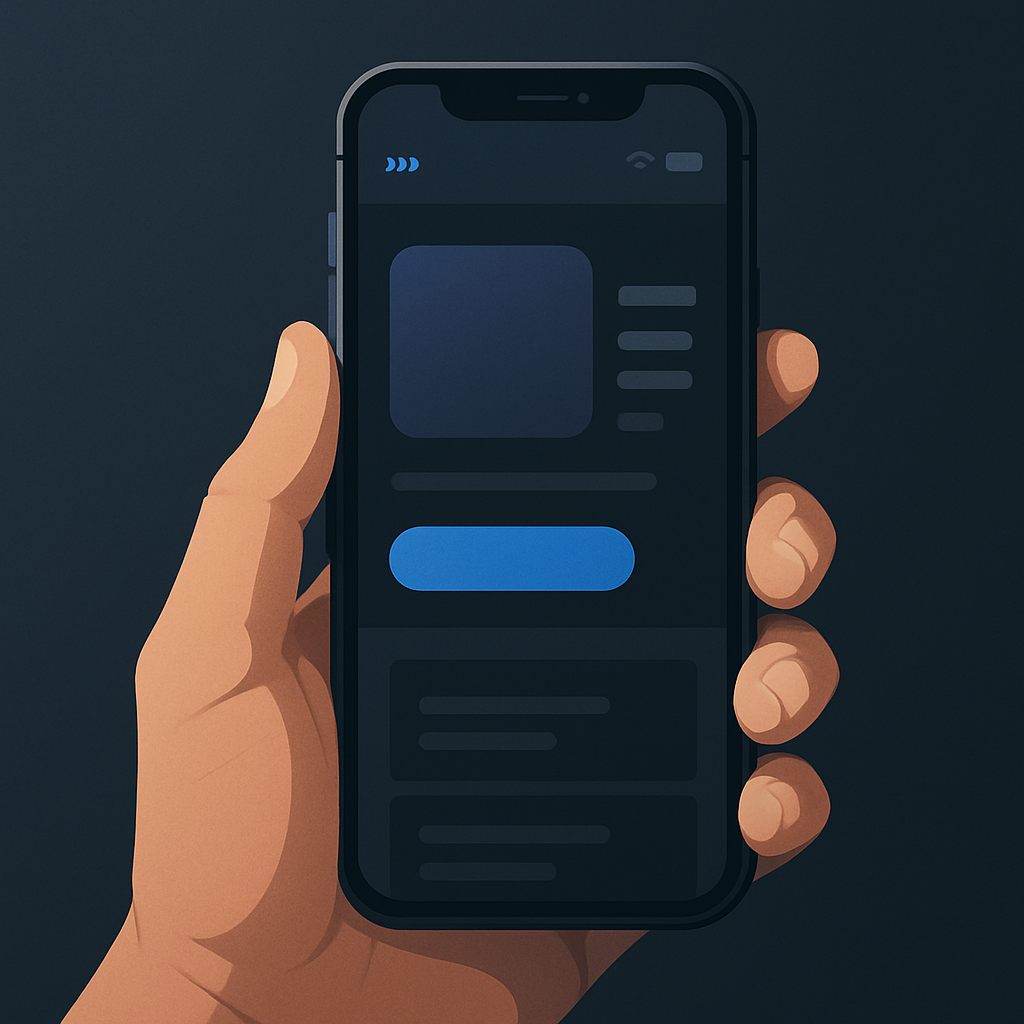
If your website doesn't work on a smartphone, you've lost today, regardless of whether you're in the B2B or B2C segment.
You should definitely consider the following points for mobile design:
- Mobile navigation (hamburger menu, thumb-friendliness)
- Touch-optimized buttons
- Mobile loading times & performance (Core Web Vitals!)
- Optimal display and usability on tablets and tablets
- Note differences between desktop and mobile versions (e.g. layout, navigation, functions)
Tip: Test your site regularly with Google Mobile Friendly Test.
Loading speed
Visitors do not wait.
According to a study by Portent, the conversion rate drops by up to 20% if your site loads one second slower.
Fast feedback from the page, for example through short loading times, also ensures a better user experience.
So what you should look out for:
- Compressed images (WebP)
- Clean code (no bloated themes)
- Fast hosting
- Activate caching
Tools such as GTmetrix, Google PageSpeed Insights or WebPageTest help you to find weaknesses.
4. visual hierarchy - design that leads
Good web design guides your visitors' gaze. It makes it clear what is important - and what comes next. Visual elements such as colors, fonts, layouts and images are crucial for user guidance and the aesthetic effect of a website.
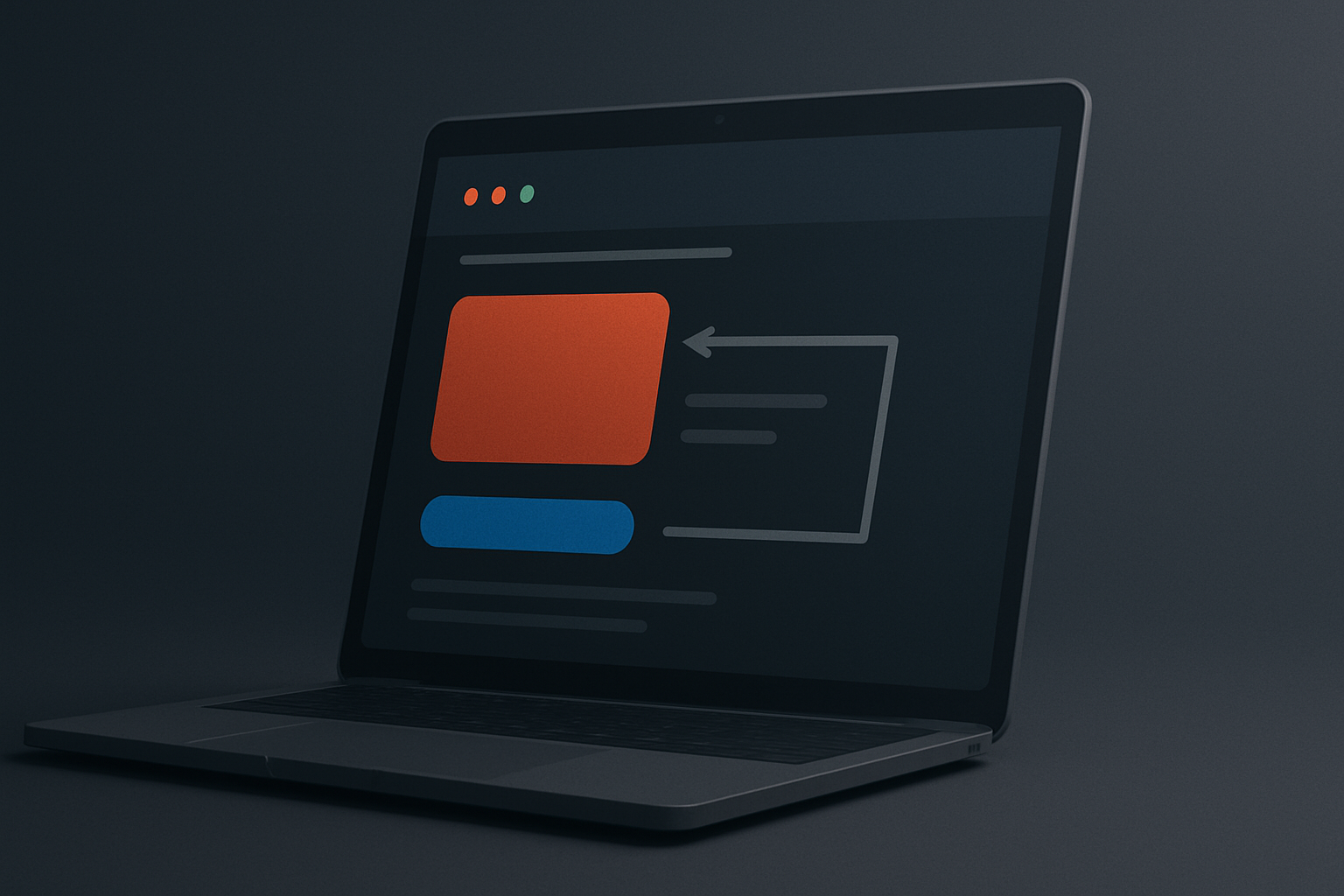
Elements of the visual hierarchy:
- Clear size differences (H1, H2, continuous text)
- Contrasts & colors for emphasis, whereby the targeted selection of color, font and different typefaces significantly influences the visual hierarchy and legibility
- Sufficient white space - yes, emptiness is also design
- Well thought-out layouts and a coherent composition ensure a clear visual hierarchy and a harmonious overall picture
The selection and arrangement of the individual elements and visual components significantly determine how users are guided through the site.
Studies show that users react up to 5× faster to visually highlighted elements. Images and an attractively designed user interface also help to strengthen the visual hierarchy and improve the user experience.
If everything looks the same, nothing works.
Therefore: Guide your users visually - with a well thought-out layout.
5. conversion rate optimization (CRO)
A beautiful site is good - a site that converts is better.
A clear and well-placed call to action is crucial for guiding users in a targeted manner and increasing conversion.
This is what you need:
- Clear, visible call-to-actions (CTA)
- Short routes to the target (e.g. contact, request, demo)
- Trust through social proof, testimonials, logos
- Recurring CTAs in strategic locations (hero, center, footer)
You want the visitor not just to look - but to act.
6. accessibility
Accessible web design is not only socially useful in Switzerland, but is also becoming increasingly legally relevant.
According to the Disability Discrimination Act (BehiG) and the associated ordinance (BehiV), public institutions must make their websites accessible.
Aber auch für Privatfirmen in der Schweiz, die ihre digitalen Dienste in der EU anbieten, greift seit 28. Juni 2025 der EU‑Accessibility Act (EAA).
You should observe the following points in order to comply with minimum standards (WCAG A or AA):
- Contrasts & colors for the visually impaired
- Keyboard navigation
- Alt texts for images
- Structured HTML markup (e.g. with WCAG check)
- Easy-to-read text is essential to ensure accessibility for all users.
A content management system makes it much easier to maintain and update accessible content.
Inclusive websites perform better - and are also rated positively by Google.
7. search engine friendliness (SEO)
What good is the most beautiful website if nobody sees it?
Search engine optimization (SEO) is not an add-on that you sprinkle on at some point - it starts in the design process. This is because many of the decisive SEO factors are directly related to web design.
You should pay attention to the following points:
Clear visual hierarchy = better user guidance = better rankings
Ein klares, strukturiertes Layout hilft deinen Besuchern, Inhalte schneller zu erfassen – und sorgt dafür, dass sie länger auf deiner Seite bleiben.
Google misst das über sogenannte User Signals wie Verweildauer und Absprungrate.
Degree of legibility
Google understands texts better if they are well structured and clearly organized. And this is precisely a design task.
Design influences readability through: Font size, line spacing, contrasts, whitespace, layout structure, scannability through paragraphs, bulleted lists, visual anchors, etc.
A cluttered or hard-to-read design reduces the time spent on your site - and therefore has a negative impact on your visibility.
Call-to-actions & internal linking
Gutes Webdesign macht nicht nur für Menschen klar, wo’s langgeht – sondern auch für Suchmaschinen.
Eine klare CTA-Struktur und durchdachte interne Verlinkung im Design helfen dabei, wichtige Seiten zu priorisieren und der Suchmaschine zu zeigen, welche Seiten wichtiger sind als andere.
8. data protection in web design - your obligations and opportunities
Datenschutz ist 2026 ein zentrales Thema im Webdesign – und zwar nicht nur, weil es gesetzlich vorgeschrieben ist.
For companies and web designers, the conscious handling of user data offers a real opportunity to stand out from the competition and gain the trust of users.
Privacy by design is a top priority for many people today - and you should do exactly the same for your website.
You should understand data protection as an integral part of your design. A well thought-out data protection concept is a must-have for every website today.
It signals to visitors that their data is secure and will be treated with respect. This not only strengthens the company's image, but can also have a positive impact on the conversion rate. After all, users are more likely to choose a website that they trust - and that starts with data protection.
GDPR, cookie consent & privacy by design
The General Data Protection Regulation (GDPR) has long been more than just a bureaucratic obstacle - it should be a central aspect of every web design project.
Unternehmen und Webdesigner müssen 2026 sicherstellen, dass ihre Website transparent mit personenbezogenen Daten umgeht.
In concrete terms, this means clear information about what data is collected, what it is used for and how it is protected.
An important point is cookie consent.
Users must be able to actively decide whether to accept or reject cookies - and as simply and comprehensibly as possible. Modern consent tools such as Cookiebot can be seamlessly integrated into the design without disrupting the user experience.
In this way, companies not only fulfill their legal obligations, but also show that they take the privacy of their users seriously.
Privacy by Design goes one step further: data protection is integrated into the development and design of the website and all digital services right from the start.
This means that care is taken from the very first draft to collect as little data as possible and to protect it in the best possible way.
For companies, this can not only make sense from a legal perspective, but can also become a competitive advantage.
This is because users often reward transparency and security with increased trust and loyalty.
Webdesign-Tools und Ressourcen für 2026
If you want to successfully implement the 8 key aspects mentioned above, you need a corresponding tool stack.
Die richtigen Tools sind für Webdesigner und Unternehmen im Jahr 2026 unverzichtbar, um Projekte effizient, kreativ und zukunftssicher zu gestalten.
But the choice of tools and resources is huge.
Knowing the right tools gives you a clear competitive edge.
The most important tools for design, analysis and optimization
When it comes to web design and prototyping, many web designers rely on solutions such as Adobe Creative Cloud, Sketch, Figma or InVision.
These tools make it possible to develop creative website designs, create interactive prototypes and share and test design ideas in a team.
Tools such as Google Analytics, SEMrush and Ahrefs are indispensable for the analysis and optimization of websites.
They provide valuable insights into user behavior, search engine visibility and website performance.
This enables companies to specifically identify weak points and continuously improve their online presence.
How we think good web design at Beyondweb
Beyondweb is not just about building beautiful websites. We see web design as a tool that must achieve clearly measurable goals: Build trust, guide users, generate inquiries - or sell directly.
To do this, we combine three things:
- Strategy before design
- User-centered design
- 100 % SEO-ready
Our claim: design that works - not just pleases
You won't get an "off-the-peg" design solution from us.
We work with a clear process, ask the right questions and implement exactly what will really help your company on the web.
Because good web design is not what you see - it's what you feel when it works.
Conclusion - web design is not an end in itself
Today, web design is much more than pretty colors, round buttons and a nice first impression. It is a central tool in your digital marketing - and often the decisive factor between click and contact, between bounce and inquiry, between interest and sales.
Klar: KI, Website-Baukästen und Templates haben ihre Berechtigung – vor allem für den schnellen Start.
Aber wenn du als KMU strategisch wachsen willst, brauchst du mehr als nur eine funktionierende Website.
You need a well-thought-out, user-centered, search engine-friendly web design that suits your company - and specifically addresses and guides your visitors.