
What does a web designer do? Tasks and role at a glance
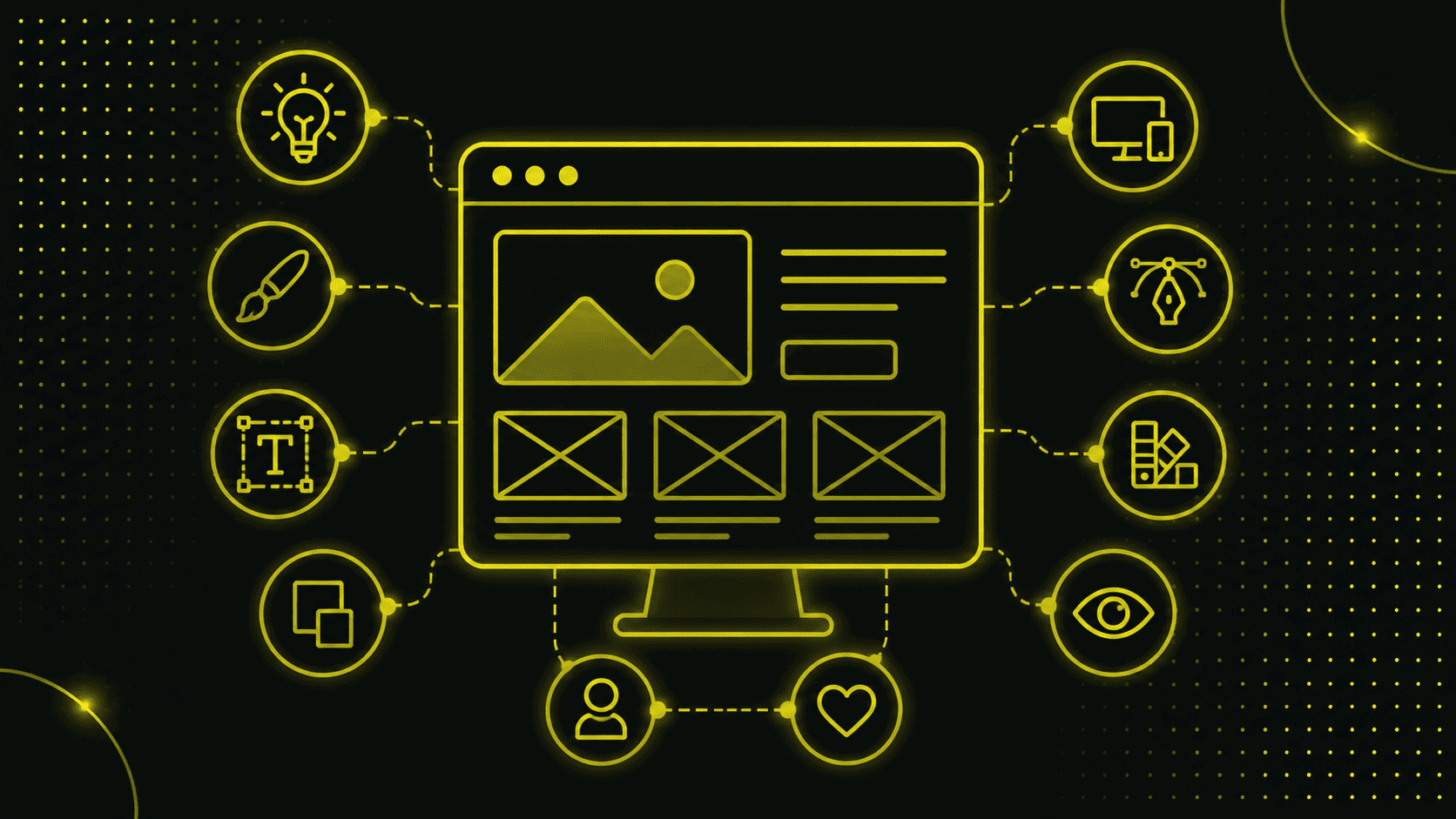
A web designer takes care of everything that has to do with the visual design of a website - and at the same time ensures that the site is functional and user-friendly.
This includes much more than just "making things look pretty".
Web designers combine design and functionality, always with an eye on the target group and good user guidance.
In other words, web designers help shape the user experience of a website.
You choose color schemes, design layouts, optimize the user experience and implement design elements.
They also keep aspects such as responsive design (i.e. adaptation to different screen sizes) and accessibility in mind so that the website is accessible and attractive for all users.
Typical tasks of a web designer
If you look around on a job board for designers, you get a very good picture of what this profession is all about.
A web designer deals with many different tasks.
To give you a better feel for what activities are part of a web designer's everyday life, I would like to introduce you to some of them in more detail in the following section
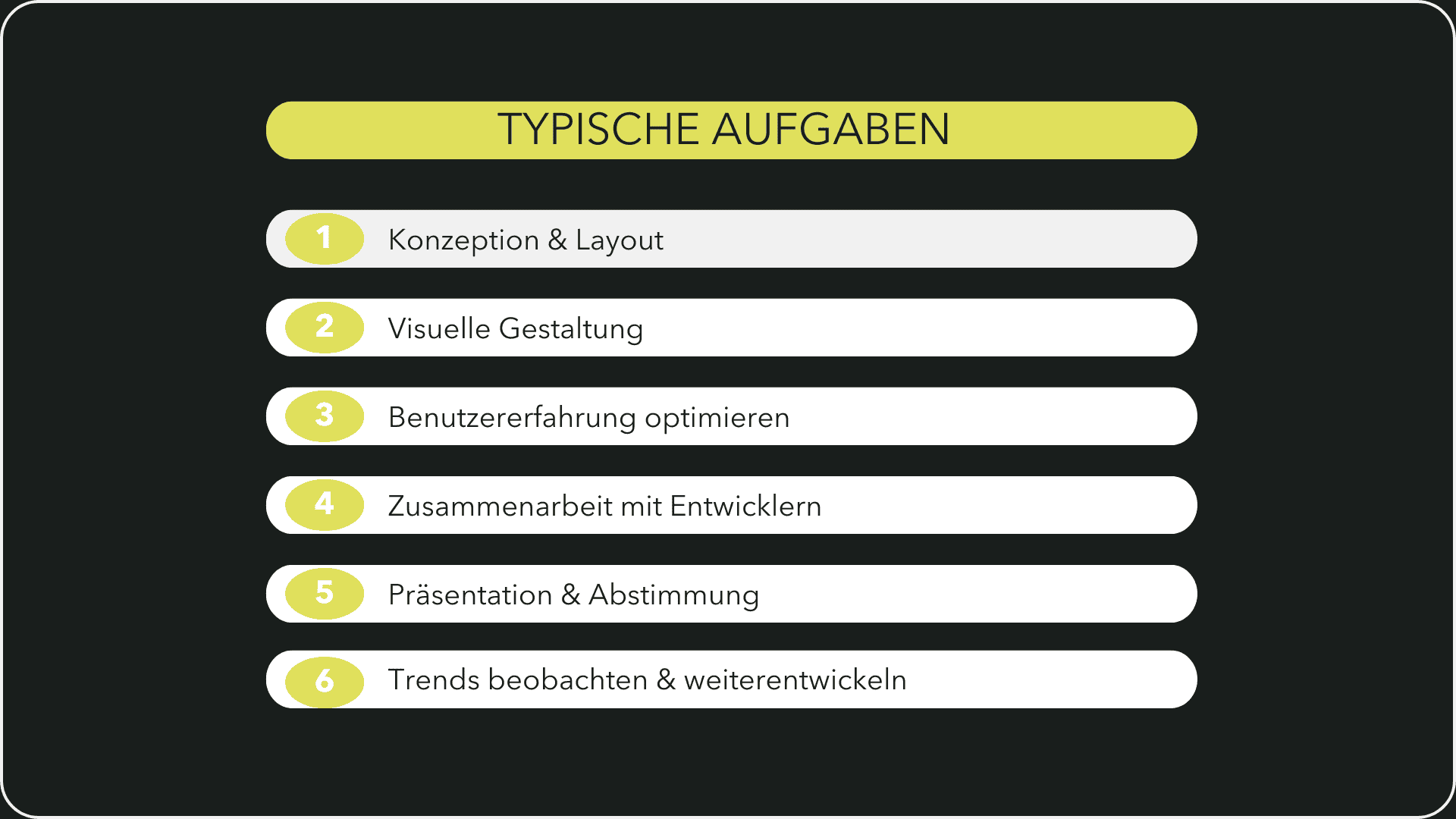
Conception & Layout
A web designer has to deal with the planning of the page structure and the creation of design drafts (wireframes, mockups) for websites or web applications.
This primarily determines how the content is arranged and which navigation makes sense.
A rough layout is often created first, which is then refined.
Visual design
Another important area of activity is visual design.
This involves the selection of colors, fonts, graphics and images to create a coherent appearance.
As a rule, the web designer develops a design that matches the customer's brand identity (corporate design) and leaves the desired impression on the user.
This also includes the design of UI elements such as buttons, icons and form fields.
Optimize user experience (UX)
One of the most important points is the user experience.
As a web designer, I have to make sure that the website is intuitive to use.
To do this, he has to think from the user's perspective:
How do visitors find the information they are looking for?
Is the navigation clearly understandable?
Are important messages emphasized?
These questions are all incorporated into the design in order to achieve a positive user experience.
Loading times can also play a role - design decisions must not unnecessarily impair performance.
Cooperation with developers
In many projects, the web designer works closely with front-end developers.
He prepares the design so that it can be technically implemented, for example using style guides, design systems or directly in the form of HTML/CSS prototypes.
A web designer therefore provides the "blueprints" (graphics, specifications) and discusses with the developer how animations or interactive elements are to be implemented.
Presentation & Voting
Of course, the design drafts must also be presented to the customer or within the team.
The web designer explains his concept ideas and, if necessary, adapts the design to your wishes or requirements.
Strong communication skills are required here to make the design decisions understandable to laypeople.
Observe & develop trends
Gutes Webdesign ist nie statisch.
It is therefore important for web designers to follow the latest design trends and technological innovations in order to create modern websites.
These include, for example, new font trends, color palettes, animation techniques or best practices in user guidance.
Acquiring knowledge about new tools (such as prototyping software or web design frameworks) is also an ongoing part of this.
Depending on the working environment, other tasks may be added.
In smaller agencies or as a freelancer, a web designer sometimes also takes on related areas - such as content creation, basic SEO optimization or even some programming to implement their designs independently.
In larger teams, on the other hand, the range of tasks is often more specialized and there are separate roles for UX research, front-end development, etc.
But regardless of the exact scope of the tasks, the web designer is always at the interface of creativity vs. technology.
He translates the client's requirements into an attractive visual concept and ensures that this concept is technically feasible and user-friendly.
Important skills and competencies of a web designer
The tasks just described already show:
Web designers need versatile skills.
In fact, this profession combines elements of art/design and technology.
The following hard and soft skills are particularly important:
Hard skills (professional skills)
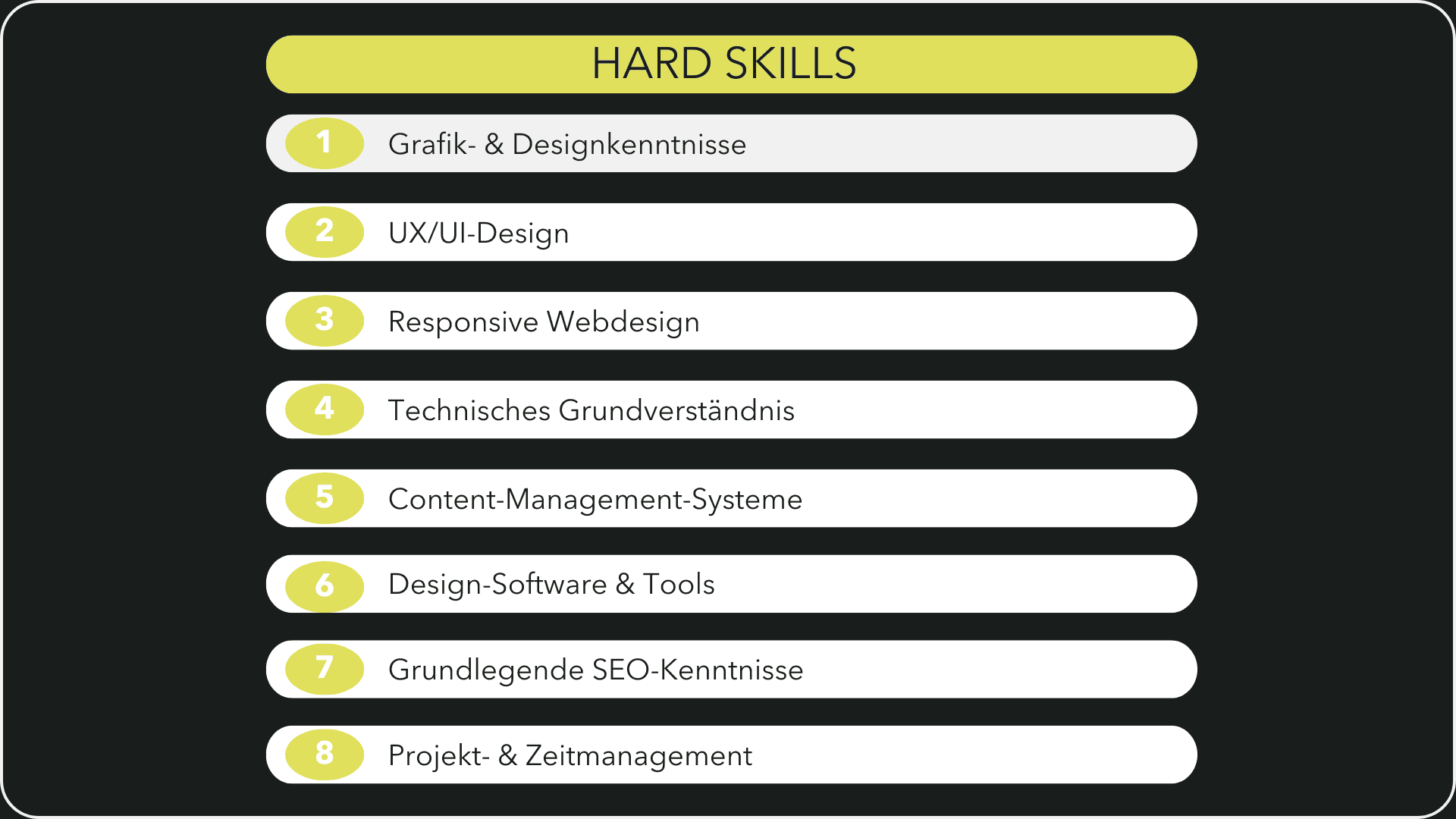
Graphic and design skills
Hard skills primarily include knowledge of graphics and design.
Above all, this includes a keen sense of layout, colors, typography and shapes.
In addition, a web designer must be familiar with design principles such as the use of white space or composition rules and know how to create visual hierarchies so that the user's gaze is directed accordingly.
UX/UI design
Knowledge of user experience (UX) and user interface (UI) design is very important.
This includes understanding how users interact with websites, how to create and test wireframes, and how to design interfaces so that they are intuitive to use.
UX design also includes user research and obtaining feedback, while UI design focuses more on the concrete design of the operating elements.
Responsive web design
Nowadays, every website has to look and function well on different device sizes - from large desktop monitors to smartphones.
Therefore, a web designer needs experience in dealing with responsive design and mobile layouts.
Das umfasst z. B. flexible Grid-Systeme, skalierbare Grafiken und die Anpassung der Navigation für Touchscreens.
Basic technical understanding (HTML, CSS, JS)
Even if web designers are not necessarily full-time programmers, a solid basic knowledge of HTML, CSS and JavaScript helps enormously.
Why?
Because designs are ultimately converted into code.
If a web designer knows the possibilities and limitations of these web technologies, they can create more realistic designs and better understand the implementation.
In addition, many web designers use these skills to build prototypes or realize smaller websites themselves.
Content management systems (CMS)
In practice, websites are often implemented with CMS such as WordPress, Typo3 or Joomla.
Knowledge of common CMS is therefore essential for every web designer - e.g. to know how design templates (themes/templates) work and can be customized.
Design software & tools
The confident use of graphics and design programs should be a matter of course.
Tools like Adobe Photoshop used to dominate for web design; today, specialized tools like Adobe XD, Figma or Sketch are more popular for creating clickable prototypes and designs.
Vector graphics programs (Illustrator) and image editing are also frequently used.
Basic SEO knowledge
Since design and website success are closely linked, it doesn't hurt if web designers have basic knowledge of search engine optimization (SEO).
Images should be named correctly and provided with alt tags, the website structure should be search engine friendly and loading times should be kept in mind - all of this overlaps with web design.
Project and time management
Web designers often work on several projects in parallel and in a team with developers, copywriters, customer managers, etc.
Daher sind auch Projektmanagementfähigkeiten äusserst hilfreich.
Soft Skills (persönliche Fähigkeiten)
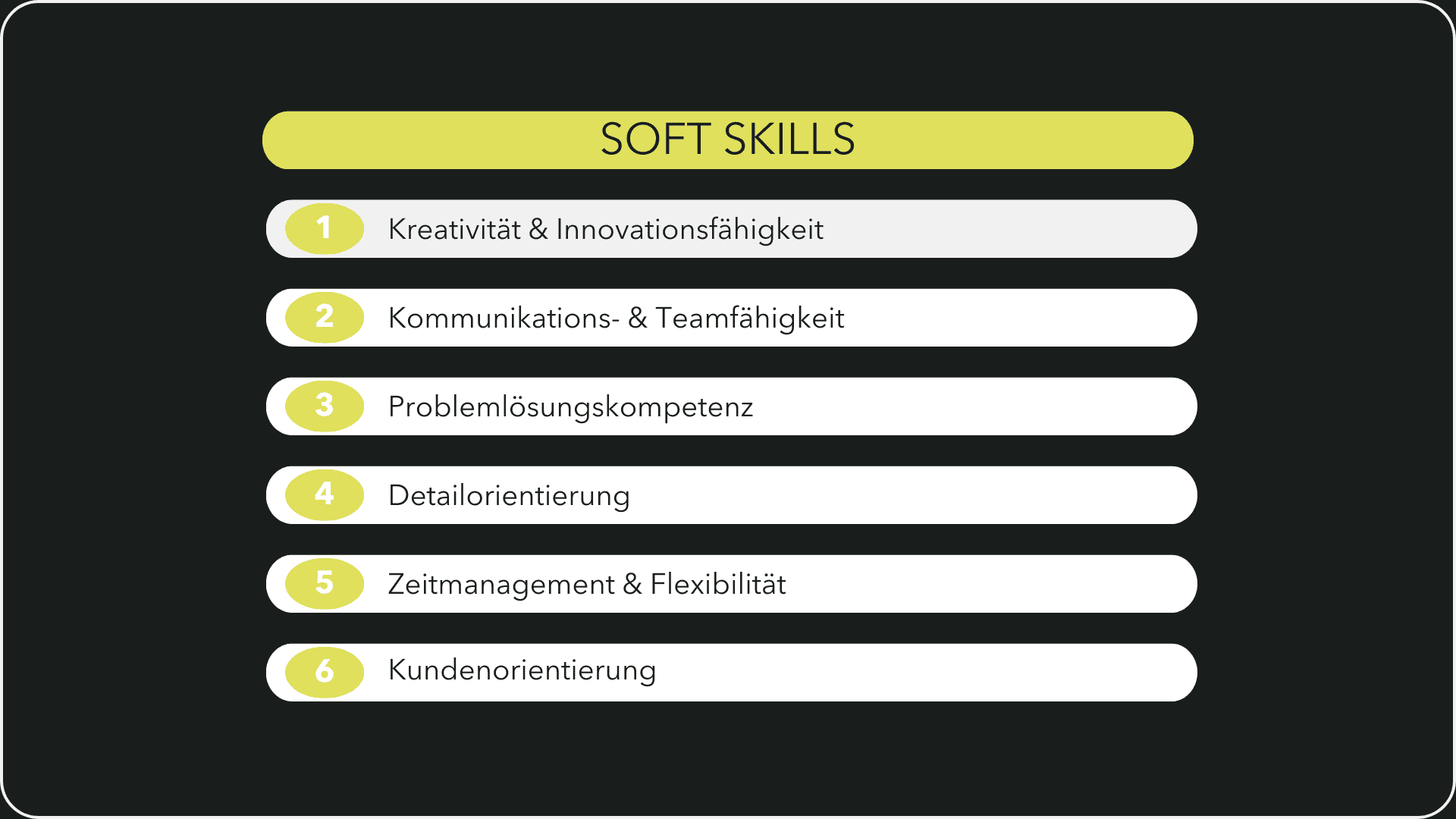
Creativity and innovative ability
Good web design requires ingenuity.
Web designers should therefore be able to develop creative ideas to make websites unique and always be open to new inspiration.
Communication and teamwork skills
A large part of the work consists of explaining concepts and implementing feedback.
That's why strong communication skills and the ability to work in a team are incredibly important.
Denn letztlich müssen Webdesigner die Sprache der Kunden verstehen (und manchmal „übersetzen“) und eng mit Entwicklern, Textern oder Marketingspezialisten zusammenarbeiten.
Problem-solving skills
Challenges often arise during the course of a project - be it a design idea that is technically difficult to implement or change requests shortly before the launch.
Hier sind analytisches Denken und schnelles Lösen von Problemen gefragt.
It is therefore important for a web designer not to be immediately discouraged by difficulties, but to look for alternatives that are both functionally and aesthetically satisfactory.
Detail orientation
Attention to detail characterizes outstanding web designers.
From the exact alignment of elements to the consistent use of spacing and fonts - small details have a strong influence on the overall impression.
At the same time, it is important not to get lost in pixel perfection when pragmatic solutions are required.
A balancing act between attention to detail and efficiency is therefore required here.
Time management and flexibility
Tight deadlines are not uncommon in this industry.
Web designers must learn to manage their time well, set priorities and remain creative under pressure when necessary.
Flexibility is important in order to be able to react quickly to changes in the project - for example, if requirements change or new trends need to be taken into account.
Customer orientation
Ultimately, a web designer creates the website for the customer and their target group.
Daher sollte er kundenorientiert denken: die Geschäftsziele des Auftraggebers verstehen, dessen Corporate Identity beachten und im Design widerspiegeln, und im Kontakt immer professionell und lösungsorientiert agieren.
Satisfied customers and users are our top priority.
Training: How do you become a web designer?
The path to becoming a web designer is varied and not clearly regulated, as it is not a protected job title.
Theoretically, anyone can call themselves that.
But in practice, things look a little different.
Most employers expect a sound knowledge of design and web technologies.
And this knowledge can be acquired in various ways.
Classical training in media design or graphic design provides a solid foundation.
In der Schweiz gibt es die Lehrberufe Interactive Media Designer oder Mediamatiker, die wichtige Aspekte des Webdesigns abdecken.
Alternatively, a degree in design, computer science or related fields such as UX design or multimedia design can make it easier to get started.
The main advantage here is the theoretical depth and the opportunity to gain practical experience.
Another way is via lateral entry and autodidactics.
Many web designers have taught themselves their skills, for example through online courses, bootcamps or practical projects.
A strong portfolio often counts for more than a formal degree in this industry.
If you create your own websites early on, whether for friends, charitable projects or your first paid jobs, you can make a name for yourself.
Since technology and design trends are constantly evolving, continuous training is very important.
Web designers must regularly familiarize themselves with new tools, programming languages and usability standards.
Online tutorials, specialist blogs and communities offer numerous opportunities to stay up to date.
Those who are flexible and willing to learn can establish themselves successfully in this profession in the long term.
Differentiation: web designer vs. web developer vs. UX designer
Although the roles of web designers, web developers and UX/UI designers overlap, there are also clear differences.
In order for you to understand what distinguishes them from each other, I would like to briefly discuss this in the following section.
Webdesigner vs. Webentwickler:
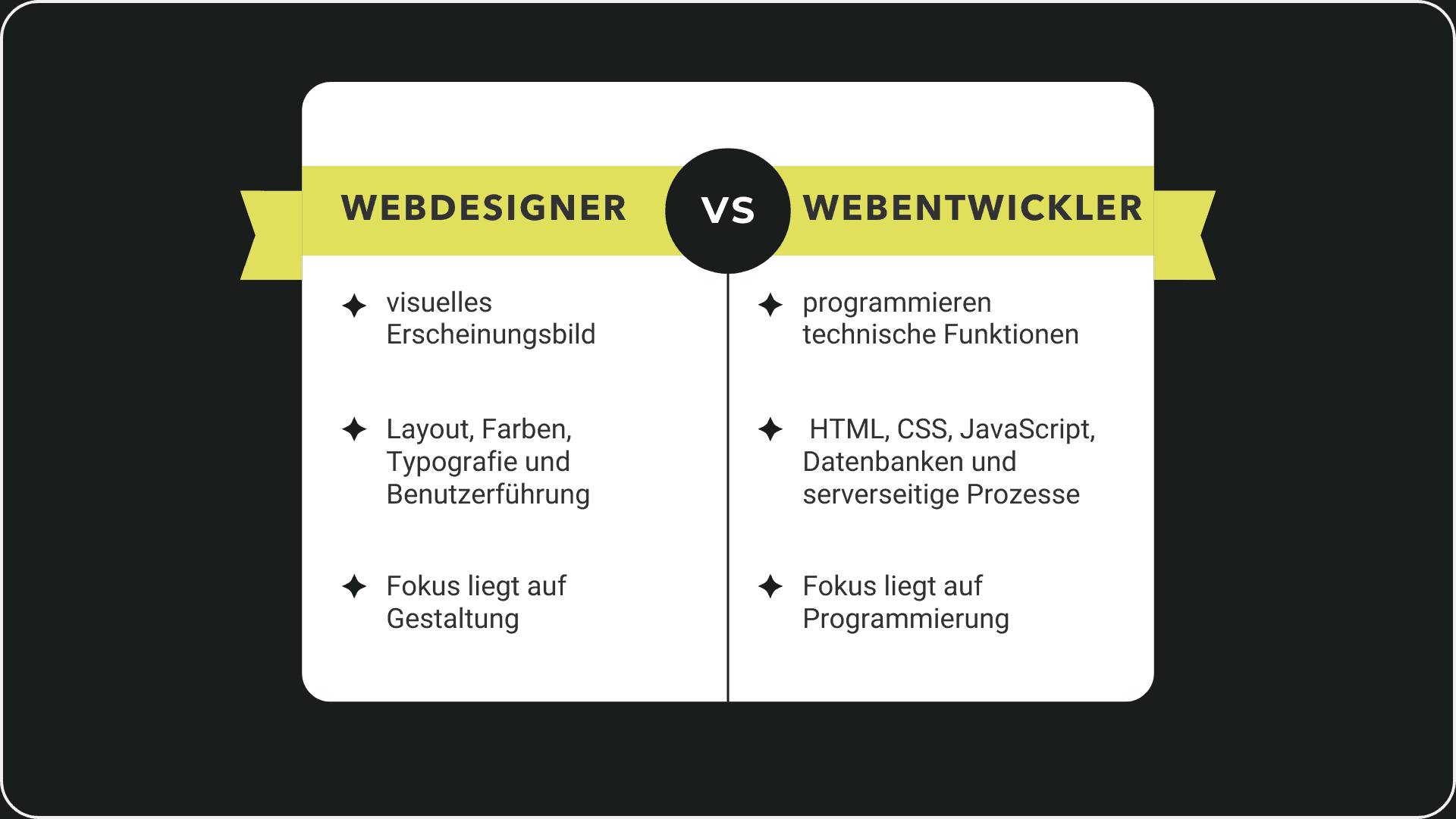
Webdesigner gestalten das visuelle Erscheinungsbild einer Website – Layout, Farben, Typografie und Benutzerführung.
Web developers, on the other hand, program the technical functions and ensure that they are implemented in the code.
While front-end developers concentrate on HTML, CSS and JavaScript, back-end developers work on databases and server-side processes.
Some web designers code themselves, but their focus is on design.
Webdesigner vs. UX/UI-Designer:
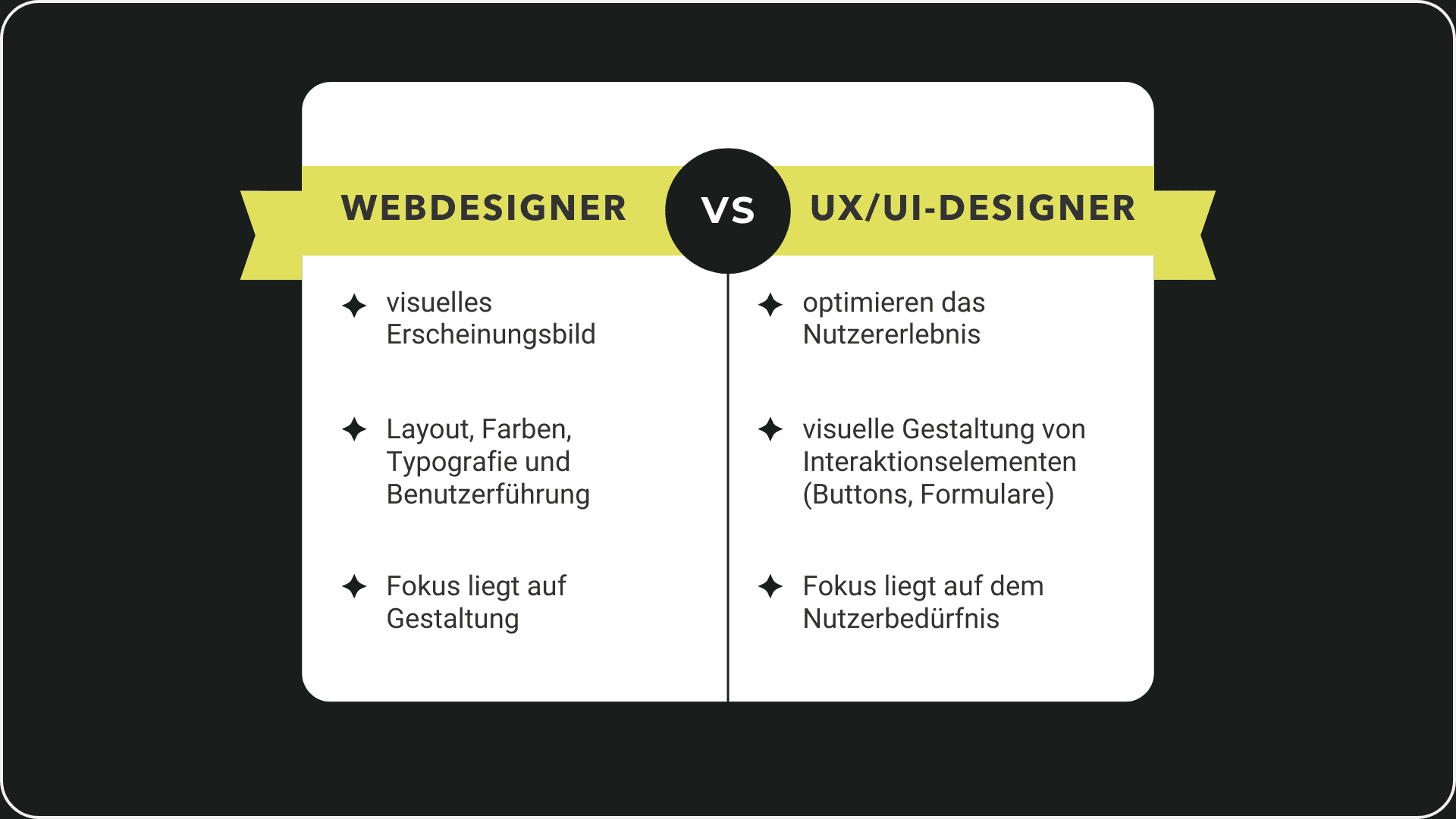
UX-Designer optimieren das Nutzererlebnis, indem sie Nutzerbedürfnisse analysieren und Seitenstrukturen entwerfen.
UI designers take care of the visual design of interaction elements such as buttons and forms.
Web designers, on the other hand, often implement the work of UX and UI designers or take on all of these tasks in smaller projects.
Weitere Rollen & Zusammenarbeit:
Neben den genannten gibt es z. B. noch Webmaster (die sich um den laufenden Betrieb und die Wartung von Websites kümmern) oder Digital Designer/“Visual Designer“ (übergreifende Designer für verschiedene digitale Medien).
However, you can see that the transitions are fluid.
In job interviews and everyday working life, it is therefore important to clarify the specific tasks of the role.
Some job advertisements for "web designers", for example, also expect coding skills like those of a front-end developer, while others focus purely on design.
It is important that companies understand how complex the creation of a modern website is.
Ideally, web designers, UX experts and developers work hand in hand.
Good web designers therefore have at least a basic understanding of neighboring disciplines in order to be able to have a say - be it on user experience issues or technical limitations.
So they act as a link between the worlds of design and technology.
Trends and the future: Is the web designer still needed?
With more and more website builders such as Wix or Squarespace and the rapid development of artificial intelligence, the question arises:
Do we still need web designers at all?
The clear answer: Yes, web designers are still needed.
However, their job description is changing.
In the past, the focus was often only on designing layouts and images.
Today, it's all about designing websites that not only look good, but are also user-friendly, functional and tailored to the respective brand.
Companies want to stand out from the crowd - and this is exactly where individual web design comes into play.
Construction kits and AI tools can generate simple pages, but they have clear limits.
They neither understand brand values nor can they take complex user needs or specific company goals into account.
A good web design therefore requires much more than just a ready-made template - it needs creative ideas, technical know-how and a feel for user experience.
Modern web designers therefore combine HTML tags, cascading style sheets, content management systems and programming to create unique websites.
At the same time, they work closely with SEO experts, marketing teams and companies to combine web design with advertising, search engine optimization and online marketing.
In the future, web designers will certainly work more and more with AI-supported tools to become more efficient.
However, a machine cannot replace what good web designers do:
Creativity, strategic thinking and a deep understanding of users and brands.
In short: web designers are and will remain indispensable - only their role is becoming increasingly versatile.
Conclusion
The profession of web designer remains important - it is changing, but not disappearing.
In an increasingly digital world, companies need a strong online presence that not only looks good, but also works.
This is exactly where web designers come into play.
Anyone working in this field must be open to new technologies and willing to develop further.
Construction kits and AI tools make simple tasks easier, but cannot replace a real understanding of users, brands and good design.
As long as the Internet continues to grow, it will also need web designers - people who not only build websites, but also structure them sensibly, design them attractively and make them user-friendly.