
What are backlinks?
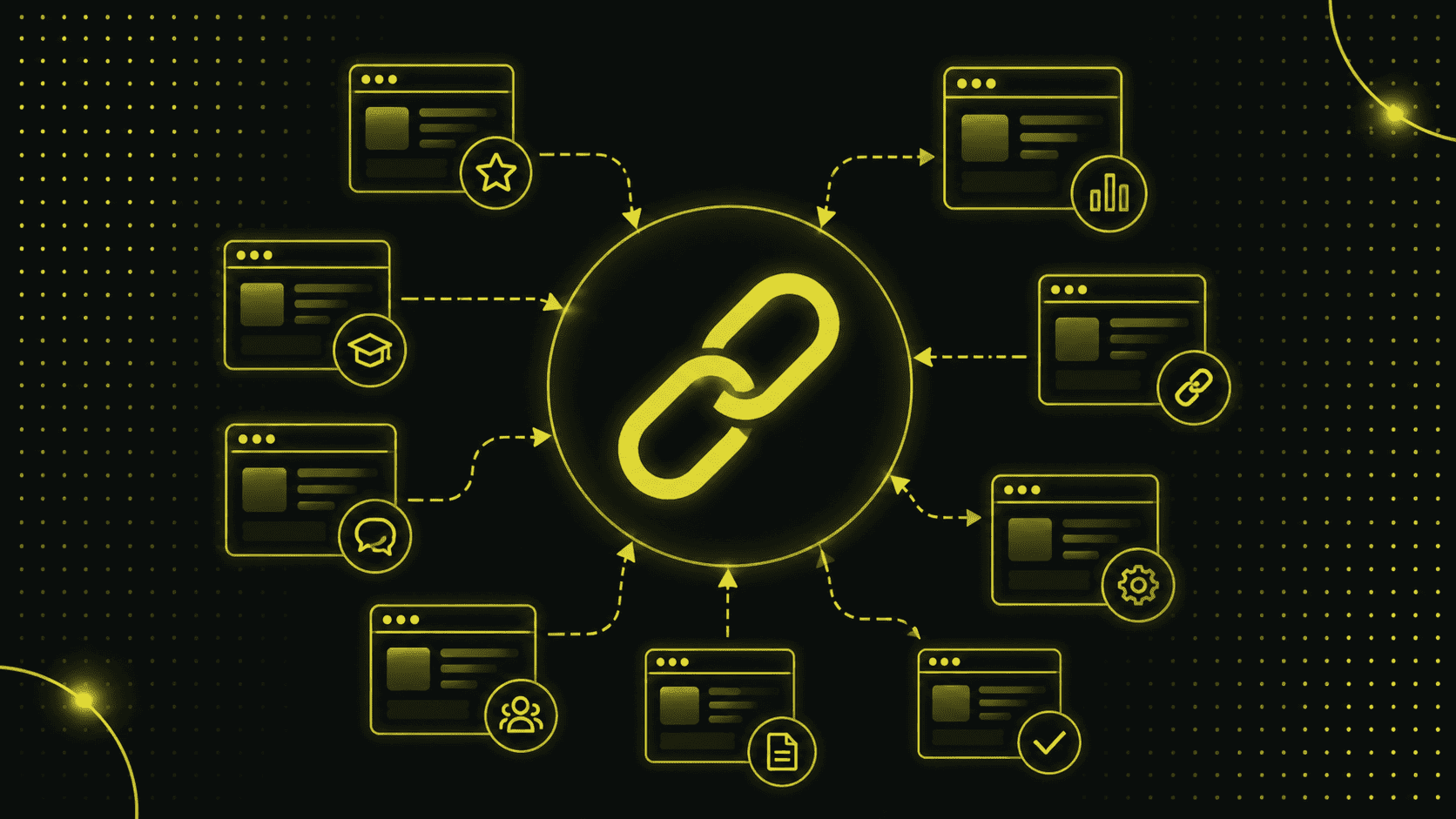
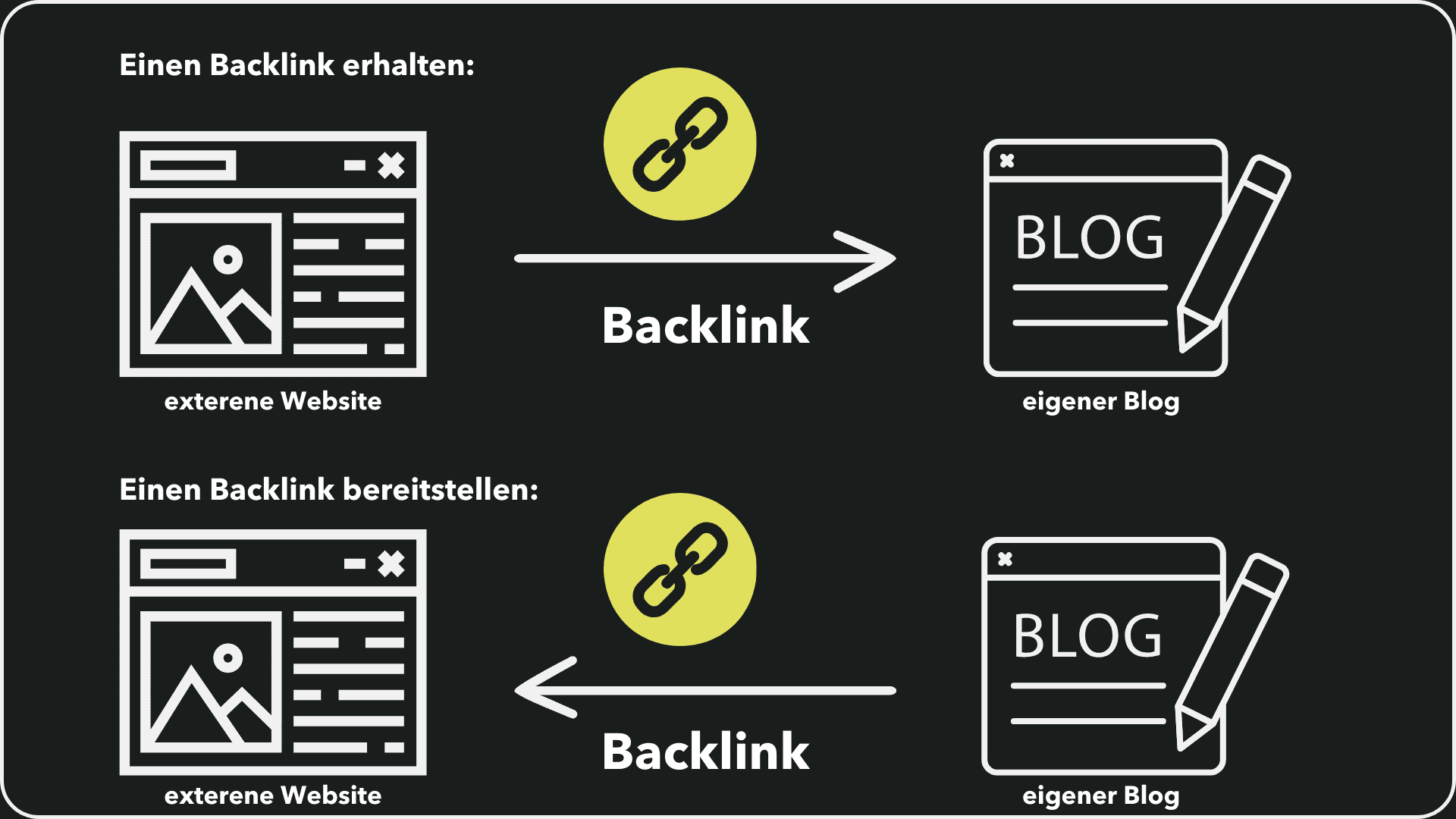
Backlinks, also known as inbound links, are links that point from one external website to another.
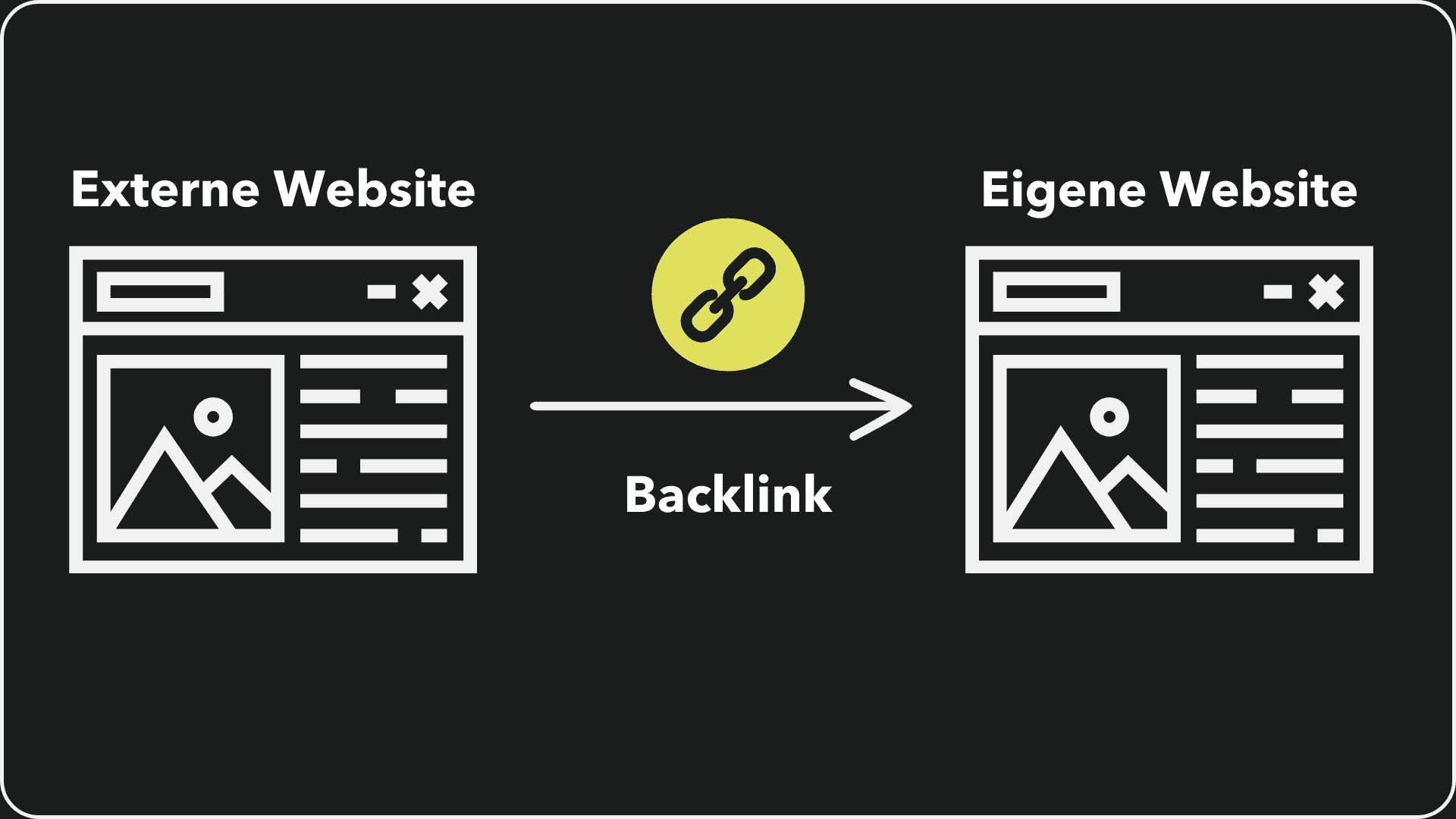
In the digital world, backlinks are a key element that search engines use to assess the value and relevance of a website.
They serve as indicators of a website's popularity and trustworthiness for Google, Bing, and other search engines.
The better a website's backlink profile and backlink strategy, the higher it will rank in search engine results for search queries.
For example, if someone mentions your website in a blog post, an article or on another website and links to your site, you have received a backlink from this source.
When you link to another website, you create a backlink to that site.
In the world of SEO, backlinks are often seen as recommendations.
They are comparable to a seal of approval on the internet.
If a trustworthy, relevant website links to your site, Google interprets this as a sign that your content is valuable.
So they are not just references, but also an expression of trust and recognition in the digital space.
How do backlinks work?
In the early days of the internet, search engines primarily used a website’s content to determine its relevance.
However, this led many websites to overload their pages with keywords in an attempt to manipulate search rankings.
It quickly became clear that a better indicator of a page's quality and relevance was needed.
That's where backlinks came into play.
As previously explained, backlinks act as digital recommendations or votes of confidence from one website to another.
If Website A links to Website B, search engines interpret this as a sign of trust from Website A toward Website B.
In the eyes of the search engine, this backlink gives Website B a certain degree of credibility, also known as “link juice.”
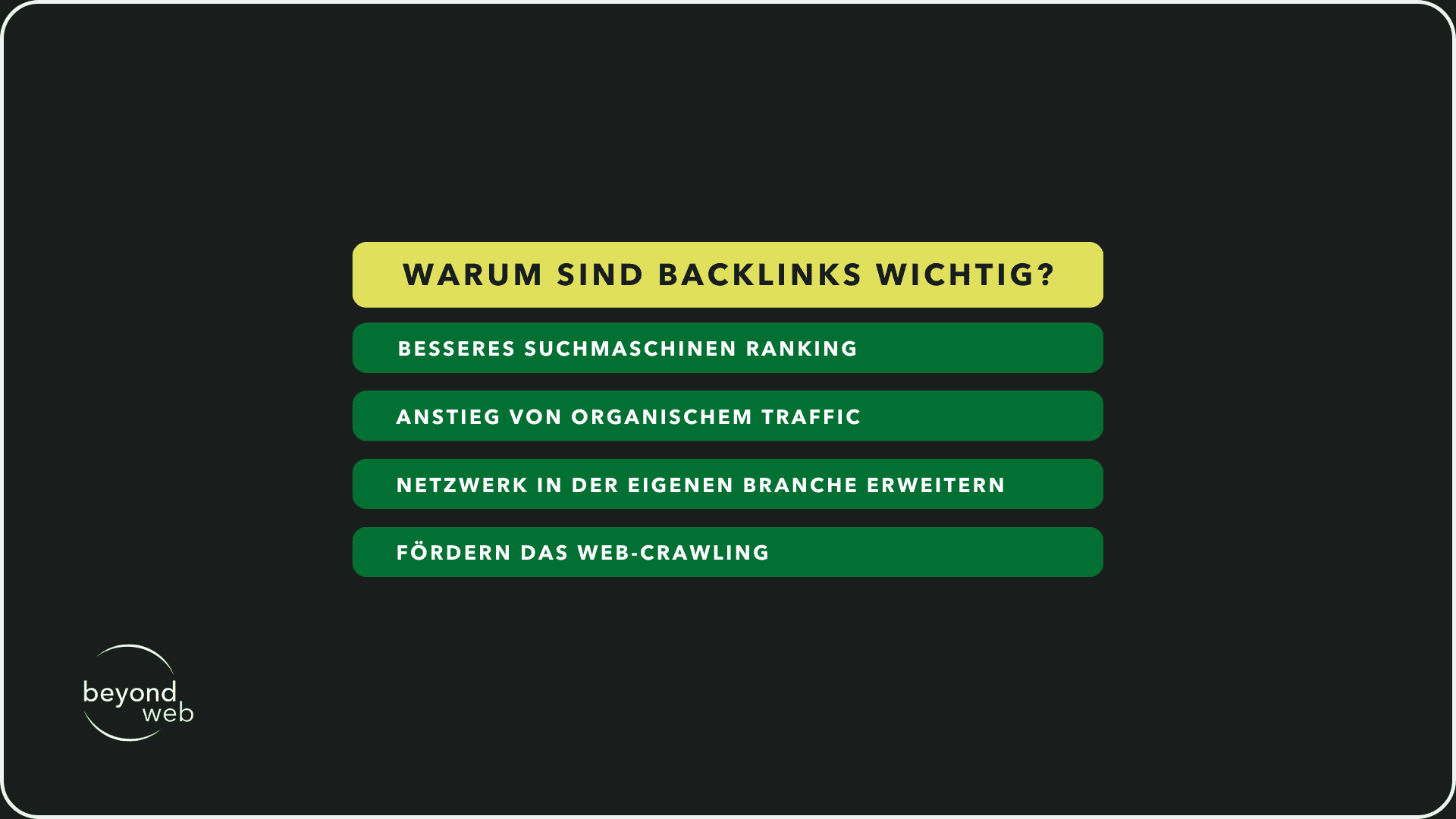
The quality and relevance of the linking website are of crucial importance.
A backlink from a reputable and thematically relevant website carries more weight and contributes more to the domain authority of the linked page than a link from a less relevant or spammy site.
Search engines use complex algorithms to evaluate the quality, relevance, and trustworthiness of a backlink.
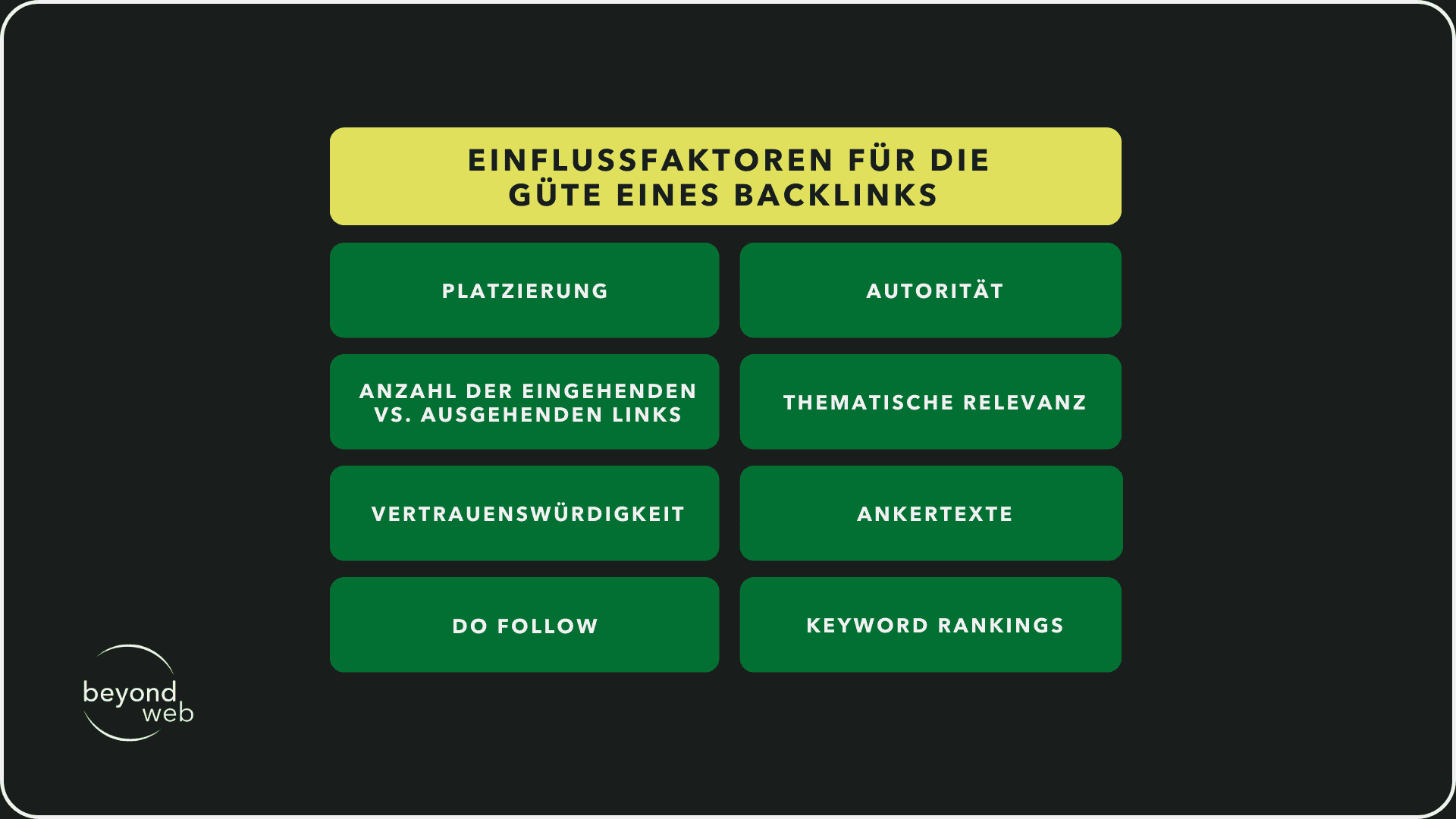
Things like the context in which the link is placed, the link’s anchor text, the authority of the linking page, and many other factors play an important role in determining the value of the backlink.
Why are they important?
In the eyes of search engines, backlinks are a sign of trust.
But the question remains: Why are backlinks important?
When other websites link to yours, it suggests that your content is valuable and useful.
The more high-quality backlinks a website has, the more likely it is to be considered trustworthy.
As a result, it tends to perform better in search engine rankings.
Another benefit of backlinks is the organic traffic they generate.
A well-placed backlink on a thematically relevant or popular website can drive a steady stream of visitors to your site.
These visitors are generally high-quality, as they have already been drawn in by the content on the source page and are then directed to your site via the link.
Backlinks also give you the opportunity to expand your network within your industry.
A link from a relevant website can be seen as a kind of invitation, which can help establish or strengthen relationships and partnerships.
In addition, they also facilitate web crawling.
Search engines use bots to crawl the web and index new content.
Backlinks make it easier for these bots to discover new websites, which allows your site to be indexed more quickly.
The following chart provides an overview of why backlinks are important:
What types of backlinks are there?
Backlinks can be broadly categorized into internal and external links.
While internal links connect different pages within the same domain, backlinks connect a website to another domain.
Within this broad categorization, various types of backlinks can be identified:
Dofollow, Nofollow, image links, and spam links.
In the following section, I’d like to explain dofollow and nofollow backlinks to you:
Dofollow backlinks
Dofollow backlinks play a crucial role in a website's search engine rankings.
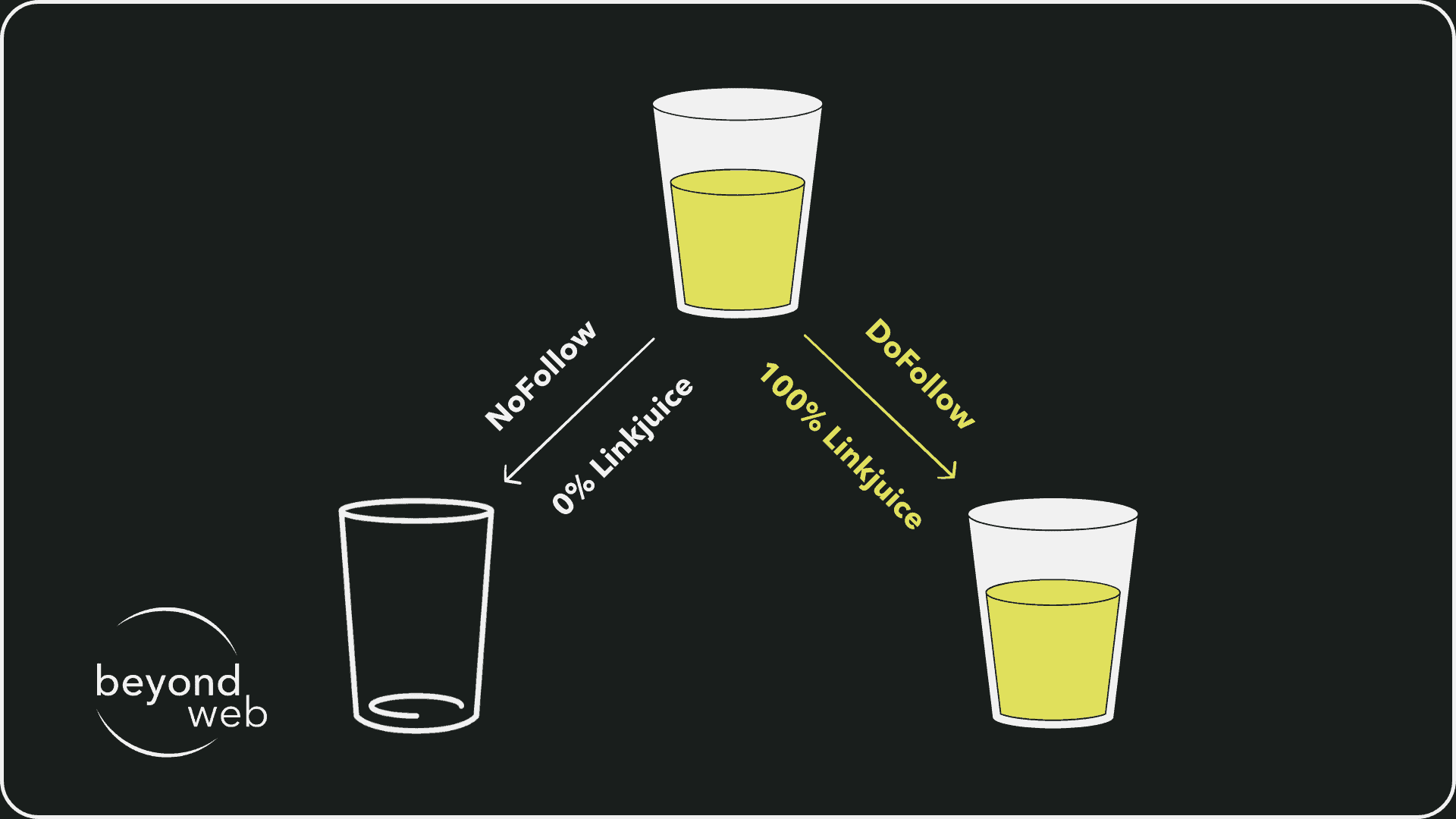
These links allow search algorithms to follow the links, which not only adds intrinsic value to a website but also significantly strengthens the linked page through the substantial transfer of link equity.
Intrinsic value means that a backlink—for example, in a blog post—can provide value to a user by offering additional information beyond the scope of the blog post.
Link juice, on the other hand, is a metric used to quantify the strength and quality of a backlink.
In other words, this shows how much weight a backlink carries, or to what extent another site is boosted by that backlink.
Nofollow backlinks
In contrast, nofollow backlinks have the exact opposite effect, as they explicitly instruct search engines not to follow the link in question.
This means that the referring page is not directly linked to the destination webpage.
According to current algorithms, Google, for example, primarily treats nofollow links as indicative cues.
These include, for example, links from social media, forums, press releases, guestbooks, Wikipedia entries, pingbacks, and directories.
Nevertheless, their importance should not be underestimated, as they play a key role in ensuring the diversity—and thus the naturalness—of the backlink profile.
In the context of backlinks, "naturalness" primarily refers to profiles that, on the one hand, contain a variety of backlinks—such as a mix of DoFollow and NoFollow backlinks—but also include some links voluntarily placed by topic-relevant sources.
In addition, social media in particular can contribute to increased attention and consequently to an increase in website traffic through nofollow backlinks.
How can I get more backlinks?
You're probably wondering:
How can you attract more backlinks—and, above all, high-quality ones?
The answer to this question is complex and requires a combination of proven strategies and creative approaches.
In the following sections, I’ll explain the most important strategies in more detail:
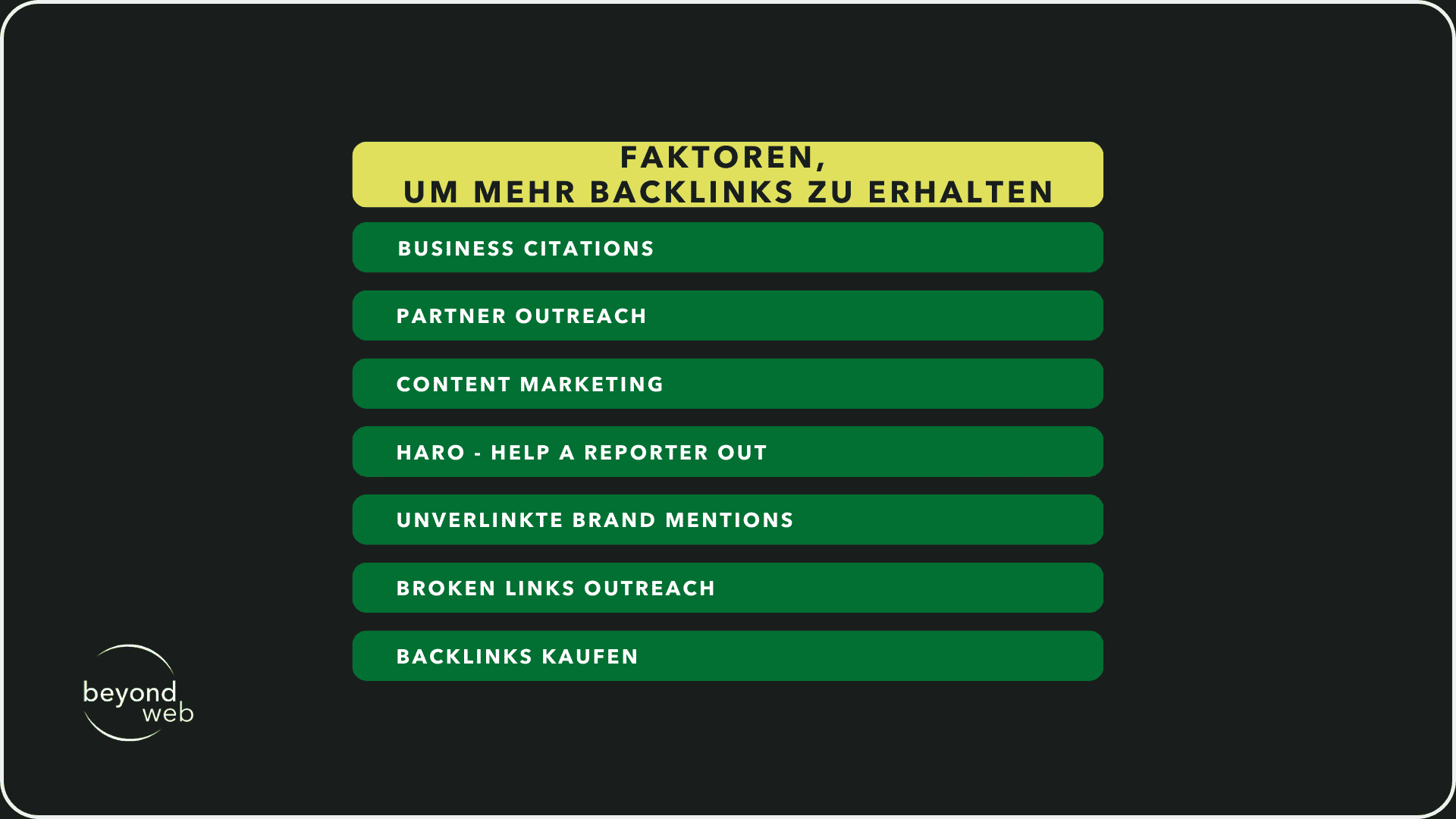
Business Citations (NoFollow)
Business citations are references to a company's name, address, and phone number in online directories and other websites.
These references are important for local SEO because they help establish a business’s authenticity and credibility in a specific region or market.
Many of these business citations are nofollow links.
Although nofollow links do not have the same direct SEO value as dofollow links, they are still important.
- #1 They drive real traffic. This means that people searching regional or business directories can find your business and click through to your website.
- They send trustworthy signals to search engines that your business actually exists and operates in the specified region.
- NoFollow links help create a more diverse and natural-looking link structure, which search engines view favorably.
To fully leverage the potential of business citations, companies should ensure that their information is consistent and up-to-date, regardless of which directory or platform they are listed on.
Partner Outreach
Partner Outreach is a digital networking tool that really shines in the field of search engine optimization.
This involves a targeted approach to building and maintaining relationships with potential partners, influencers, bloggers, other websites, and industry experts in order to secure backlinks and references.
The key to successful partner outreach lies in relevance and mutual benefit.
Instead of randomly contacting websites or influencers on social media, companies should focus on those whose content aligns with their business.
A common ground or shared interest significantly increases the chances of a successful collaboration.
It's not just about asking for backlinks.
Building relationships can take various forms, whether through sharing content, offering to write a guest post, collaborating on research, or organizing webinars and online events.
It is important not to send mass emails that are not tailored to the specific recipient.
Authentic communication and a professional demeanor are essential.
AI can be helpful for finding inspiration.
But the human touch must not be lost—this is exactly where an AI humanizer can help by making AI-generated text sound more natural, thereby preserving the personal touch in the message.
The goal is to create mutual value for both parties.
A well-planned partner outreach strategy can therefore not only increase the number of backlinks, but also boost traffic and improve brand awareness.
Content Marketing
In recent years, content marketing has proven to be one of the most effective strategies for increasing online visibility and driving engagement.
At its core, content marketing is about creating and distributing valuable, relevant, and consistent content to attract and retain a clearly defined target audience.
However, beyond directly engaging customers, content marketing also has a huge impact on search engine optimization and, in particular, on building backlinks.
High-quality content is like a magnet for backlinks.
If you create well-researched articles, detailed studies, visually appealing infographics, or informative videos that offer real value, other websites are more likely to link to your content.
This often happens organically, for example, when bloggers, journalists, or industry experts come across your content and use it as a reference or to educate their own readers.
However, effective content marketing goes beyond simply creating content.
Promoting this content—whether through social media, email marketing, influencer partnerships, or paid advertising—is just as important for maximizing its reach and impact.
The more visibility your content gets, the more likely it is that others will notice it and link to it.
It is still important to emphasize that not all content attracts backlinks.
The key lies in quality and relevance.
So the content must not only be well-written or well-produced, but also address the needs and questions of your target audience.
Overall, content marketing is not only a way to boost engagement and build customer loyalty, but also an effective tool for increasing organic visibility by acquiring valuable backlinks.
HARO
HARO, short for "Help a Reporter Out," is an innovative platform that connects journalists with experts and sources from various industries.
Originally developed to help reporters connect with qualified sources for their stories, HARO has also proven to be a valuable tool for link building and expanding the online presence of brands and professionals.
HARO works in a simple yet effective way.
Journalists who need information, quotes, or background knowledge for their articles submit requests on the platform.
Experts and professionals registered with HARO can respond to these requests and share their expertise.
When a journalist uses the provided information in their article, they often include a backlink to the expert’s or company’s website.
For brands and individuals, HARO offers an excellent opportunity to demonstrate their expertise in their field while also securing high-quality backlinks from reputable media websites.
However, it is important to emphasize that success on HARO requires quality.
Quick, thoughtless answers are rarely chosen.
It is crucial to respond to inquiries with expert knowledge and genuine value for the journalist.
Unlinked brand mentions
Unlinked brand mentions are references to your company, brand, or products on websites, blogs, or social media that do not directly link to your website.
While these mentions are valuable in and of themselves for brand awareness, they also offer an excellent opportunity to generate valuable backlinks.
Unlinked brand mentions occur for various reasons.
Maybe a blogger wrote about your product but forgot to include a link.
Or a satisfied customer has shared their positive experience with your service on a forum without including a link.
Such mentions are often worth their weight in gold, as they come from real users and are made in a positive context.
The process of leveraging such mentions begins with monitoring and identification.
Tools like Ahrefs can help you search the web for mentions of your brand or company.
As soon as you find an unlinked brand mention, you can contact the website operator or author to thank them for the mention.
In the same message, you can politely ask if it would be possible to include a link to your website, as this could help readers get more information directly from the source.
Overall, unlinked brand mentions offer a win-win situation:
Not only will you strengthen your backlink profile and SEO, but you’ll also build stronger relationships with bloggers, authors, and your target audience.
It’s a method that’s both discreet and effective and can add real value to your link-building strategy.
Broken Link Outreach
The "broken link outreach" method is a proven tactic in search engine optimization that benefits both website owners and visitors.
The core of this strategy is identifying so-called “dead links” on other websites that lead to content that no longer exists or has been moved, and offering an alternative, functional resource—ideally from your own website.
But how exactly does that work?
The internet is constantly changing, and over time, content may be moved, deleted, or reorganized.
This often results in external links that once led to this content now leading nowhere.
For website owners, broken links like these are problematic because they can impair the user experience and negatively affect search rankings.
That's where broken link outreach comes in.
By using tools like the "Broken Link Checker," you can scan websites in your industry for broken links.
If you find a link like this that leads to a topic or content similar to your own—or that you’ve even improved upon—you can contact the website operator.
Let him know about the broken link and offer your own content as an alternative.
Broken links outreach is therefore a proactive method for acquiring high-quality backlinks while helping the online community at the same time.
It’s a win-win situation that, when implemented correctly, can lead to increased traffic and better rankings.
Buy backlinks
Buying backlinks is a practice that has long been a subject of controversy in the SEO world.
At first glance, it seems like a quick and easy way to increase the number of inbound links to a website and thus potentially improve its search engine ranking.
But as with many things, there are also some significant drawbacks and risks here.
Backlinks are valuable for one simple reason:
They signal to search engines that a website is considered trustworthy and authoritative.
This trust is built through organic, voluntary linking.
However, when backlinks are purchased, this authentic endorsement is missing, and in many cases, the links can be viewed as artificial and manipulative.
Search engines, particularly Google, have made significant efforts over the years to detect such practices and penalize websites that use them.
Google’s Penguin update, which was first introduced in 2012, was specifically designed to identify and penalize websites with unnatural link profiles.
So if websites are caught buying backlinks, this can lead to serious penalties, including a drop in search engine rankings.
Furthermore, when purchasing backlinks, there is always the risk of being associated with low-quality websites.
This can not only harm a website’s SEO profile, but also its credibility and reputation in the eyes of visitors.
However, it is important to emphasize that not all purchased links are bad per se.
There are legitimate ways to do this, such as sponsored content or advertising, where links can be purchased.
But transparency is crucial here as well, and such links should always include a “nofollow” attribute to make it clear that this is a paid partnership.
The following table provides an overview of all the factors that help you get more backlinks.
Alternatives to Backlinks
While backlinks are undoubtedly a key pillar of search engine optimization (SEO), they are by no means the only way to improve a website’s visibility and ranking.
It is essential to build a balanced and diverse SEO portfolio that goes beyond simple link-building strategies.
This ensures that your website is robust and resilient in various aspects of optimization.
In this context, there are two key areas that are often viewed as alternatives or complements to link building: technical optimization and on-page optimization.
Both have their own merits and their own methods for enhancing the overall experience for your visitors and encouraging search engines to rank your site higher.
I'll explain these two areas in more detail in the following sections:
Technical optimization
Technical optimization forms the foundation of any successful SEO strategy and can be enhanced by an experienced Swiss SEO agency.
This refers to improving the technical aspects of a website to facilitate search engine crawling and indexing processes while also enhancing the user experience.
While a website’s content and backlinks are often the visible parts of the SEO iceberg, technical optimization lies beneath the surface and ensures that everything runs smoothly.
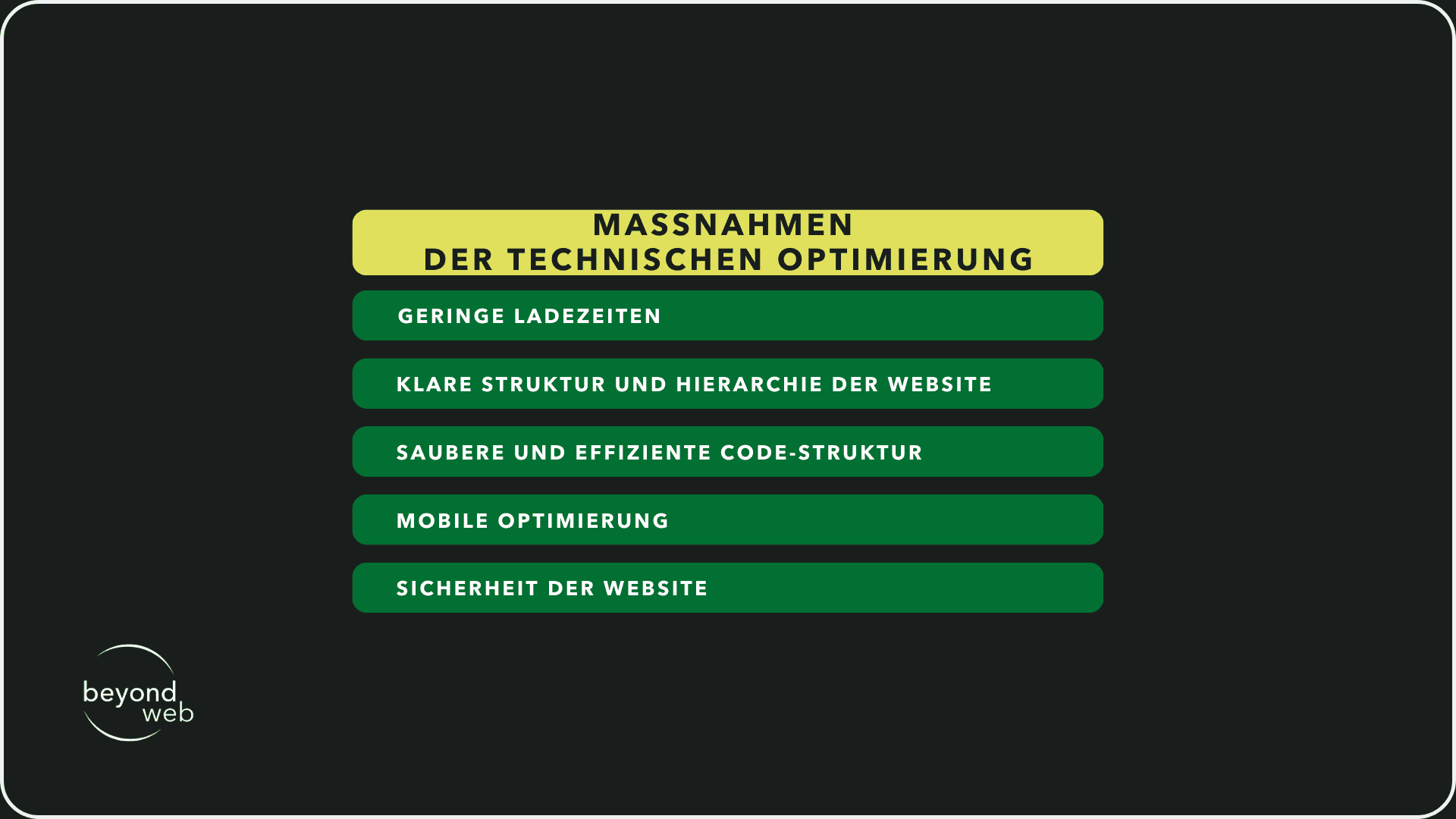
A key aspect of technical optimization is a website's loading time.
In our fast-paced digital world, users expect quick loading times, and even the slightest delay can cause visitors to leave.
Search engines recognize this and reward websites that load quickly and efficiently with higher rankings.
But it's not just about speed.
The website's structure, including a clear hierarchy and logical internal linking, makes it easier for search engines to find and index content.
This is complemented by a clean and efficient code structure that is free of errors and adheres to modern web standards.
Another aspect is mobile optimization.
With an ever-growing number of users accessing websites via mobile devices, it is essential that websites function well and are user-friendly on smaller screens.
Google has designated the mobile index as the primary index for its web crawling activities, underscoring the importance of this aspect.
After all, safety is also a key concern.
HTTPS encryption not only protects users' data, but is also considered a positive ranking factor by search engines.
Overall, technical optimization ensures that a website has a solid foundation, allowing other SEO efforts—such as content creation and link building—to build on it effectively.
On-page optimization
On-page optimization refers to the measures taken directly on a website to improve its ranking in search results.
Unlike off-page strategies, such as building backlinks, on-page optimization focuses on a page’s content and HTML structure.
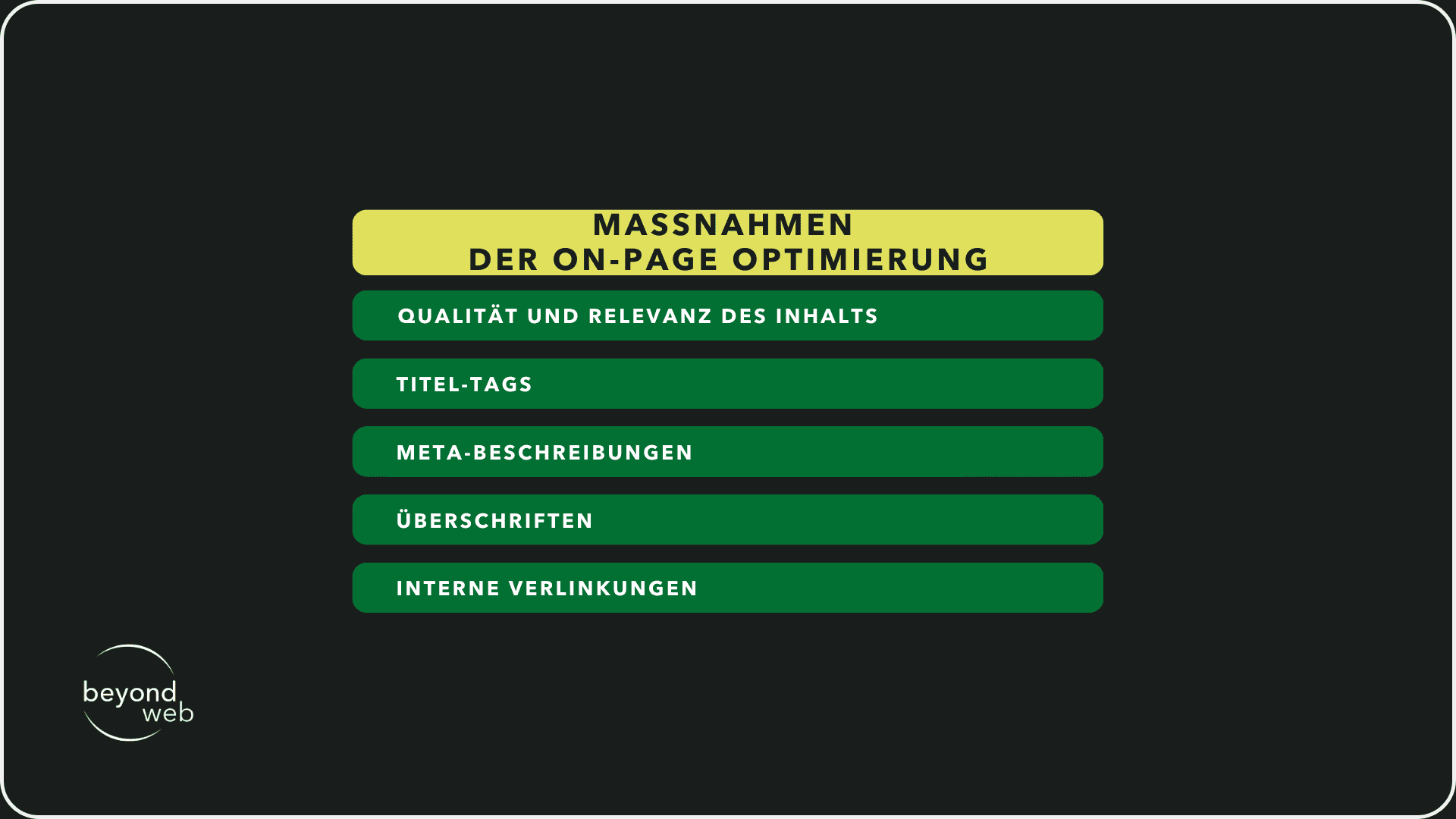
The quality and relevance of the content are at the heart of every on-page strategy.
Search engines like Google reward content that is informative, well-researched, and unique.
This means that website operators should regularly create high-quality content that meets the needs and interests of their target audience.
But it's not just about the content.
The structure of the website is also crucial.
Title tags, meta descriptions, and headings should be chosen carefully to make it clear to both users and search engines what the page is about.
At the same time, they help increase the click-through rate from search results.
In addition, internal linking also plays an important role.
It helps search engines understand the context between different pages on a website and can effectively distribute "link juice" to strengthen a page's authority.
Overall, on-page optimization is an ongoing process.
Since search engine algorithms are constantly evolving, website operators must regularly adapt and update their strategies to remain visible and stay one step ahead of their competitors.