
What factors determine how long it takes for backlinks to work?
There are various factors that influence how quickly backlinks improve rankings.
I will list and explain the most important ones in the following sections:
#1 The number of inbound backlinks
Both quantity and quality play a role here.
Because the sheer number of backlinks alone is no longer decisive for successful SEO.
The rule is: the more high-quality links I have, the faster I can achieve greater improvements.
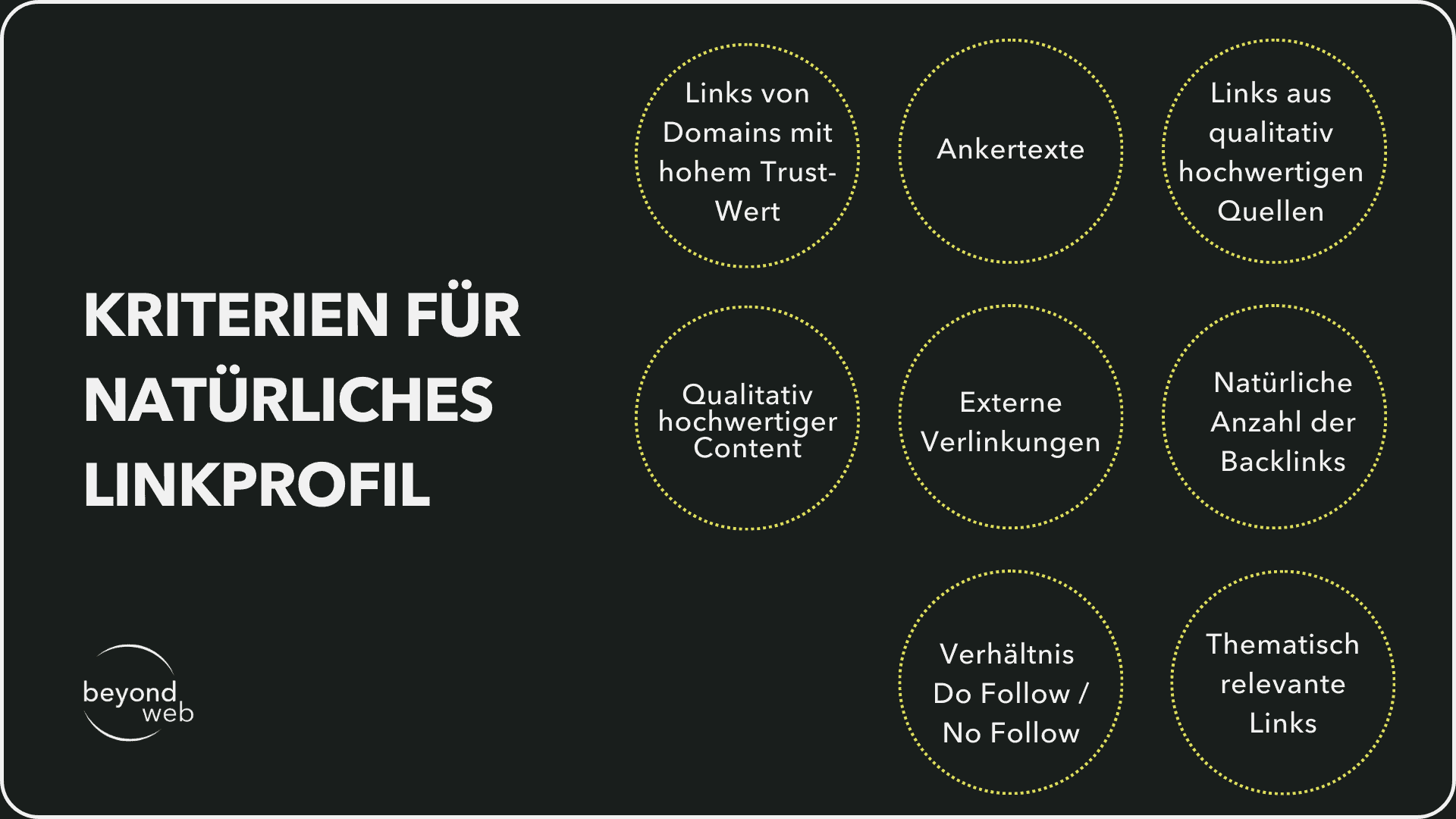
A good backlink profile is characterized by a mixture of different links.
The links should be considered from both highly authoritative sites and smaller, thematically relevant sites.
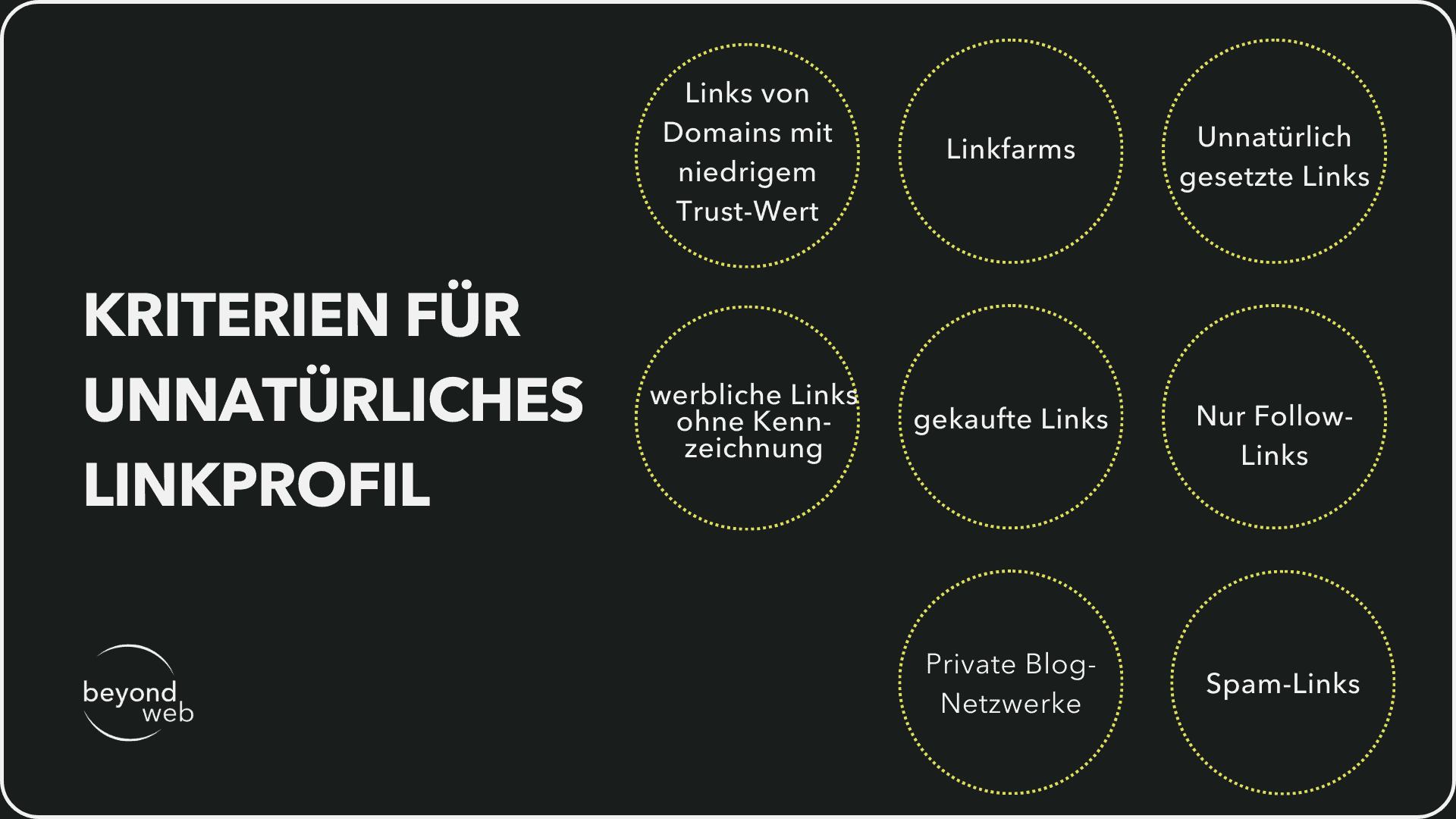
A common misconception in the SEO world is that the accumulation of a large number of backlinks inevitably leads to a rapid improvement in ranking.
In der Praxis hat sich jedoch gezeigt, dass Google Websites mit einem unnatürlich schnellen Anstieg an Backlinks oft misstrauisch betrachtet, da dies auf manipulative Praktiken wie Link-Kauf oder Link-Tauschbörsen hindeuten kann.
Google becomes particularly suspicious when a completely new domain, with no previous track record and no previous backlinks, suddenly acquires hundreds or even thousands of links within a few weeks.
In these cases, a manual penalty and a downgrading of the website 's ranking by Google cannot be ruled out.
Therefore, I always recommend paying attention to a natural, continuous build-up of the link profile.
Continuity in link building leads to long-term SEO success.
#2 The time of the last crawl
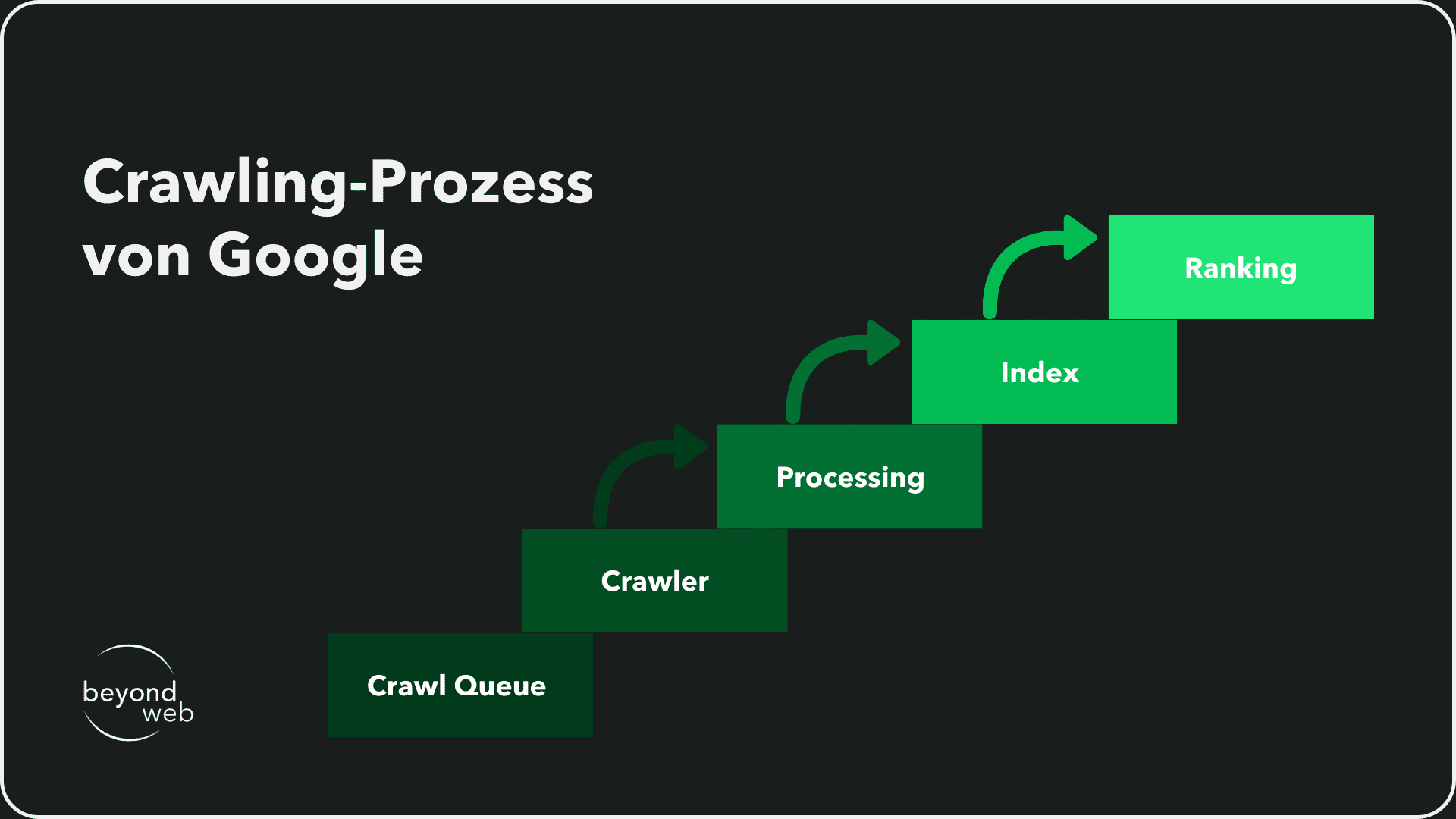
Search engines have to crawl the website to discover the backlink, which happens at different speeds depending on the frequency of the crawl.
This frequency, also known as the "crawl rate", can vary from website to website and is determined by the search engines on the basis of various factors.
Aspects such as the size of the website, its structure, the loading time of the page, the value and topicality of the content and the number of new and updated pages play a role here.
Google and other search engines aim to always provide users with the most up-to-date and relevant information.
They therefore tend to crawl websites that are regularly updated and offer fresh, high-quality content more frequently.
Wenn eine Website, auf der ein neuer Backlink platziert wurde, in der Vergangenheit eine hohe Crawl-Rate aufgewiesen hat, ist die Wahrscheinlichkeit höher, dass der neue Link schneller von den Suchmaschinen entdeckt und in den Index aufgenommen wird.
It is also worth noting that backlinks from pages that are themselves crawled more frequently, such as popular news websites or blogs with a high readership, tend to be captured more quickly and thus flow into the evaluation of a website's link popularity in a shorter time.
Webmasters can actively take measures to improve the crawlability of a website and thus support the crawling process.
For example, a clear, logical page structure can help new content and backlinks to be discovered and indexed more quickly.
However, it is also important to note that even after a backlink has been crawled and indexed by the search engines, some time may pass before concrete effects on the ranking of the linked page become visible.
This is due to the complex algorithms of the search engines, which take into account a large number of factors in the evaluation and are constantly being further developed.
Patience and a long-term link building strategy are therefore essential.
#3 The initial situation of your own website
Websites on the Internet that are already equipped with a solid SEO foundation and a clear structure can feel the effects in the rankings more quickly.
This is because they have already built up a certain degree of authority and trust within the search engines.
The existing backlink structure also plays a role here.
A site that already has a large number of high-quality backlinks may experience a positive change through new backlinks more quickly than a website that is still at the beginning of link building.
Zudem beeinflussen die Relevanz und die Qualität der Inhalte auf der Website die Geschwindigkeit und das Ausmass der Auswirkungen neuer Backlinks.
Search engines value content that is informative, well-written and relevant to the target audience more highly.
If such content is strengthened by backlinks, this can help to increase the visibility and authority of the website in the search results.
In addition, the user experience on the website can also play a role.
Factors such as the loading speed of the page, the mobile design, the user-friendliness and the general accessibility of the page influence how positive the effects of backlinks are.
If users who reach the website via a backlink have a positive experience there, this reduces the bounce rate and can lead to better rankings.
#4 The inertia of the Google Penguin algorithm
The Google Penguin algorithm, first introduced in 2012, aims to combat webspam and in particular to prevent the use of unfair link building practices.
With its help, Google tries to penalize websites that violate the webmaster guidelines by downgrading their rankings.
The "sluggishness" or latency of the algorithm refers to how long it takes for changes or updates in the link profile of a website to be recognized by Google, processed and ultimately reflected in the search results.
Penguin updates used to happen at intervals, which meant that it could take weeks or even months before the impact of a new backlink (or the removal of a harmful backlink) was noticed by Google.
Since the integration of the Penguin algorithm into Google's core algorithm in 2016, data processing has taken place in real time.
This means that changes to a website's link profile should be recognized more quickly.
Nevertheless, there is no guarantee as to how quickly the effects of a new backlink will be felt, as this also depends on many other factors.
#5 The trust value of a domain
A link from a trustworthy domain can be faster and more effective than one from a less trustworthy site.
The trust value, also known as "domain authority" or "domain trust", refers to the reputation and credibility that search engines attribute to a particular domain.
It is based on a variety of factors, including the quality and relevance of the content, the number and quality of inbound links, and the age of the domain.
High-trust domains usually have a history of providing high-quality, relevant content and a solid, user-friendly structure.
Links from these domains are generally considered more reliable and authentic and are therefore rated higher by search engines.
A backlink from a domain with a high trust value can contribute significantly to improving your SEO by increasing the reputation of your own site in the eyes of search engines.
Tools, um indexierte Backlinks zu checken?
Today we, and many other webmasters, use SEO tools to check the effectiveness of backlinks and adjust the strategy accordingly.
The first few months after acquiring new backlinks are crucial for assessing their influence and value.
In the following sections, I will list the individual tools and explain their functions:
Google Search Console (GSC)
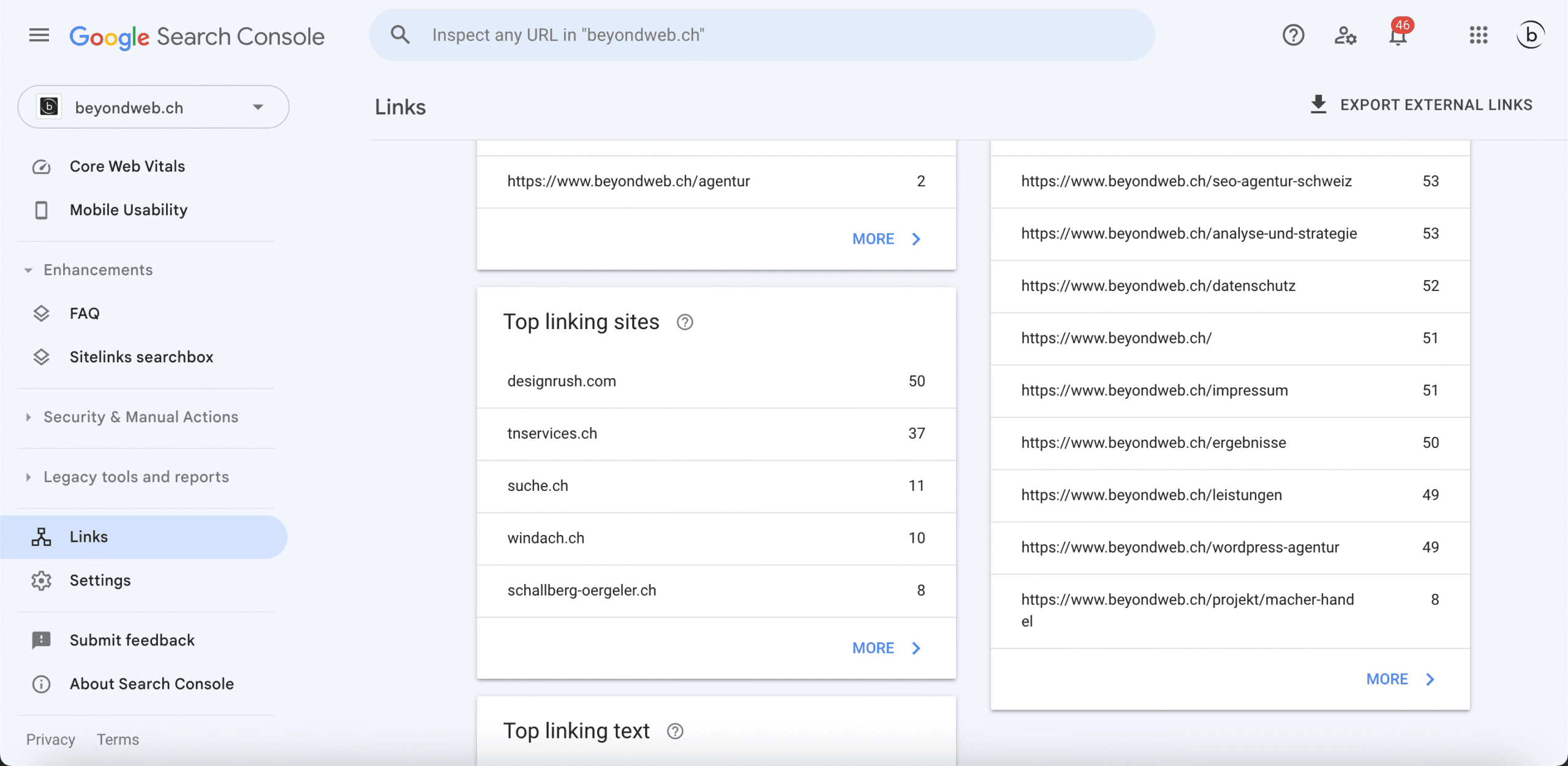
Google Search Console, or GSC for short, is an essential, free tool provided by Google to help webmasters monitor and manage their website's presence in Google Search.
To see the backlinks within Google Search Console, you must proceed as follows:
- Click on "Links" in the left sidebar
- Then click on the "More" tab under "Top linking sites"
Here you can now see all the links that Google has indexed.
Ahrefs
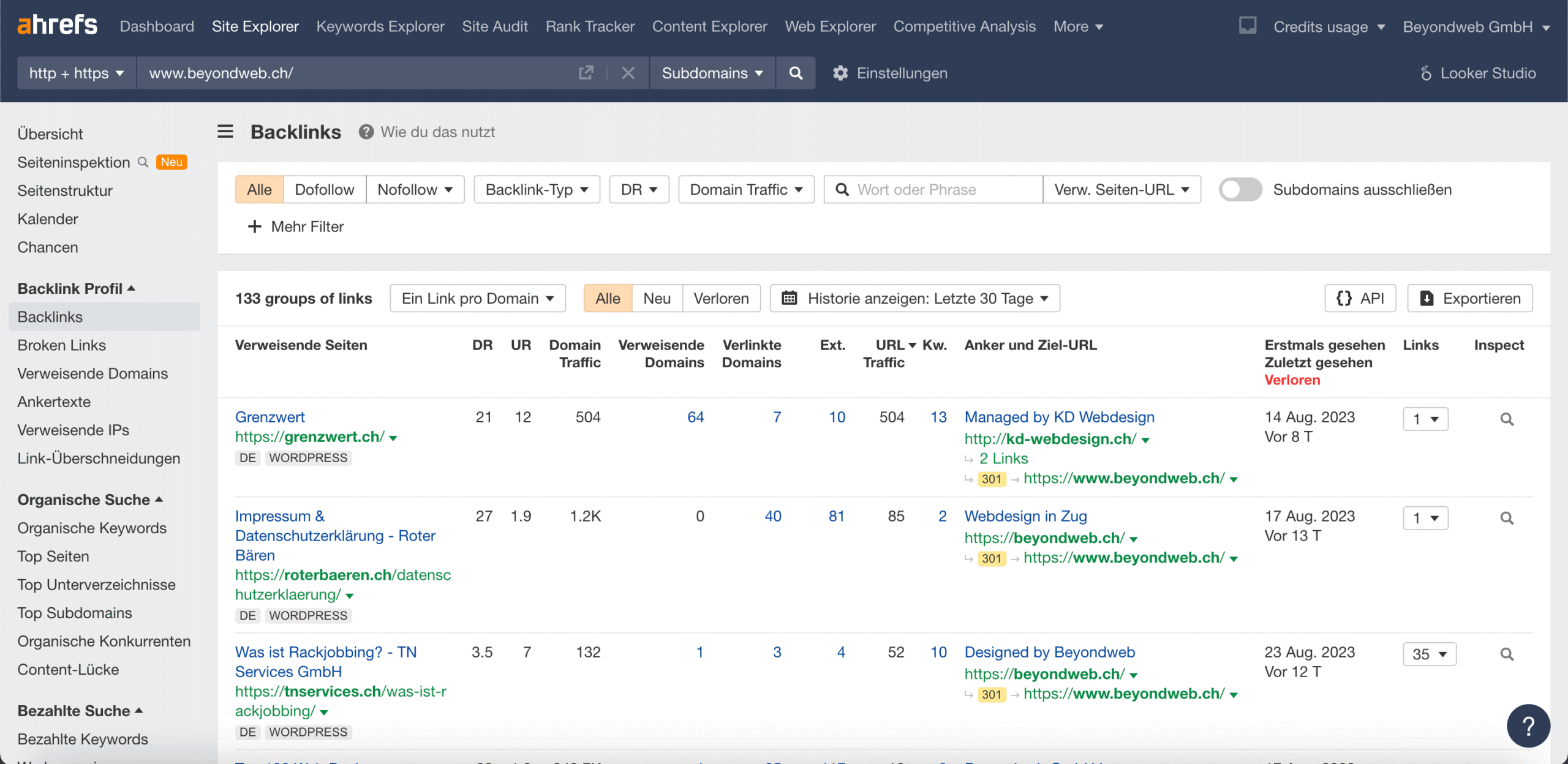
Ahrefs is an advanced SEO tool that offers a variety of functions to analyze the backlink profile of a website in detail.
It provides an extensive database of live backlinks and enables users to gain a deep insight into the link quality and structure of a website.
To get to the backlinks within Ahrefs, you must proceed as follows:
- Click on "Site Explorer" in the top bar
- Enter the URL of your website
- Then click on the "Backlinks" tab in the left sidebar
Here you can now see all backlinks and filter them according to the desired metrics.
(This information only applies to the paid version of Ahrefs)
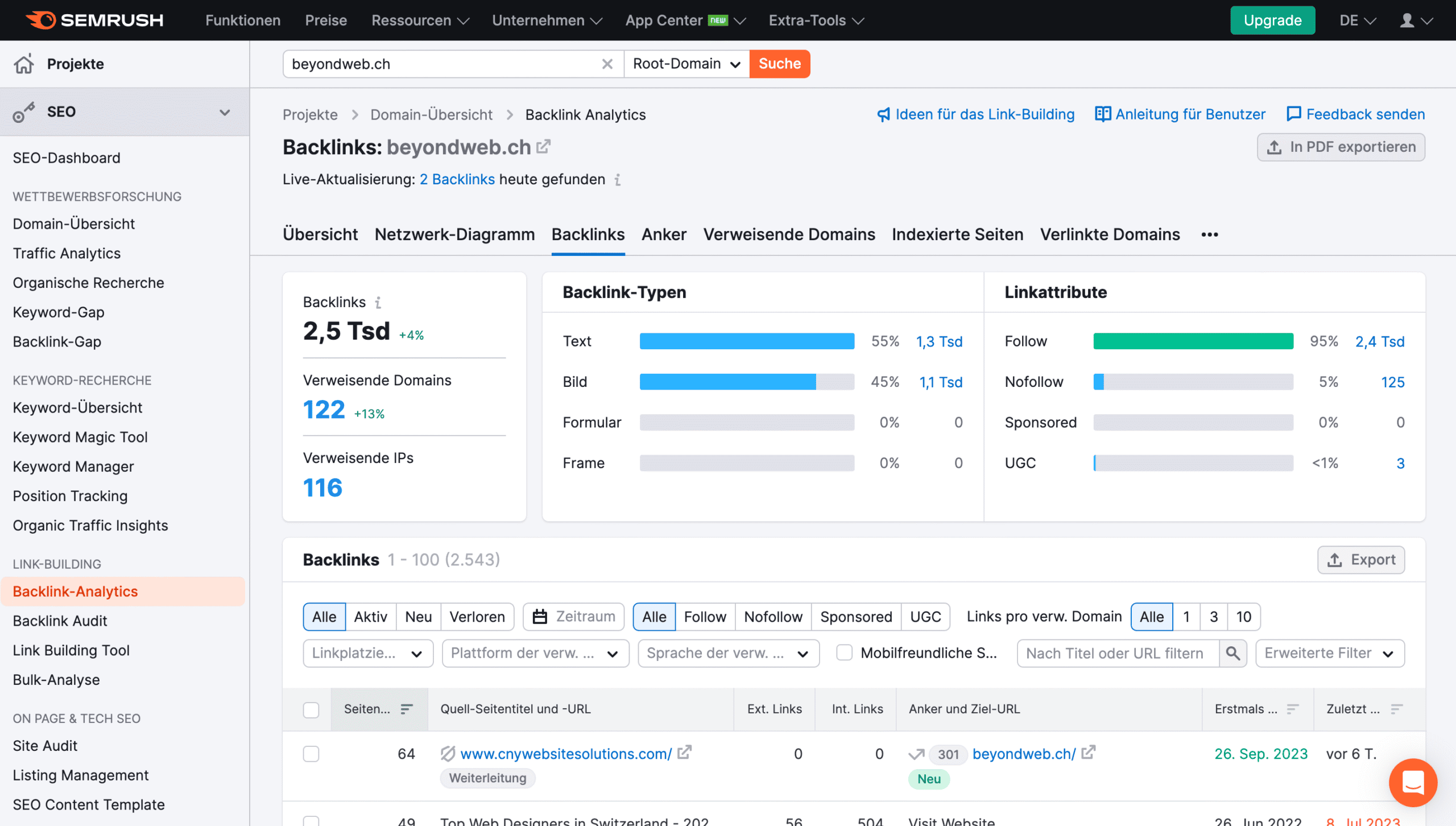
SEMrush
SEMrush is a comprehensive tool that helps SEO experts collect data on backlinks, keywords and traffic to make decisions for their SEO strategy.
To access the backlink data, you must follow these steps:
- Click on "Backlink Analytics" in the left sidebar
- Then click on "Backlinks"
Now you can view all backlinks.
Is it possible to speed up the indexing of backlinks?
The indexing of backlinks can be accelerated by several methods.
To make it easier to understand, I will briefly explain the individual methods:
1. have backlinks manually indexed in Google Search Console:
To achieve faster indexing of your backlinks by Google, you can use the URL inspection tool of the Google Search Console.
Proceed as follows:
- 1. log in to the Google Search Console tool
- 2. enter the URL to which your backlink is linked
- 3. click on "Request indexing"
This process signals Google to crawl the page in question, which increases the likelihood that your backlink will be indexed faster.
2. use Web 2.0:
Web 2.0 platforms enable users to create and share their own content.
This means that these platforms live from the contributions of Internet users.
Prominent examples include Wikipedia, social networks such as Facebook and video platforms such as YouTube.
By publishing relevant content on these platforms that matches the main topic of your website, you can generate backlinks that will get organic traffic and better search engine rankings over time.
3. use ping tools:
By using ping tools, you can indicate to search engines that updates have been made to your website.
By pinging the URL where your backlink is located, you cause the search engine bots to check this page again and look for new additions.
This helps search engines to recognize and index your backlink more quickly.
Ein Beispiel für ein solches Tool ist Pingomatic.
4. sharing on social media:
Das Posten der URL einer Seite, die einen Backlink enthält, in sozialen Netzwerken wie Twitter, YouTube und Pinterest kann den Indexierungsprozess erheblich beschleunigen.
5. high quality backlinks:
The quality of a backlink is crucial.
Links from websites with high traffic that regularly publish high-quality content are much more valuable for search engines.
Eine hohe Qualität und Relevanz der Backlinks können dazu beitragen, dass sie von Google schneller indexiert werden.
6. use video sitemaps:
If your website contains video content, a video sitemap is helpful.
A video sitemap provides Google with detailed information about the videos on your site, which can make indexing easier.
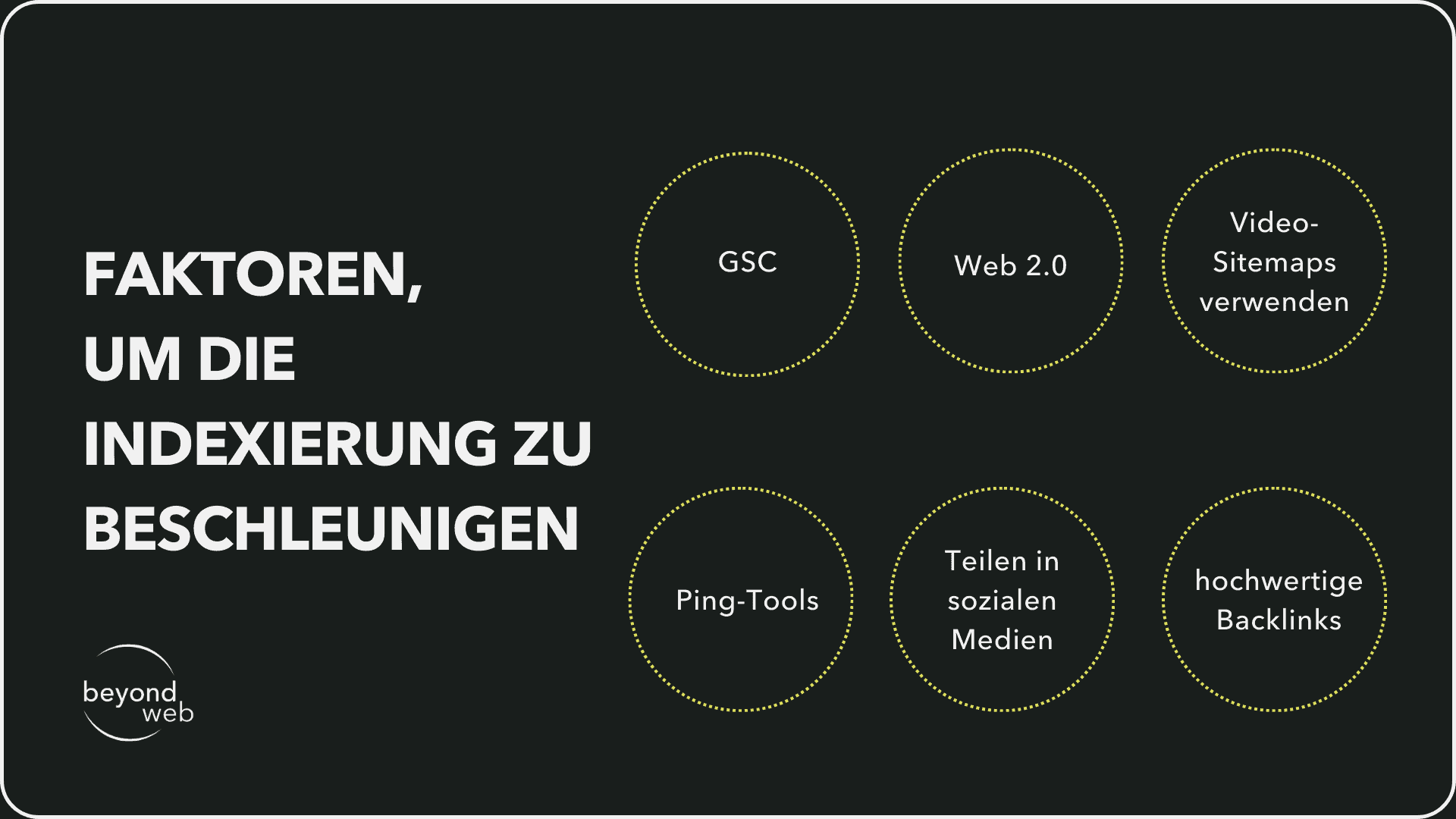
Overall, the speed of backlink indexing can influence the ranking of a website and can be accelerated by the methods mentioned above.
Nevertheless, it is essential to focus on natural link building and organic traffic in order to achieve the most sustainable results.
What to do if certain links are simply not listed?
If certain links are not indexed, you don't have many options, as backlinks usually come from domains that you don't have direct access to.
Nevertheless, there are a few ways to rule out certain scenarios.
I have created a step-by-step checklist for you in the next section:
Step-by-step checklist
1. check the link status:
Check on the respective page that the backlink actually still exists and has been placed on your website.
2. manual indexing:
Kontaktiere den Website-Betreiber, auf dem der Backlink platziert wurde, und bitte ihn, die Seite manuell über die Search Console zu indexieren.
3. quality control:
Check the spam score of the linking page.
A high score can be a reason why search engines do not consider the link.
4. check on-page factors:
Make sure that the linked page has no technical problems.
5. check relevance:
Search engines prefer thematically relevant backlinks.
Stell sicher, dass der Inhalt der verlinkenden Seite in Bezug auf deine Seite relevant ist.
6. check anchor text:
Ein unnatürlicher oder überoptimierter Anchor-Text kann von Suchmaschinen als Spam betrachtet werden.
7. use of backlink tools:
Überprüfe mit SEO-Tools wie Ahrefs oder MOZ, ob die Links schon indexiert wurden.
With Ahrefs in particular, backlinks are often recorded before the Google Search Console.
Sometimes, however, it simply takes a while for search engines to recognize and index a link.
However, if a backlink is not indexed despite all efforts, then think about finding alternative or additional sources for backlinks.
Conclusion
There is no general answer to the question of how long it takes for backlinks to develop their full effect.
The idea that it always takes exactly 15 days, for example, is misleading.
Nevertheless, my experience in this area shows that it usually takes between two weeks and three months for backlinks to be indexed by Google.
However, their actual effect on the rankings often only occurs later.
The time it takes for a backlink to show its maximum effect can therefore vary greatly and depends on various factors:
1. quality of the backlink
A high quality backlink from an authoritative and relevant website is likely to be faster and more powerful than a link from a less relevant or spammy site.
2. age of the linking page
A backlink from an established and older site can build trust and authority faster.
3. the freshness of the content
Current and regularly updated content can help backlinks to be recognized and weighted more quickly.
4. number and quality of other backlinks on the page
If a page has many high-quality backlinks, this can accelerate the effect of a new backlink.
5. technical factors
The crawl rate and frequency of the website can influence how quickly backlinks are recognized.
Es ist auch möglich, dass bestimmte Backlinks überhaupt nicht erkannt werden, insbesondere wenn sie von Seiten mit niedriger Qualität stammen oder wenn Google sie als unnatürlich oder manipulativ einstuft.
It is therefore crucial to focus on building high-quality and relevant backlinks and not just on quantity.
Patience and consistency are the key to achieving changes in position within the search results and thus success.